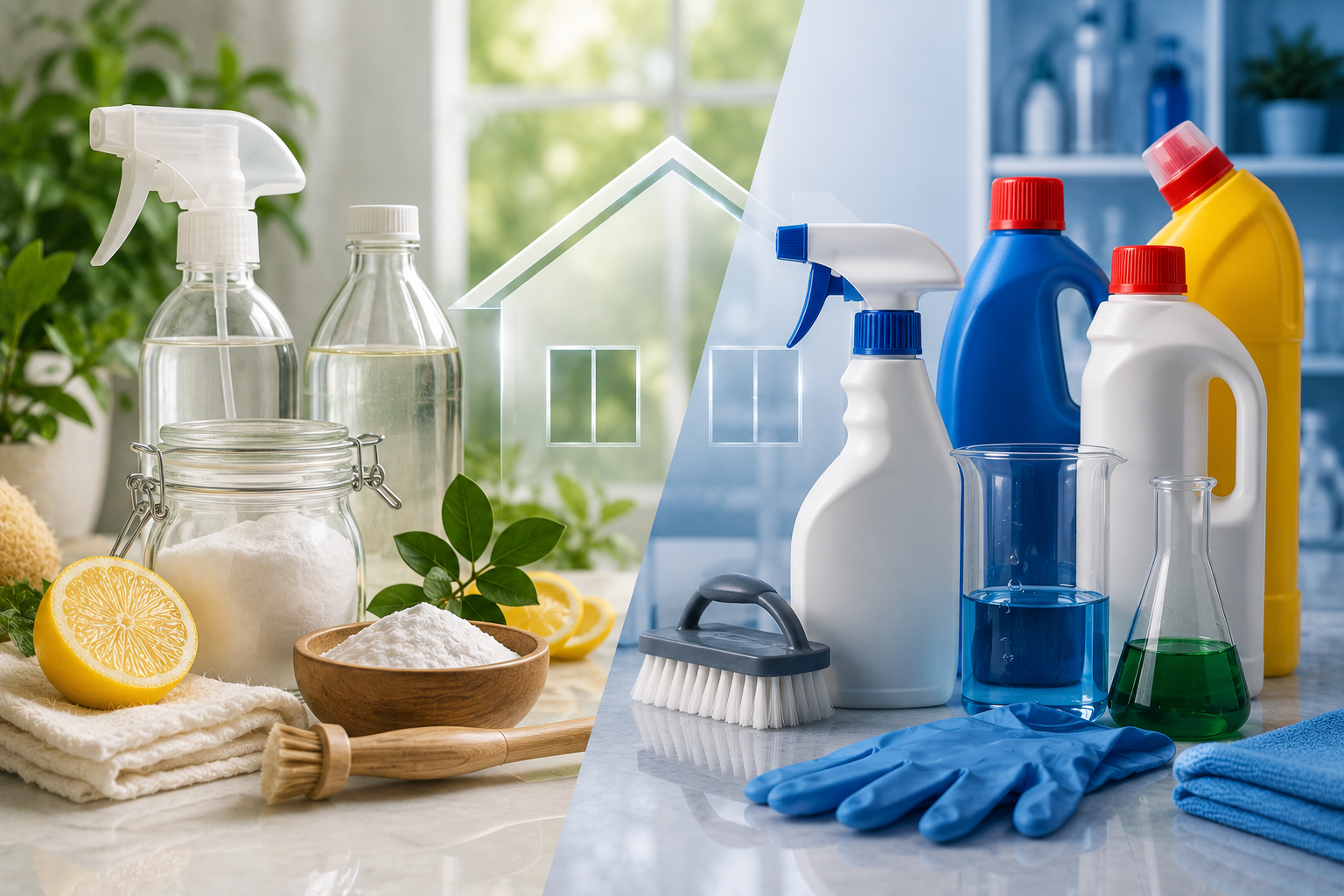
The natural-versus-chemical cleaning debate often gets framed as a simple safety-versus-effectiveness trade-off, but the real picture is more nuanced than that. Both types of cleaners work through the same basic mechanism, surfactants that reduce water’s surface tension so it can penetrate dirt and grease and lift it away, meaning the real difference isn’t how they clean, it’s what they’re made from and what that means for your health, your surfaces, and your specific cleaning task.
This guide compares natural and chemical cleaning products across effectiveness, safety, cost, and environmental impact, helping you decide which makes sense for which task in your home. We’ll also cover VOCs, EPA Safer Choice certification, and practical buying advice for American homeowners trying to make an informed, balanced decision.
By the end, you’ll understand where each type genuinely excels, and why most cleaning experts land somewhere in the middle rather than picking one category exclusively.
Which Is Actually Better?
For everyday maintenance cleaning, light dusting, and general surface wiping, natural cleaners perform comparably to chemical products while reducing indoor air pollutants and skin exposure. For heavy-duty disinfection, tough grease-cutting, and situations requiring EPA-registered germ-killing claims, chemical cleaners generally still have the edge in both speed and proven kill rates against pathogens.
The most practical, research-backed approach isn’t choosing one category exclusively, it’s using natural products for daily maintenance and reserving chemical cleaners for specific high-stakes disinfection tasks where their faster, more thoroughly tested germ-killing power genuinely matters.
How Natural and Chemical Cleaners Actually Differ
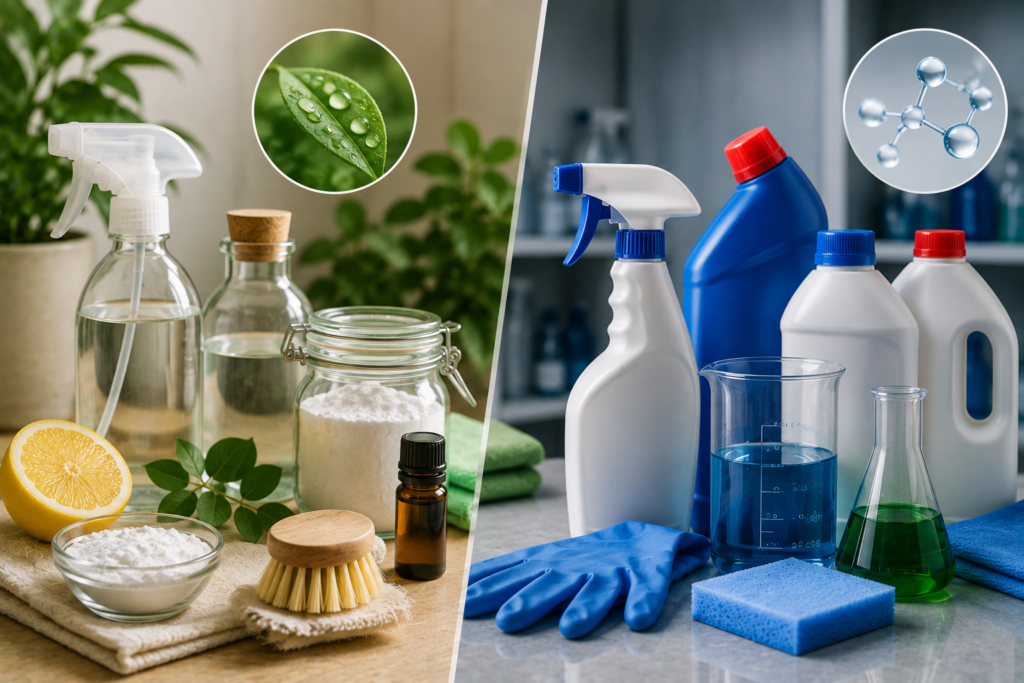
Before comparing performance, it helps to understand what genuinely separates these two categories beyond marketing language.
Truly natural cleaning products rely on ingredients derived from nature, things like vinegar, plant-based surfactants, baking soda, castile soap, and essential oils, rather than synthetic chemical compounds. Chemical cleaners, by contrast, use manufactured compounds specifically engineered for fast-acting cleaning power, stronger disinfection, and consistent performance across a wide range of surfaces and soil types.
It’s worth noting that “natural” and “green” labeling isn’t strictly regulated the way some shoppers assume, and products marketed this way can sometimes still contain a meaningful share of synthetic ingredients. Looking for genuine third-party certifications, rather than trusting front-of-label marketing claims alone, is the more reliable way to confirm a product’s actual formulation.
Round One: Everyday Cleaning Effectiveness
For routine, everyday cleaning tasks, research suggests the effectiveness gap between natural and chemical products is smaller than many people assume.
A study published in the Journal of Applied Microbiology compared conventional bleach, environmentally preferable cleaning products, and DIY solutions, finding that environmentally preferable products performed comparably to bleach for everyday cleaning needs. Separate testing from America’s Test Kitchen, corroborated by additional research from the Toxic Use Reduction Institute at UMass Lowell, similarly found that a well-known natural cleaning method performed just as well as conventional alternatives for standard household cleaning tasks.
That said, natural cleaners generally do require more scrubbing effort or longer contact time to achieve comparable results, since they typically work more gently and gradually than fast-acting chemical formulations.
Round Two: Disinfection and Germ-Killing Power
This is where the comparison genuinely shifts in favor of chemical cleaners, at least for certain specific tasks.
Chemical cleaners with EPA-registered disinfection claims are formulated and tested specifically to kill 99.9 percent of pathogens within a defined, typically shorter contact time. Most green disinfectants, by comparison, require a dwell time of around 10 minutes to reach a comparable 99.9 percent germ-kill rate, meaning natural disinfecting products can still be highly effective, but they generally need more patience and longer surface contact than their chemical counterparts to achieve the same result.
For situations genuinely requiring fast, proven disinfection, such as after illness in the household, raw meat preparation surfaces, or high-touch areas during flu season, chemical disinfectants with EPA registration remain the more reliably tested option. For routine daily surface cleaning without an active illness concern, natural products with adequate dwell time can reasonably keep pace.
Round Three: Indoor Air Quality and VOC Exposure
Indoor air quality is one of the areas where natural cleaning products show a clear, research-supported advantage.
Indoor air can be two to five times more polluted than outdoor air, and traditional cleaning products contribute meaningfully to this through volatile organic compound, or VOC, emissions. Research monitoring whole-house VOC emissions found that mopping with a bleach-based cleaner produced significantly more VOCs than mopping with a natural, lemon-verbena-scented alternative, with the two products showing almost entirely different chemical emission profiles.
High exposure to traditional cleaning products has been associated with meaningfully higher odds of both upper and lower respiratory symptoms in exposed individuals. There’s also a secondary concern worth understanding: certain VOCs can react with ozone already present in the air to form formaldehyde, a known carcinogen, adding an additional layer of indirect risk beyond the VOCs themselves. Fragranced cleaning products in particular have been linked to self-reported health problems in a substantial share of the general population, making fragrance-free or naturally scented options worth considering for sensitive households.
Round Four: Skin and Direct Exposure Safety
Beyond airborne exposure, direct skin contact during manual cleaning represents another meaningful safety consideration worth weighing.
Every manual cleaning session involving chemical products carries some degree of chemical absorption through skin contact, particularly for anyone who cleans frequently or doesn’t consistently wear gloves. Natural cleaners are generally gentler on frequently exposed hands, making them a more comfortable option for households where one person handles the bulk of regular cleaning tasks.
Children, pregnant women, and elderly household members are particularly susceptible to chemical exposure, and some traditional cleaning products contain compounds linked to hormone disruption, adding further weight to natural product selection specifically for households with these more vulnerable members.
Round Five: Surface Compatibility
Beyond health considerations, the two categories also differ somewhat in how they interact with different household surfaces.
Natural cleaners are generally safe across most surfaces and are less likely to cause damage or discoloration over repeated use. Some chemical cleaners, by contrast, can be genuinely harsh on certain materials, requiring more careful, surface-specific application to avoid dulling finishes or damaging delicate materials like natural stone or certain wood finishes.
Round Six: Cost Comparison
Price differences between the two categories exist, though they’re often smaller than assumed once you factor in product concentration and usage patterns.
Chemical cleaners are typically more affordable upfront and widely available across virtually every retailer. Natural cleaning products may cost somewhat more per bottle, but many come in more concentrated formulas that last considerably longer per use, which can narrow or even close the cost gap over time depending on your household’s cleaning frequency and habits.
Comparing Natural and Chemical Cleaners at a Glance
| Factor | Natural Cleaners | Chemical Cleaners |
| Everyday cleaning effectiveness | Comparable, may need more scrubbing | Strong, fast-acting |
| Disinfection speed | Slower, ~10 min dwell time | Faster, EPA-registered kill claims |
| Indoor air quality impact | Lower VOC emissions | Higher VOC emissions |
| Skin exposure risk | Lower | Higher with frequent use |
| Surface compatibility | Generally gentle, low damage risk | Can be harsh on some materials |
| Upfront cost | Sometimes higher per bottle | Generally lower |
| Long-term cost | Often lasts longer per use | Less concentrated, used faster |
| Best for | Daily maintenance, sensitive households | Heavy disinfection, tough grease/stains |
Understanding Certifications Worth Actually Trusting
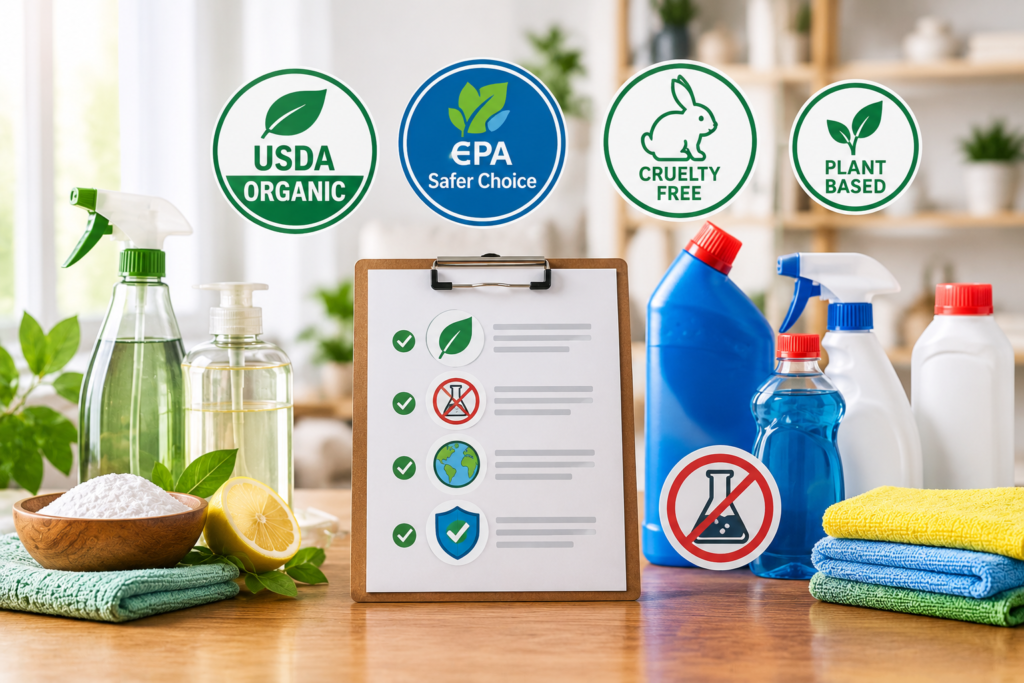
Since “natural” and “green” labeling isn’t strictly regulated, looking for specific third-party certifications is the most reliable way to verify genuine formulation claims.
- EPA Safer Choice: Identifies products meeting stringent human health and environmental safety criteria, based on EPA-reviewed ingredient safety data.
- Green Seal (GS-37): Considered a rigorous standard specifically for industrial and household cleaning products.
- UL Ecologo: Verifies reduced environmental impact across a product’s full life cycle, from manufacturing through disposal.
- USDA Bio-Based: Confirms a product is made from renewable biological ingredients rather than petroleum-based synthetic compounds.
Looking for these specific certifications on packaging offers considerably more assurance than trusting general marketing language like “natural,” “eco-friendly,” or “green” alone, none of which carry standardized regulatory meaning on their own.
Building a Practical Hybrid Approach
Rather than committing entirely to one category, most cleaning experts and research-backed guidance point toward a genuinely practical hybrid strategy.
- Use natural cleaners for: Daily maintenance cleaning, general surface wiping, homes with children or chemical sensitivities, and any task where gentle, lower-exposure cleaning is the priority over maximum speed.
- Use chemical cleaners for: Bathroom disinfection after illness, kitchen surfaces after raw meat preparation, heavy grease-cutting jobs, and any situation specifically requiring EPA-registered germ-killing claims.
- Consider hybrid or certified “green” products: Many EPA Safer Choice or Green Seal-certified products aim to balance genuine effectiveness with reduced environmental and health impact, offering a reasonable middle ground for households wanting both performance and lower chemical exposure.
Practical Buying Advice
A few specific considerations help you shop confidently regardless of which category you lean toward for a given task.
- Look past front-label marketing claims: Words like “natural” or “eco-friendly” aren’t regulated terms, so check the ingredient list or look for genuine third-party certifications instead.
- Match dwell time to your actual cleaning task: If using a natural disinfectant, allow the full recommended contact time, often around 10 minutes, to achieve genuine germ-killing effectiveness rather than wiping it away too quickly.
- Reserve chemical disinfectants for genuine high-risk situations: Illness in the household, raw meat prep surfaces, and flu season high-touch areas are reasonable places to prioritize proven, fast-acting chemical disinfection.
- Ventilate when using any strong cleaning product: Opening a window or running a fan while cleaning with chemical products meaningfully reduces the VOC concentration you’re breathing in during and after cleaning.
- Be cautious with essential oils specifically: Some essential oils processed with solvents can contain their own VOCs, and pregnant women, babies, and people with asthma or chronic conditions may react poorly to certain oils, so research specific oils before relying on them heavily in a natural cleaning routine.
Match the Cleaner to the Task, Not a Single Ideology
Choosing between natural and chemical cleaning products doesn’t have to be an all-or-nothing decision, and the research genuinely supports a balanced, task-specific approach. Natural cleaners perform comparably for everyday maintenance cleaning while meaningfully reducing indoor air pollutants and skin exposure, making them well suited to daily use and sensitive households. Chemical cleaners retain a genuine edge for fast, EPA-registered disinfection during higher-stakes situations like illness or raw food prep. Rather than picking one category exclusively, using natural products for daily cleaning and reserving chemical disinfectants for specific high-risk moments gives you the practical benefits of both approaches.
Frequently Asked Questions
1- Do natural cleaning products actually kill germs effectively?
Yes, though they generally require a longer dwell time, often around 10 minutes, to achieve a comparable 99.9 percent germ-kill rate that chemical disinfectants achieve more quickly.
2- Are chemical cleaners really worse for indoor air quality?
Research generally supports this, with studies finding that bleach-based cleaning produces meaningfully more VOC emissions than natural alternatives during comparable cleaning tasks.
3- Is “natural” or “green” labeling actually regulated?
No, these terms aren’t strictly regulated, which is why looking for specific certifications like EPA Safer Choice or Green Seal offers more reliable assurance than label language alone.
4- Should I use chemical disinfectants after someone in my household is sick?
Yes, this is a reasonable situation to prioritize EPA-registered chemical disinfectants for their faster, more rigorously tested germ-killing performance.
5- Are natural cleaners safe for households with children?
Generally yes, natural cleaners typically involve lower skin and airborne chemical exposure, making them a commonly recommended choice for homes with young children, though some essential oils still warrant caution.
6- Is it more expensive to switch to natural cleaning products?
Not necessarily long-term; while some natural products cost more per bottle, many come in more concentrated formulas that last longer, which can offset or even eliminate the price difference over time.