
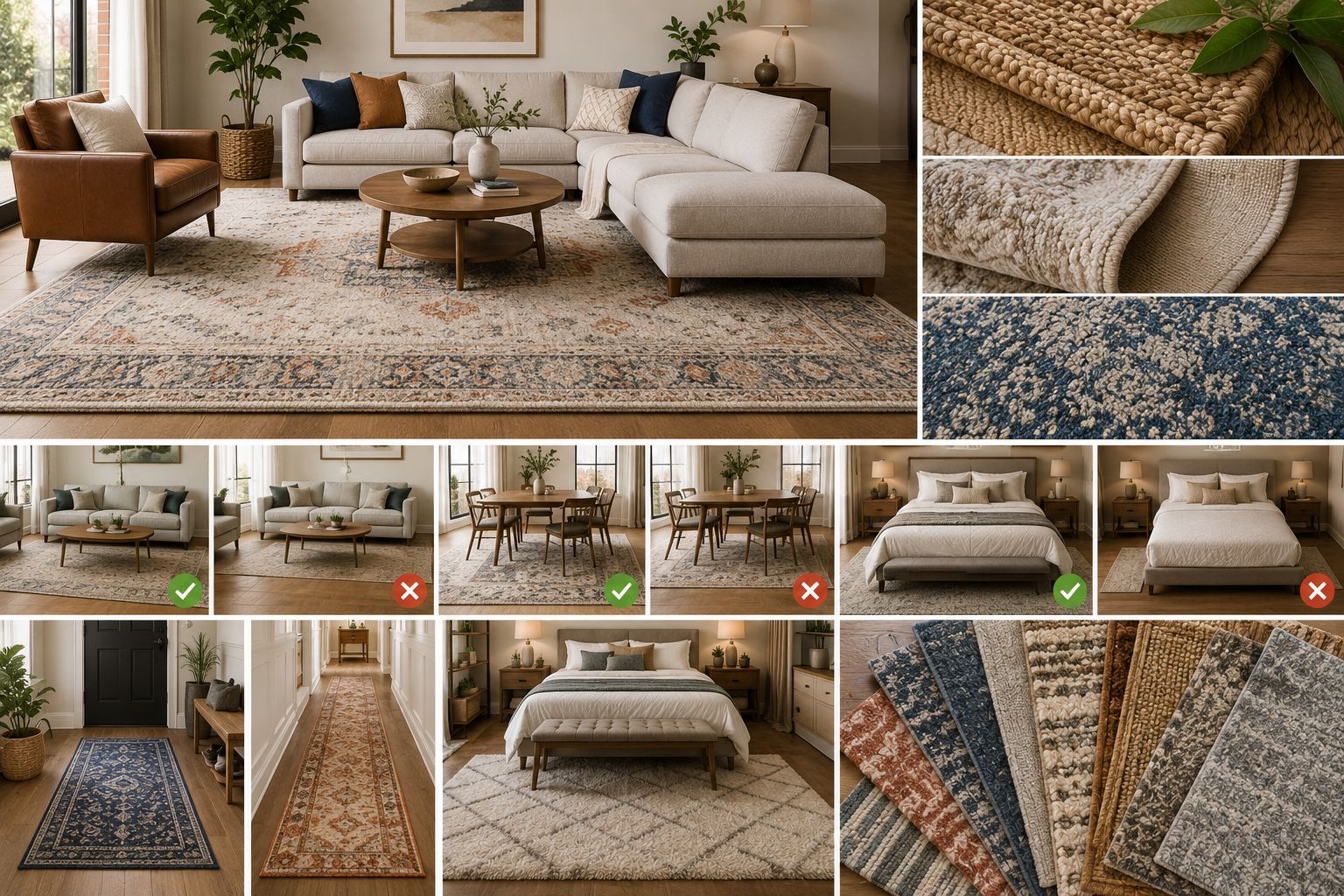
Choosing a rug sounds simple until you’re standing in a showroom facing dozens of sizes, materials, and pile heights, all of which genuinely change how the rug looks, feels, and holds up in your home. The single most common mistake homeowners make is buying a rug that’s too small for the room, a mistake that instantly makes even a well-decorated space look choppy and unfinished, regardless of how nice the rug itself is.
This guide walks through exactly how to size a rug correctly for every room, what pile height actually means for comfort and durability, which materials suit which lifestyles, and practical placement rules that prevent the most common rug-buying regrets.
What Actually Matters Most
Size is the single biggest factor in whether a rug looks intentional or accidental, always measure your furniture layout first, then size up rather than down, since an undersized rug is the most common and most visible mistake. Beyond size, match pile height to the room’s traffic level: low-pile for entryways, kitchens, and dining rooms where durability and easy cleaning matter, and medium-to-high pile for bedrooms and living rooms where comfort underfoot is the priority. Material should follow the same logic, durable, easy-clean options like wool blends or synthetic fibers for high-traffic or pet-heavy homes, and softer natural fibers for lower-traffic, comfort-focused spaces.
Start With Size: The Mistake That Ruins Every Other Choice
Why Bigger Almost Always Beats Smaller
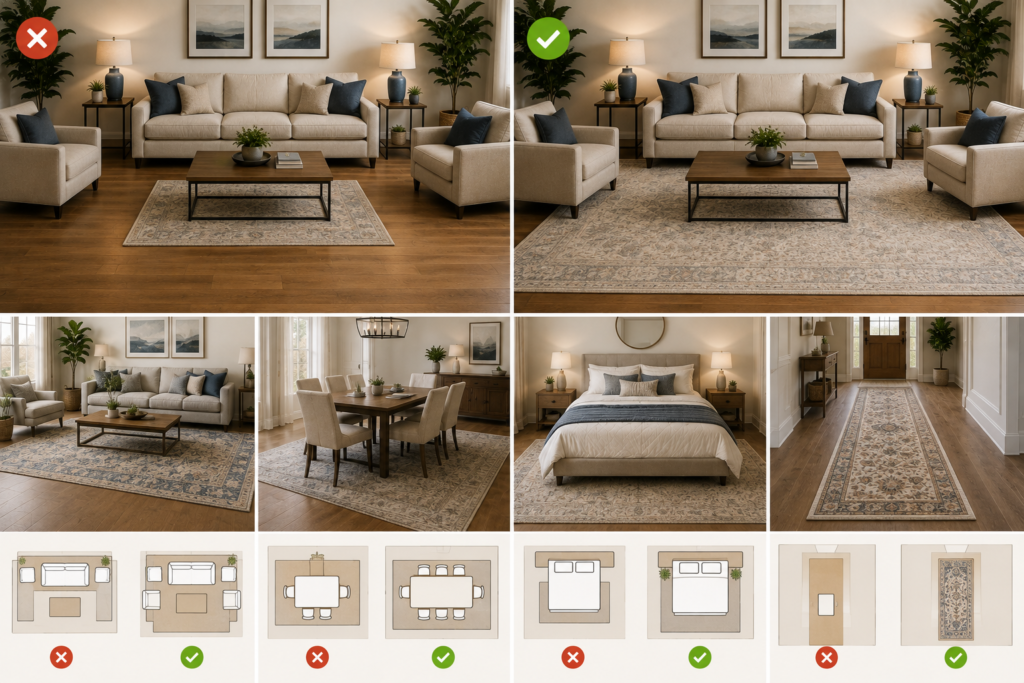
Homeowners consistently gravitate toward smaller, more budget-friendly rug sizes, but an undersized rug tends to make a room look unintentional and disconnected rather than pulling the space together. As a general rule, when you’re deciding between two sizes, choose the larger one.
Measure Your Furniture Layout First
Before shopping, measure the actual footprint of your seating or furniture arrangement, not just the room’s total square footage. Your rug should extend at least 6 inches beyond your sofa on both sides, with 8 inches offering an even more polished look.
Standard Living Room Rug Sizes
| Rug Size | Best For |
| 5×7 | Small apartments or as an accent piece |
| 6×9 | Smaller living rooms, with careful placement |
| 8×10 | Medium living rooms (roughly 11×13 feet) |
| 9×12 | Larger living rooms or open floor plans |
| 10×14 | Spacious rooms with multiple seating areas |
Living Room Placement: All Four Legs or Just the Front Two?
The most common, most polished approach is having all four legs of every major furniture piece resting on the rug. If your room or budget doesn’t allow for a rug that large, the next best option is having just the front two legs of each seating piece on the rug, keeping the layout visually anchored rather than floating in the middle of the room.
Sizing a Dining Room Rug
For a dining room, the rug needs to be large enough that all four chair legs stay on the rug even when pulled out from the table, generally meaning at least 24 to 30 inches of rug extending beyond the table’s edge on all sides.
Sizing a Bedroom Rug
In bedrooms, a rug placed under the bottom two-thirds of the bed, extending out on both sides and at the foot, creates a soft landing area without requiring an oversized rug under the entire bed frame. For smaller rooms, two smaller runners placed on either side of the bed can work just as well. Leave at least 12 inches of floor space between the rug and any nightstands.
Sizing Rugs for Entryways and Hallways
In entryways, a 2×3, 3×5, or 4×6 rug generally works well depending on the space, while long, narrow hallways call for a single long runner or two evenly spaced shorter runners. Leave roughly 3 inches of space between the runner and the walls on all sides, and make sure the rug doesn’t block any door swings.
Understanding Pile Height (And Why It Matters More Than You’d Think)
What Pile Height Actually Means
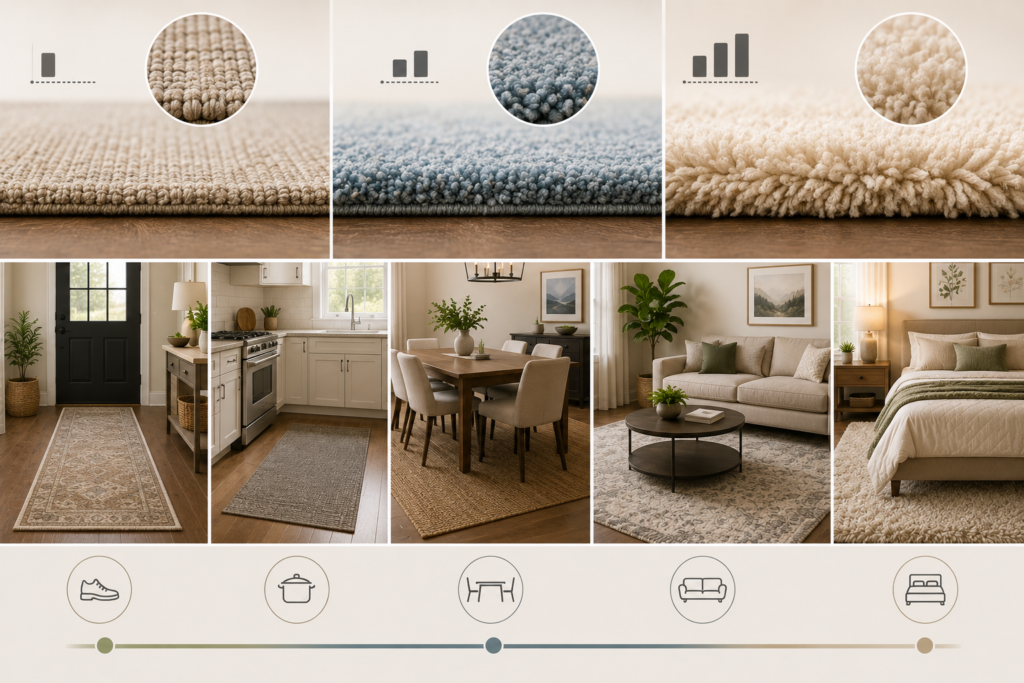
Pile height refers to the length of a rug’s fibers, measured from the backing to the very top of the strands, it’s different from overall rug thickness, which includes the backing and construction as well. This single specification affects how a rug feels underfoot, how well it handles foot traffic, and how much maintenance it will realistically need.
Low Pile: Durable and Easy to Clean
Low-pile rugs feature short, tightly woven fibers, generally under about a quarter inch thick. They’re easy to vacuum, resist crushing under furniture, and their shorter fibers are far less likely to trap crumbs, dirt, or pet hair, making them the practical choice for entryways, kitchens, hallways, and dining rooms specifically, since dining chairs slide in and out far more easily over a low-pile surface than a plush one.
Medium Pile: The Versatile Middle Ground
Medium-pile rugs, roughly a quarter to three-quarter inch thick depending on the specific classification you’re comparing, strike a genuine balance between comfort and practicality. They add real softness and warmth underfoot while remaining reasonably easy to clean, making them a strong fit for living rooms, family rooms, and bedrooms alike.
High Pile: Maximum Comfort, More Maintenance
High-pile and shag rugs offer a plush, luxurious feel with longer, looser fibers, ideal for low-traffic, comfort-focused spaces like bedrooms. The trade-off is real, high pile traps dust, hair, and spilled debris more readily, requires more careful vacuuming (the wrong vacuum setting can actually damage the fibers), and isn’t well suited to furniture that needs to slide or roll smoothly across it.
Pile Height Guide by Room
| Room | Recommended Pile Height | Why |
| Entryway/kitchen | Low pile | Durable, easy to clean, handles dirt and moisture |
| Dining room | Low pile | Chairs slide easily without snagging or leaving indentations |
| Hallway | Low pile | Withstands heavy foot traffic |
| Living room | Medium pile | Balance of comfort and easy maintenance |
| Bedroom | Medium to high pile | Soft, cozy feel where traffic is lighter |
| Home office | Low pile | Allows desk chairs to roll smoothly |
Choosing the Right Rug Material for Your Lifestyle
Wool: The Reliable All-Rounder
Wool rugs are naturally durable, stain-resistant, and available across a wide range of pile heights and price points, making them one of the most versatile material choices for nearly any room in the house.
Synthetic Fibers: Budget-Friendly and Practical
Synthetic materials like polypropylene and nylon offer strong stain resistance and affordability, and many are now specifically designed to be machine-washable, a genuinely practical feature for households with kids or pets where spills and accidents are a regular occurrence.
Natural and Blended Fibers
Many modern rugs blend natural fibers (like wool or cotton) with synthetic materials to combine softness and style with improved affordability and durability, a common approach for homeowners wanting a natural look without the higher price tag or maintenance demands of a fully natural-fiber rug.
Flatweave: Slim, Versatile, and Easy to Maintain
Flatwoven rugs, crafted on a loom typically from cotton or wool, have a notably slim profile and are both durable and easy to clean, making them a strong fit for busy entryways, kitchens, and dining rooms where a low-maintenance, low-pile option is the priority.
Material Comparison at a Glance
| Material | Durability | Stain Resistance | Best For |
| Wool | High | Good | Nearly any room, especially higher-traffic living spaces |
| Synthetic (polypropylene/nylon) | High | Excellent | Households with kids, pets, or budget priorities |
| Natural/synthetic blends | Moderate to high | Moderate to good | Style-forward decorating on a budget |
| Flatweave (cotton/wool) | High | Good | Entryways, kitchens, dining rooms |
Rugs for Kids, Pets, and High-Traffic Households
If your home includes young children, pets, or simply sees heavy daily foot traffic, prioritize a low-pile, machine-washable rug in a durable synthetic or wool blend. This combination handles spills, accidents, and constant use far better than a plush, high-pile natural fiber rug, which will show wear and stains considerably faster under that kind of daily demand.
Common Placement Mistakes to Avoid
- Ignoring Furniture Leg Clearance
Thick, plush rugs can inadvertently block doors from swinging fully open or make it noticeably harder to slide dining chairs in and out. Always check that your chosen pile height works with your specific furniture and room layout before committing to a purchase.
- Placing Rugs Too Close to Walls or Nightstands
In bedrooms and hallways specifically, leave adequate breathing room, at least 12 inches between a bedroom rug and nightstands, and a few inches of clearance along hallway walls, so the rug doesn’t feel cramped or awkwardly placed.
- Putting Seams in Doorways
For hallway runners, particularly when using two shorter runners rather than one continuous piece, avoid placing the seam directly in a doorway, where it becomes both a visual interruption and a potential tripping point.
Practical Buying Tips
- Measure your actual furniture layout, not just the room’s total square footage, before choosing a rug size
- When choosing between two sizes, go with the larger one, undersized rugs are the most common regret
- Match pile height to the room’s traffic level rather than choosing based on feel alone in a showroom
- Prioritize machine-washable synthetic or wool-blend rugs for households with kids or pets
- Leave adequate clearance around nightstands, doorways, and furniture legs when planning placement
Common Mistakes to Avoid
- Buying a rug too small for the furniture layout, the single most common mistake that makes a room look unintentional
- Choosing high pile for high-traffic areas, leading to premature wear, crushing, and difficulty cleaning
- Ignoring pile height’s effect on furniture movement, ending up with dining chairs or doors that catch or drag
- Placing a rug flush against nightstands or walls, creating a cramped, poorly finished look
- Choosing natural, delicate fibers for pet- or kid-heavy households, without considering stain resistance and washability
Conclusion
Choosing the right rug ultimately comes down to getting the fundamentals right before style ever enters the conversation, size that matches your furniture layout, pile height suited to the room’s actual traffic level, and material that fits how your household really lives. Skip the temptation to size down or prioritize plush comfort in a high-traffic zone, and you’ll end up with a rug that looks intentional, performs well for years, and genuinely pulls the room together rather than just sitting in it.
Frequently Asked Questions
1- What size rug should I buy for my living room?
Measure your furniture layout first, then choose a rug that extends at least 6 to 8 inches beyond your sofa on both sides, ideally large enough for all four legs of your seating to rest on it.
2- What is rug pile height, and why does it matter?
Pile height is the length of a rug’s fibers from the backing to the top, and it directly affects comfort, durability, and how easy the rug is to clean, low pile suits high-traffic areas, while high pile suits comfort-focused, low-traffic spaces.
3- What’s the best rug material for homes with pets?
Synthetic fibers like polypropylene or nylon, especially machine-washable options, generally hold up best to pet-related messes, offering strong stain resistance and easier cleaning than delicate natural fibers.
4- How big should a dining room rug be?
Large enough that all four chair legs remain on the rug even when pulled out from the table, generally requiring at least 24 to 30 inches of rug extending beyond the table’s edge on all sides.
5- Should a bedroom rug go under the entire bed?
Not necessarily. Placing the rug under the bottom two-thirds of the bed, extending out on the sides and at the foot, creates a comfortable landing area without needing an oversized rug under the whole frame.
6- What pile height is best for a home office?
Low pile is generally recommended, since it allows a desk chair to roll smoothly across the surface without catching or dragging the way a higher-pile rug would.
7- Is it better to size up or down when choosing between two rug sizes?
Size up. An undersized rug is one of the most common and most visually noticeable mistakes homeowners make, making a room look choppy rather than pulled together.