
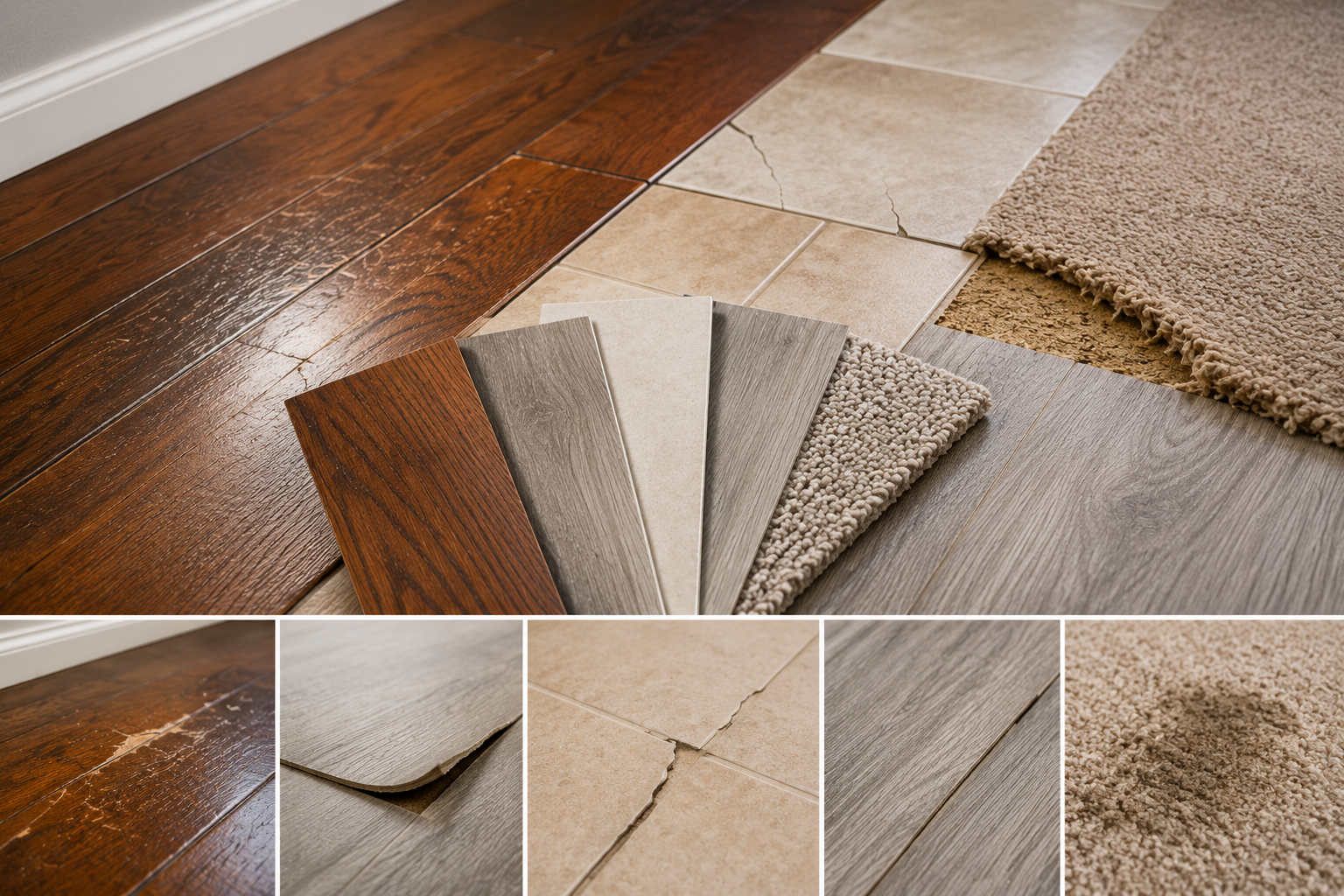
Flooring doesn’t fail overnight. Most floors show gradual warning signs, worn patches, persistent creaks, or subtle discoloration, long before needing full replacement. Knowing what to look for helps you plan ahead rather than being caught off guard.
This guide covers the clearest signs it’s time to replace your flooring, how these signs vary by material, and how to decide between repair and full replacement. We’ll also cover flooring lifespan, warning signs, and material-specific replacement guidance for American homeowners.
By the end, you’ll know exactly what to look for across hardwood, laminate, tile, vinyl, and carpet, so you can make a confident, informed decision about your home’s flooring.
When Should You Replace Flooring?
Replace flooring when damage affects structural integrity or safety, such as widespread cracking, significant water damage, or safety hazards like uneven surfaces that create tripping risks. Cosmetic wear alone, like minor scratches or slight fading, often doesn’t require full replacement and can sometimes be addressed with targeted repairs or refinishing instead.
As a general guideline, if repair costs approach or exceed a significant portion of full replacement cost, particularly on flooring already near the end of its typical lifespan, replacement usually makes more financial sense than continued patching.
Average Flooring Lifespans by Material
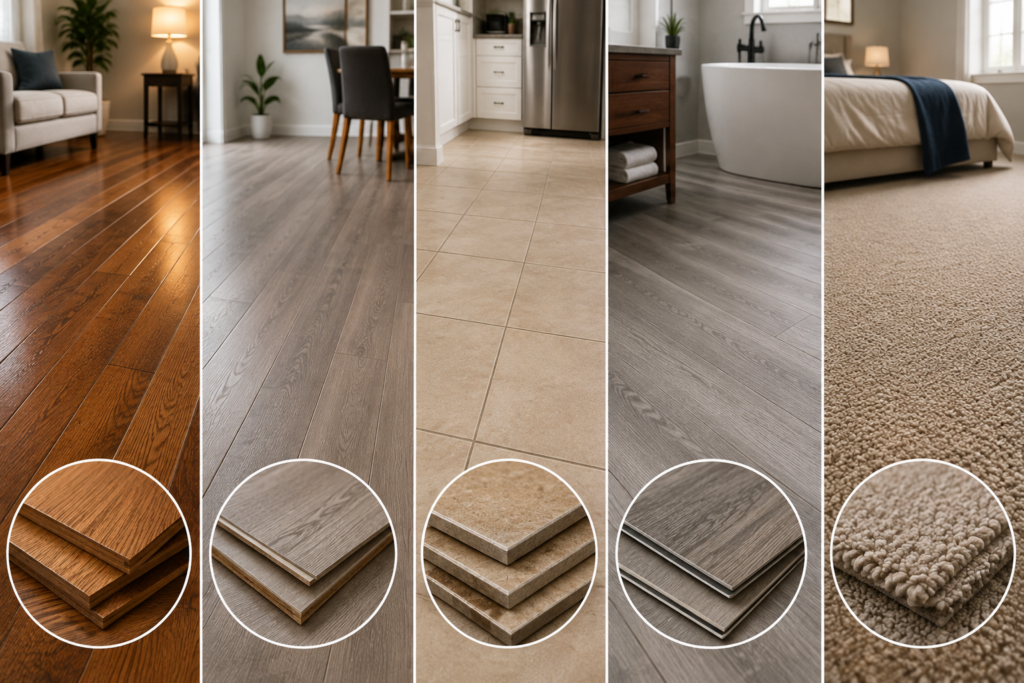
Understanding roughly how long each flooring type is designed to last helps you interpret warning signs more accurately, since wear on a newer floor means something different than on an older one.
| Flooring Type | Typical Lifespan |
| Hardwood | 25–100+ years with refinishing |
| Laminate | 15–25 years |
| Tile | 20–50+ years |
| Vinyl | 10–20 years |
| Carpet | 5–15 years |
These ranges vary considerably based on installation quality, foot traffic, and maintenance, so use them as general reference points rather than fixed timelines.
Signs It’s Time to Replace Hardwood Flooring
Hardwood is known for its longevity, and many issues can be addressed through refinishing, though certain signs indicate replacement is the better path.
- Deep Gouges and Structural Damage
Surface scratches are usually fixable through sanding and refinishing, but deep gouges that penetrate multiple layers of the wood may compromise the board’s structural integrity beyond what refinishing can address.
- Persistent Warping or Cupping
Boards that remain warped or cupped even after addressing the underlying moisture source often indicate permanent damage that refinishing alone won’t correct.
- Boards That Have Been Refinished Multiple Times
Hardwood can only be sanded and refinished a limited number of times before the wood becomes too thin to safely refinish again. Once boards have reached this point, replacement becomes the only remaining option.
- Extensive Water Damage or Rot
Significant water damage that has caused rot, mold, or severe discoloration throughout multiple boards typically requires replacement rather than spot repair, particularly if the damage has spread to the subfloor.
Signs It’s Time to Replace Laminate Flooring
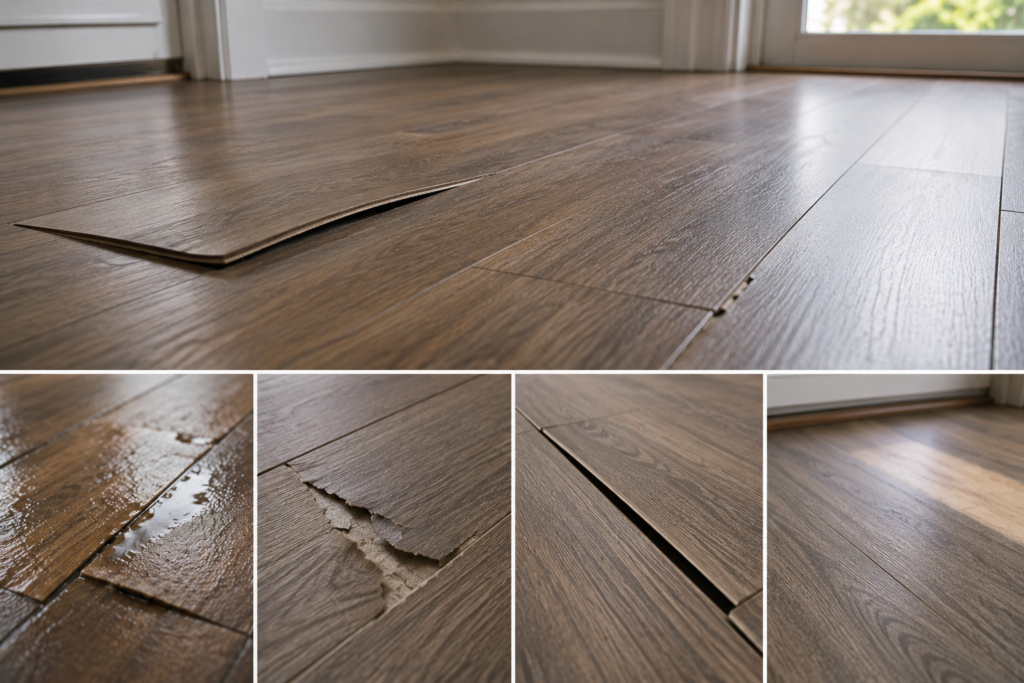
Laminate flooring has a shorter lifespan than hardwood and specific wear patterns that signal it’s time for replacement rather than repair.
- Swelling or Warping from Moisture
Once laminate’s core layer absorbs moisture and swells, this damage is permanent and can’t be reversed through cleaning or drying. Affected planks typically need replacement.
- Peeling or Delaminating Surface Layer
Laminate’s printed wear layer can begin peeling or separating from the core over time, particularly in high-traffic areas, and this damage isn’t repairable once it begins.
- Persistent Gaps Between Planks
While minor seasonal gaps are normal, permanent, worsening gaps between planks can indicate the flooring has reached the end of its structural life.
- Fading That Affects Overall Appearance
Sun exposure can fade laminate’s printed surface over time, and once fading is widespread across the floor, replacement is generally the only way to restore a consistent appearance.
Signs It’s Time to Replace Tile Flooring
Tile is one of the most durable flooring materials, so replacement is often driven by specific, isolated issues rather than widespread wear.
- Widespread Cracking
Individual cracked tiles can often be replaced without redoing the whole floor, but widespread cracking across many tiles may indicate subfloor movement or structural issues that require more extensive repair or replacement.
- Loose or Hollow-Sounding Tiles
Tiles that sound hollow when tapped, or that have become loose, indicate a failed bond with the subfloor. Isolated instances can sometimes be repaired, but widespread looseness often points to a larger installation issue.
- Persistent Grout Problems
While grout itself can be repaired or replaced independently of the tile, grout that continues to crack or fail despite proper repair may indicate ongoing movement in the subfloor affecting the tile installation.
- Outdated Style Affecting Home Value
Beyond physical damage, significantly outdated tile styles can affect a home’s appeal to buyers, making replacement a worthwhile consideration for homeowners planning to sell.
Signs It’s Time to Replace Vinyl Flooring
Vinyl flooring has a moderate lifespan and specific wear patterns that typically signal replacement rather than repair.
1- Tears or Punctures
Unlike some flooring materials, vinyl doesn’t self-heal from tears or deep punctures, and while small sections can sometimes be patched, extensive damage typically requires replacing larger sections or the entire floor.
2- Bubbling or Lifting
Bubbles or areas where vinyl has lifted from the subfloor often indicate adhesive failure or trapped moisture, and this issue typically worsens over time without replacement of the affected area.
3- Significant Discoloration or Yellowing
UV exposure can cause vinyl to yellow or discolor over years of use, and once this affects a significant portion of the floor, replacement is usually the only way to restore a uniform appearance.
4- Persistent Odors
Vinyl that develops persistent odors, particularly after water exposure, may have trapped moisture beneath the surface that continues to cause issues even after visible drying.
Signs It’s Time to Replace Carpet
Carpet generally has the shortest lifespan among common flooring materials and shows some of the clearest wear signs.
- Matting and Crushed Fibers
Carpet fibers that remain flattened and matted even after cleaning and fluffing indicate the padding and fiber structure have broken down beyond what maintenance can restore.
- Persistent Stains or Odors
Stains or odors that remain after professional cleaning often indicate the padding beneath the carpet has absorbed the issue, requiring replacement rather than continued surface cleaning.
- Visible Wear Patterns
Worn pathways in high-traffic areas that show the carpet backing through thinned fibers indicate the carpet has reached the end of its functional lifespan.
- Allergy or Respiratory Symptoms
Carpet that seems to worsen allergy symptoms despite regular cleaning may be trapping allergens deep within fibers that professional cleaning can no longer fully address.
Comparing Replacement Signs by Flooring Type
| Flooring Type | Key Replacement Trigger | Repairable Alternative |
| Hardwood | Structural damage, too thin to refinish | Sanding and refinishing |
| Laminate | Swelling, peeling, persistent gaps | Spot plank replacement |
| Tile | Widespread cracking, subfloor issues | Individual tile replacement |
| Vinyl | Tears, bubbling, discoloration | Patching small areas |
| Carpet | Matting, persistent odors, wear patterns | Professional deep cleaning |
Repair or Replace? A Practical Framework
Deciding between repair and replacement often comes down to weighing cost, extent of damage, and how close the flooring is to its typical lifespan.
Isolated damage on flooring still well within its expected lifespan is usually worth repairing rather than replacing, since spot repairs are generally far less expensive than a full floor replacement. Widespread damage, or damage occurring on flooring already near or past its typical lifespan, generally makes replacement the more sensible long-term choice.
Questions to ask when deciding:
- Is the damage isolated to a small area, or spread throughout the floor?
- Is the flooring already near the upper end of its typical lifespan?
- Would repair costs approach a significant portion of full replacement cost?
- Is the underlying cause of damage, such as moisture, fully resolved before repairing?
Safety Considerations When Assessing Flooring
Beyond appearance and cost, certain flooring issues present genuine safety concerns that should be addressed regardless of the flooring’s age.
- Uneven or lifting surfaces: Raised or uneven flooring creates a genuine tripping hazard and should be addressed promptly, whether through repair or replacement.
- Mold growth beneath flooring: Mold associated with water damage poses health risks and typically requires professional remediation alongside flooring replacement.
- Loose tiles or boards: Flooring pieces that shift or move underfoot present both a trip hazard and a sign of underlying installation or structural issues.
How Home Renovation Plans Affect the Decision
If you’re planning a renovation or preparing to sell, flooring condition and style become relevant considerations beyond pure functionality.
Flooring that’s functionally fine but significantly outdated in style may still be worth replacing if you’re renovating a space or preparing your home for sale, since flooring has a meaningful impact on how buyers perceive a home’s overall condition. Conversely, if you’re not planning to sell soon and the flooring is functionally sound, cosmetic updates can often wait until they align with a broader renovation plan.
How Usage and Location Affect Flooring Lifespan
How and where flooring is used within your home meaningfully affects how quickly it shows wear.
- High-traffic areas wear out faster: Entryways, hallways, and kitchens generally show wear signs sooner than bedrooms or formal living spaces used less frequently.
- Moisture-prone areas need extra attention: Bathrooms, laundry rooms, and basements are more likely to develop moisture-related issues, making regular inspection in these areas particularly important.
- Households with pets or children: Increased foot traffic, spills, and potential for scratches or stains can shorten the practical lifespan of flooring compared with lower-activity households.
- Sun exposure varies by room: Rooms with large windows or significant direct sunlight may see faster fading or discoloration, particularly for laminate and vinyl flooring.
Being aware of these location-specific factors helps you anticipate which areas of your home are likely to need attention first, allowing for more proactive inspection and maintenance.
Cost Considerations When Planning Flooring Replacement
Understanding typical cost patterns across flooring types helps you budget realistically when replacement becomes necessary.
- Material costs vary significantly: Carpet and vinyl generally sit at the more affordable end of the spectrum, while hardwood and natural stone tile typically command higher prices per square foot.
- Installation complexity affects total cost: Some flooring types require more specialized installation, which affects labor costs beyond the material price itself.
- Removal and disposal add expense: Removing and disposing of old flooring, particularly tile or hardwood, adds to the total project cost beyond just the new material and installation.
- Subfloor repairs may be necessary: If moisture damage or structural issues affected the subfloor, addressing this before installing new flooring adds to the overall project scope and cost.
Getting a clear, itemized estimate before starting a flooring replacement project helps avoid unexpected costs partway through the process.
When to Consult a Flooring Professional
While many replacement signs are straightforward to identify yourself, certain situations benefit from professional assessment first.
- Uncertain extent of water damage: A professional can assess whether damage is limited to the visible surface or has affected the subfloor more extensively.
- Suspected mold growth: Professional inspection and remediation are important when mold is suspected, both for accurate assessment and safe removal.
- Structural concerns: Persistent unevenness, sagging, or movement in flooring may indicate underlying structural issues requiring professional evaluation beyond typical flooring wear.
- Uncertainty about repair versus replacement: When it’s unclear whether an issue is isolated or more widespread, a professional assessment can help you avoid either unnecessary replacement or inadequate repair.
Conclusion
Recognizing the early warning signs of failing flooring, whether it’s hardwood too thin to refinish, swelling laminate, cracked tile, torn vinyl, or matted carpet, helps you plan replacement on your own timeline rather than reacting to a bigger problem later. Understanding your flooring’s typical lifespan and weighing repair costs against replacement value gives you a clear, practical framework for making the right call. When safety concerns like uneven surfaces or mold are involved, addressing the issue promptly protects both your home and your household, regardless of the flooring’s age.
Frequently Asked Questions
1- How do I know if my hardwood floor needs replacing or just refinishing?
If damage is limited to surface scratches and the wood hasn’t been refinished too many times already, refinishing is usually sufficient. Deep gouges, persistent warping, or boards too thin to sand safely indicate replacement is needed.
2- Can laminate flooring be repaired instead of replaced?
Individual damaged planks can sometimes be replaced, but widespread swelling, peeling, or fading typically requires full replacement rather than spot repair.
3- Is cracked tile always a sign I need new flooring?
Not necessarily. Isolated cracked tiles can often be replaced individually, though widespread cracking may indicate subfloor issues requiring more extensive attention.
4- How long should vinyl flooring typically last?
Vinyl flooring generally lasts 10 to 20 years, depending on quality and foot traffic, though visible tears, bubbling, or discoloration can signal it’s time to replace sooner.
5- When should I replace carpet instead of having it professionally cleaned?
If stains, odors, or matting persist despite professional cleaning, this typically indicates the padding or fiber structure has broken down and replacement is the better option.
6- Are uneven floors always a safety concern?
Yes, uneven or lifting flooring creates a genuine tripping hazard and should be addressed promptly, regardless of the flooring’s age or remaining cosmetic condition.