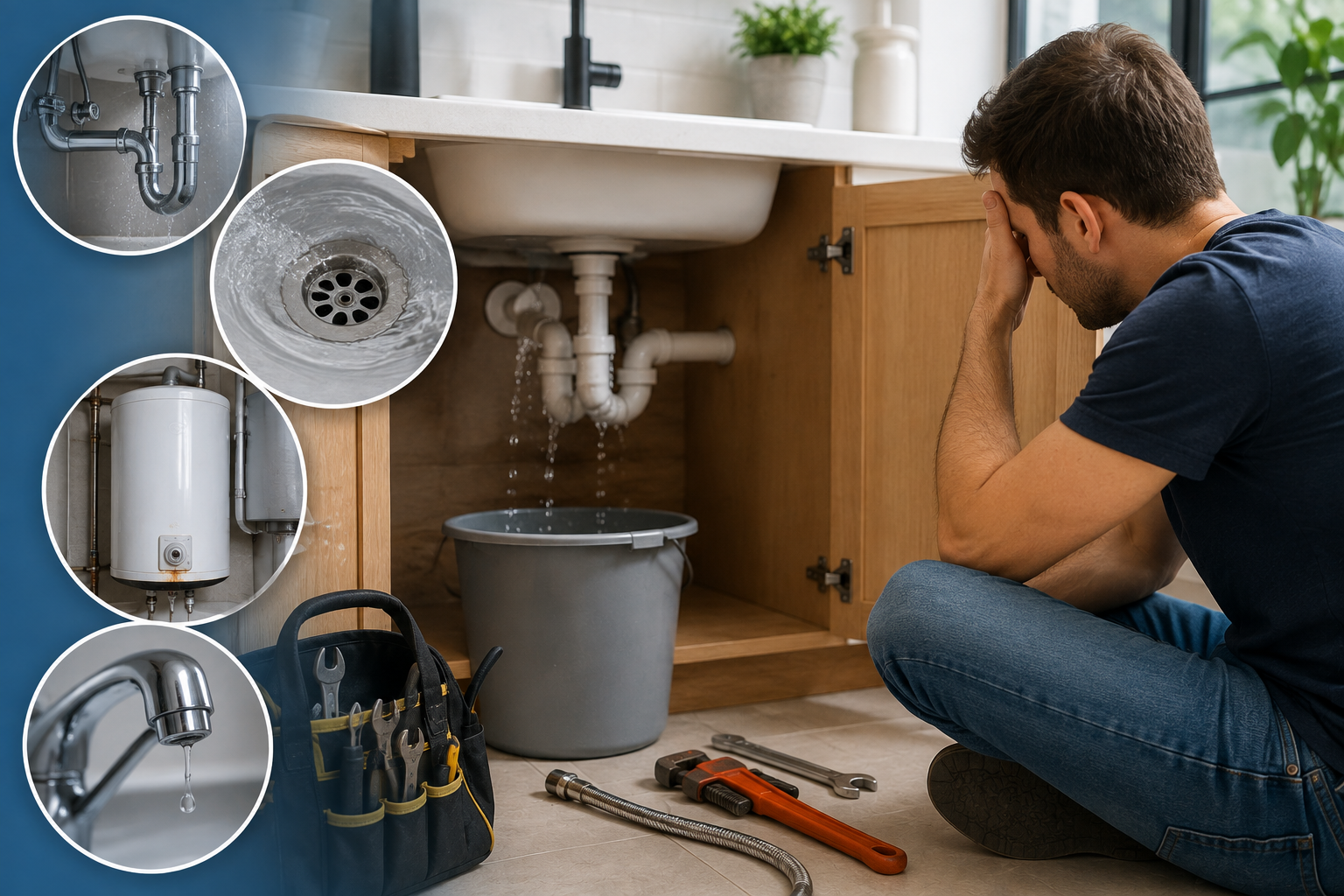
A slow drain or a slightly odd noise from your pipes can feel easy to ignore, especially when everything still seems to work fine. The problem is that some plumbing issues quietly worsen in the background until they turn into a genuine emergency.
This guide covers the clearest signs it’s time to call a professional plumber, which issues are safe to handle yourself, and how to avoid costly water damage by acting early. We’ll also cover plumbing emergencies, water damage prevention, and practical advice for American homeowners deciding when to pick up the phone.
By the end, you’ll know exactly which warning signs mean it’s time to stop troubleshooting and bring in a licensed professional.
When Should You Call a Plumber?
Call a professional plumber when you notice persistent or recurring problems, signs of hidden water damage, sewer smells, low water pressure throughout your home, or any issue involving gas lines or water heater installation. Minor, isolated issues like a slow drain or a dripping faucet are often manageable yourself, but anything affecting your whole home’s water system or hinting at hidden damage deserves professional attention.
Acting quickly on these warning signs typically saves money in the long run, since small plumbing problems tend to become significantly more expensive the longer they’re left unaddressed.
1- Signs of a Hidden Water Leak
Not every leak is visible right away, which makes recognizing subtler warning signs particularly important for catching problems early.
Unexplained Increase in Your Water Bill
A noticeable jump in your water bill without a corresponding change in usage is one of the clearest signs of a hidden leak somewhere in your home’s plumbing system. This is often one of the first signals homeowners notice before any visible damage appears.
The Sound of Running Water
Hearing water running when no fixtures are in use, particularly a faint hissing or trickling sound near walls or floors, often indicates water moving through a pipe that shouldn’t currently have flow.
Musty Odors
A persistent musty or mildew smell, especially in areas near plumbing like bathrooms, kitchens, or basements, can indicate hidden moisture buildup from a slow, ongoing leak.
Warped or Discolored Surfaces
Warped flooring, bubbling paint, or discolored patches on walls and ceilings near plumbing fixtures often signal water intrusion that’s been developing for some time before becoming visible.
2- Signs of Serious Drain or Sewer Line Problems
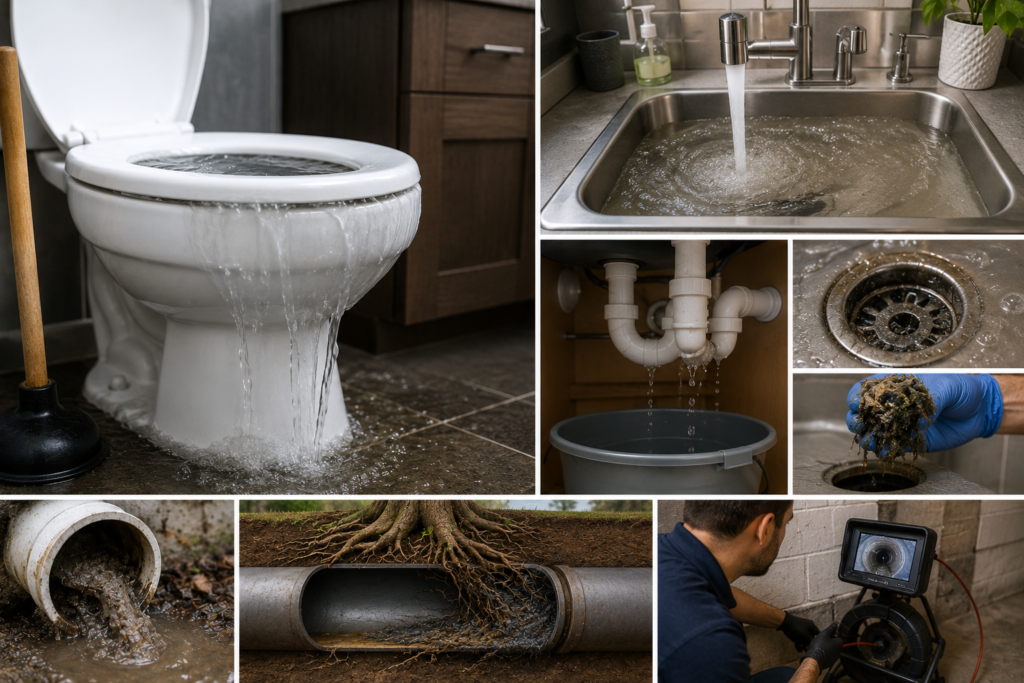
Drain issues that affect multiple fixtures simultaneously often point to a larger problem than a simple, isolated clog.
Multiple Drains Backing Up at Once
If water backs up in more than one drain simultaneously, such as your toilet, tub, and sink all draining slowly or backing up together, this typically indicates a blockage in your main sewer line rather than an isolated fixture issue.
Gurgling Sounds From Drains
Unusual gurgling noises coming from drains, particularly when using a different fixture, can indicate trapped air caused by a blockage further down your plumbing system.
Sewage Odors Indoors
A persistent sewage smell inside your home often points to a vent pipe issue, a dry P-trap, or a more significant sewer line problem that requires professional diagnosis.
Recurring Clogs Despite DIY Efforts
If plunging or snaking provides only temporary relief before the clog returns, this often signals a deeper blockage, tree root intrusion, or pipe damage that DIY tools can’t fully resolve.
3- Signs of Water Heater Problems
Water heater issues range from simple, manageable maintenance to situations requiring immediate professional attention.
No Hot Water or Inconsistent Temperature
A complete lack of hot water, or temperatures that fluctuate unpredictably, can indicate a failing heating element, thermostat issue, or sediment buildup significant enough to require professional service.
Strange Noises From the Water Heater
Popping, rumbling, or banging sounds from your water heater often indicate sediment buildup at the bottom of the tank, which can reduce efficiency and, over time, contribute to premature tank failure.
Visible Leaking Around the Tank
Any visible water pooling around your water heater’s base warrants prompt professional attention, since tank leaks can escalate quickly and cause significant water damage.
Rusty or Discolored Water
Rust-colored hot water, particularly if it doesn’t clear after running the tap for a few minutes, can indicate internal tank corrosion that may be approaching the end of its service life.
4- Signs of Low or Fluctuating Water Pressure
Water pressure issues can range from a simple, fixable annoyance to a sign of a larger underlying problem.
Pressure Drops When Using Multiple Fixtures
If pressure noticeably drops when running the dishwasher, shower, and a faucet simultaneously, this could indicate an undersized pipe, a partially closed valve, or in some cases, a supply line issue.
Gradual, Unexplained Pressure Decline
Water pressure that gradually worsens over months, rather than fluctuating with fixture use, often points to mineral buildup or corrosion inside aging pipes.
Pressure Issues Affecting the Whole House
Widespread low pressure throughout your entire home, rather than a single fixture, generally indicates a supply-side issue requiring professional diagnosis rather than a simple aerator cleaning.
Signs You Need Emergency Plumbing Help
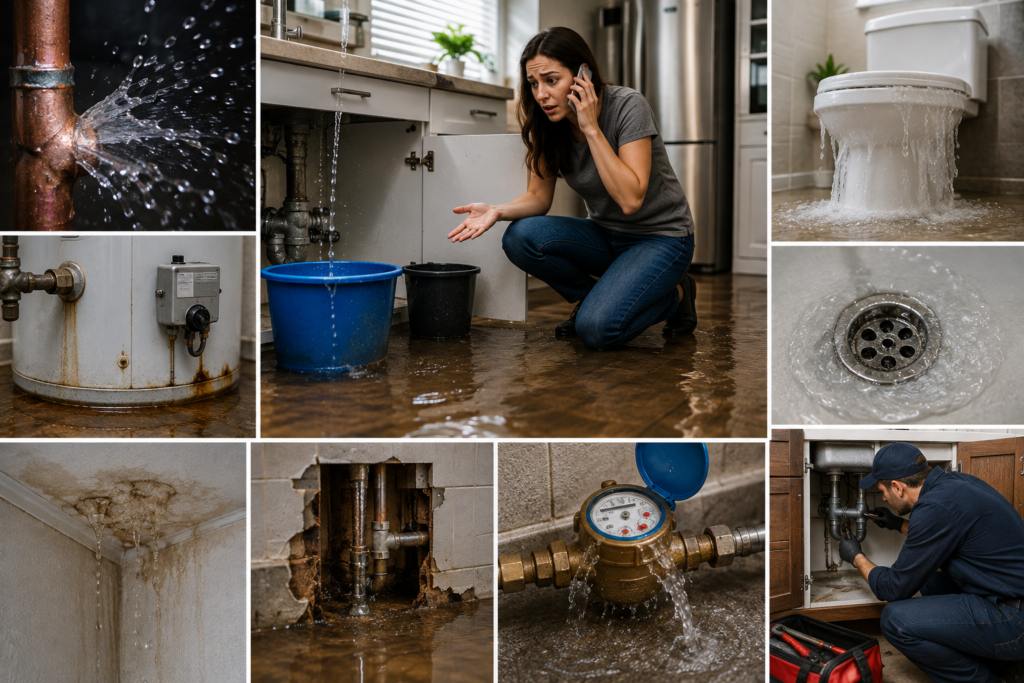
Certain plumbing situations qualify as genuine emergencies requiring immediate professional response, regardless of time of day.
- A burst pipe, which can flood a room within minutes and cause significant structural damage
- A gas smell near a water heater or gas line, which requires shutting off the gas supply and calling both a professional and, in serious cases, your gas utility
- Complete loss of water throughout the home, which could indicate a major supply line failure
- Sewage backing up into your home, which presents both property damage risk and genuine health hazards
- Flooding from a failed water heater or supply line that isn’t stopping after shutting off the affected fixture’s valve
In any of these situations, shutting off your main water supply, or gas supply if applicable, while waiting for professional help arrives can help limit damage in the meantime.
Comparing DIY-Friendly Issues vs Professional-Only Situations
| Issue | DIY-Friendly? | Why |
| Dripping faucet | Yes | Simple cartridge or washer replacement |
| Running toilet | Yes | Usually a flapper or fill valve issue |
| Single slow drain | Yes | Plunger or drain snake often resolves it |
| Multiple drains backing up | No | Likely main sewer line issue |
| No hot water throughout home | No | May involve heating element or gas connection |
| Burst pipe | No | Requires immediate professional repair |
| Persistent low pressure, whole house | No | Likely supply-side or corrosion issue |
| Gas smell near water heater | No | Genuine safety emergency |
Why Ignoring Plumbing Warning Signs Gets Expensive
Delaying professional help when these warning signs appear often leads to significantly higher repair costs down the line.
- Small leaks become bigger problems: A minor leak left unaddressed can gradually damage flooring, drywall, and even a home’s structural components, turning an affordable repair into a much larger renovation project.
- Water heater issues can escalate quickly: A water heater showing early warning signs, if ignored, can eventually fail completely, sometimes leading to flooding that damages surrounding areas.
- Sewer line problems worsen over time: Tree root intrusion or pipe damage affecting a sewer line typically gets worse without intervention, potentially leading to complete blockages or pipe collapse.
- Mold growth from hidden moisture: Persistent hidden leaks create the moisture conditions mold needs to grow, which can create both property damage and potential health concerns if left unaddressed.
How to Prepare Before Calling a Plumber
A little preparation before your plumber arrives can help the visit go more smoothly and potentially save on service costs.
- Document the issue: Taking photos or videos of the problem, along with noting when it started and any patterns you’ve observed, helps the plumber diagnose the issue more efficiently.
- Know your main shutoff valve location: Being able to quickly reference or point out your main water shutoff valve saves time if the plumber needs to test with water off.
- List any recent changes: Mention any recent renovations, new appliance installations, or other changes that might be relevant to diagnosing the current issue.
- Ask about emergency service fees: If you’re calling outside normal business hours, ask upfront about any additional emergency service charges so there are no surprises on your bill.
Choosing the Right Plumber for the Job
When it’s time to call a professional, choosing the right one matters just as much as recognizing that you need one.
- Verify licensing and insurance: Confirm the plumber holds appropriate licensing for your state and carries liability insurance to protect you if something goes wrong during the repair.
- Ask about experience with your specific issue: Some plumbers specialize in certain areas, like water heater installation or sewer line repair, so confirming relevant experience helps ensure quality work.
- Get a written estimate when possible: For non-emergency situations, a written estimate before work begins helps avoid unexpected costs and misunderstandings about scope.
- Check reviews and reputation: A consistent track record of quality work across multiple reviews is generally more reliable than a single glowing testimonial.
Signs of Fixture or Appliance-Specific Plumbing Trouble
Beyond whole-home issues, certain individual fixtures and appliances show warning signs worth watching closely.
- Toilet Issues Beyond a Simple Flapper
If your toilet continues running even after replacing the flapper, or if you notice the bowl water level fluctuating without explanation, this can indicate a cracked tank, a problem with the fill valve assembly, or even an issue further down the drain line.
- Washing Machine Drainage Problems
A washing machine that drains slowly or backs up during the spin cycle may indicate a clogged standpipe or drain line, which can sometimes signal a broader drainage issue affecting nearby plumbing as well.
- Dishwasher Backing Up Into the Sink
Water backing up into your sink during a dishwasher cycle often points to a clogged air gap or drain line connection, an issue that’s sometimes simple to resolve but can also indicate a more significant blockage.
- Persistent Toilet Clogs
A toilet that clogs frequently, even with normal use, may indicate a partial blockage further down the line or a toilet with an inadequate flush mechanism for your home’s plumbing system, both of which benefit from professional evaluation.
Understanding the Cost of Delayed Plumbing Repairs
Beyond the direct repair cost, delayed plumbing repairs often carry additional expenses that aren’t immediately obvious.
- Water damage restoration: Once water has damaged flooring, drywall, or subflooring, restoration costs typically far exceed what an early plumbing repair would have cost.
- Increased utility bills: A hidden leak continues wasting water and money every day it goes unaddressed, adding up considerably over weeks or months.
- Mold remediation: If moisture from an unaddressed leak leads to mold growth, remediation costs can be substantial, particularly if mold spreads into wall cavities or flooring materials.
- Emergency service premiums: Waiting until a problem becomes a genuine emergency often means paying after-hours or emergency service rates, which are typically higher than standard scheduled service calls.
Addressing plumbing warning signs promptly, rather than waiting to see if they resolve on their own, consistently proves to be the more cost-effective approach over time.
Conclusion
Recognizing the early warning signs of plumbing problems, from unexplained water bill increases to multiple drains backing up at once, helps you call a professional before a manageable issue turns into costly water damage. While minor problems like a dripping faucet or a single slow drain are often fine to handle yourself, anything involving your home’s main water supply, sewer line, gas connections, or water heater deserves prompt professional attention. Acting quickly on these signs, rather than waiting to see if the problem resolves on its own, remains the most reliable way to protect both your home and your budget.
Frequently Asked Questions
1- How do I know if a plumbing issue is an emergency?
Burst pipes, gas smells, sewage backups, and complete loss of water are all genuine emergencies requiring immediate professional attention, regardless of time of day.
2- Can I fix a slow drain myself before calling a plumber?
Yes, a plunger or drain snake often resolves minor, isolated slow drains. If the problem persists or affects multiple drains at once, it’s time to call a professional.
3- What does it mean if multiple drains back up at the same time?
This typically indicates a blockage in your main sewer line rather than an isolated fixture issue, and it generally requires professional diagnosis and repair.
4- Is a rise in my water bill always a sign of a leak?
Not always, but an unexplained increase without a corresponding change in usage is one of the most common early signs of a hidden leak and worth investigating.
5- Should I try to fix water heater problems myself?
Basic maintenance like flushing sediment is often manageable, but issues involving gas connections, electrical components, or significant leaks should be handled by a licensed professional.
6- What should I do if I smell gas near my water heater?
Leave the area, avoid using any switches or open flames, and contact your gas utility and a licensed plumber immediately, since this is a genuine safety emergency.