
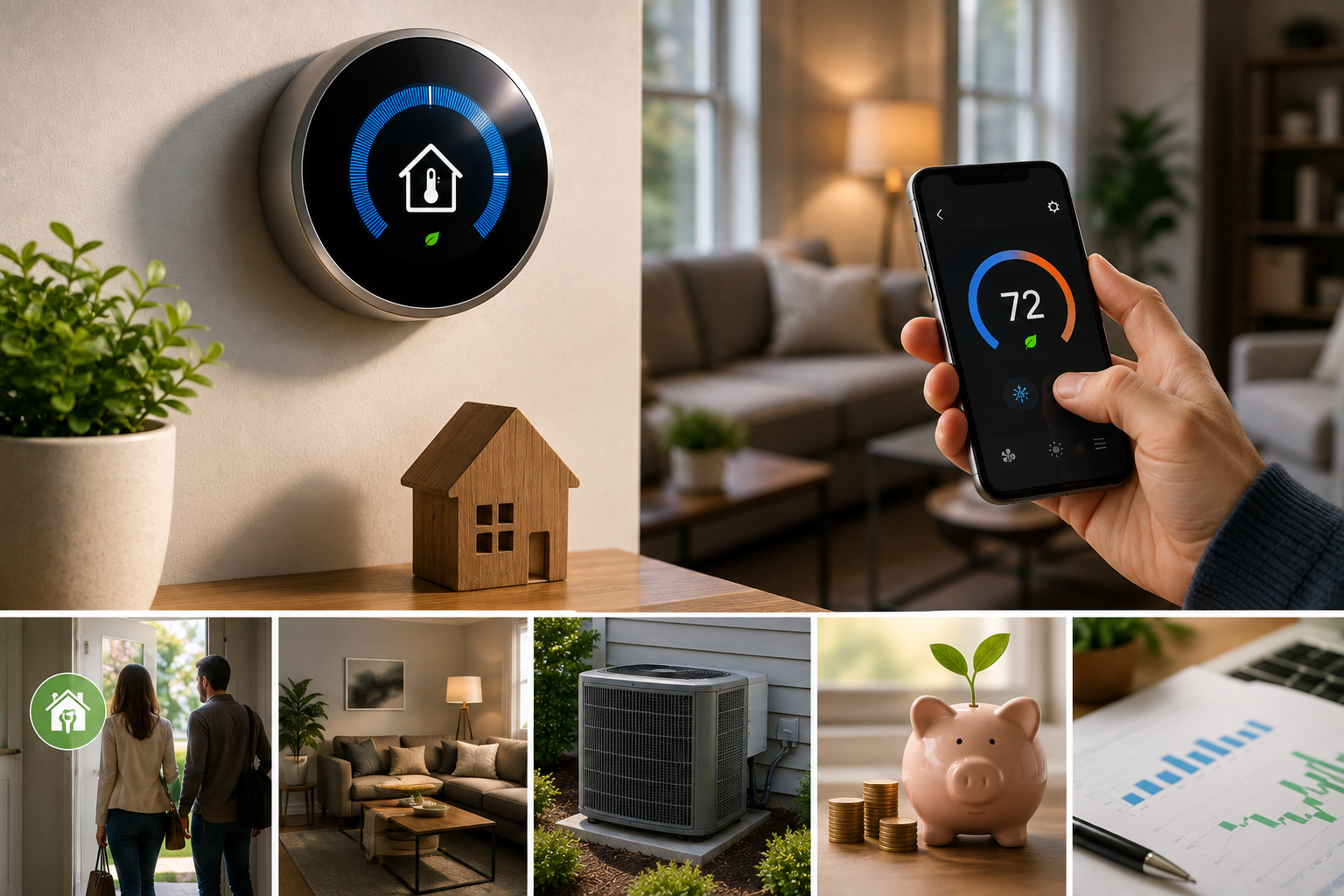
For most homeowners, yes, a smart thermostat genuinely pays for itself, typically within one to two years, through consistent energy savings that add up automatically without requiring you to change your daily habits. According to ENERGY STAR, certified smart thermostats save the average household approximately 8 percent on heating and cooling bills, translating to roughly $50 a year, though independent studies and manufacturer field data show a realistic range of 3 to 23 percent depending on your specific climate, HVAC system, and previous thermostat habits.
This guide breaks down exactly how much smart thermostats really save, what affects your specific payback period, and the compatibility issues worth checking before you buy. We’ll also cover ENERGY STAR certification, HVAC compatibility, and practical buying advice for American homeowners deciding whether this upgrade is worth it for their specific home.
By the end, you’ll have a realistic, honest picture of what a smart thermostat can actually do for your energy bills, rather than relying on the most optimistic number a manufacturer happens to advertise.
Are Smart Thermostats Worth It?
For most households, yes. ENERGY STAR’s official, verified average puts savings at around 8 percent of heating and cooling costs, and even at that conservative figure, a $70 to $250 thermostat typically pays for itself within one to two years, especially when combined with common utility rebates. The technology delivers the most value for households currently using a manual or ignored programmable thermostat, since you’re capturing genuine savings from behavior you weren’t previously managing consistently.
Where a smart thermostat offers less clear value is for households that are already diligent about manually adjusting their thermostat throughout the day, since much of the potential savings comes specifically from automating behavior that wasn’t happening consistently before.
Understanding the Real Savings Numbers
Savings claims for smart thermostats vary widely across the internet, and it’s worth understanding where the more reliable figures actually come from.
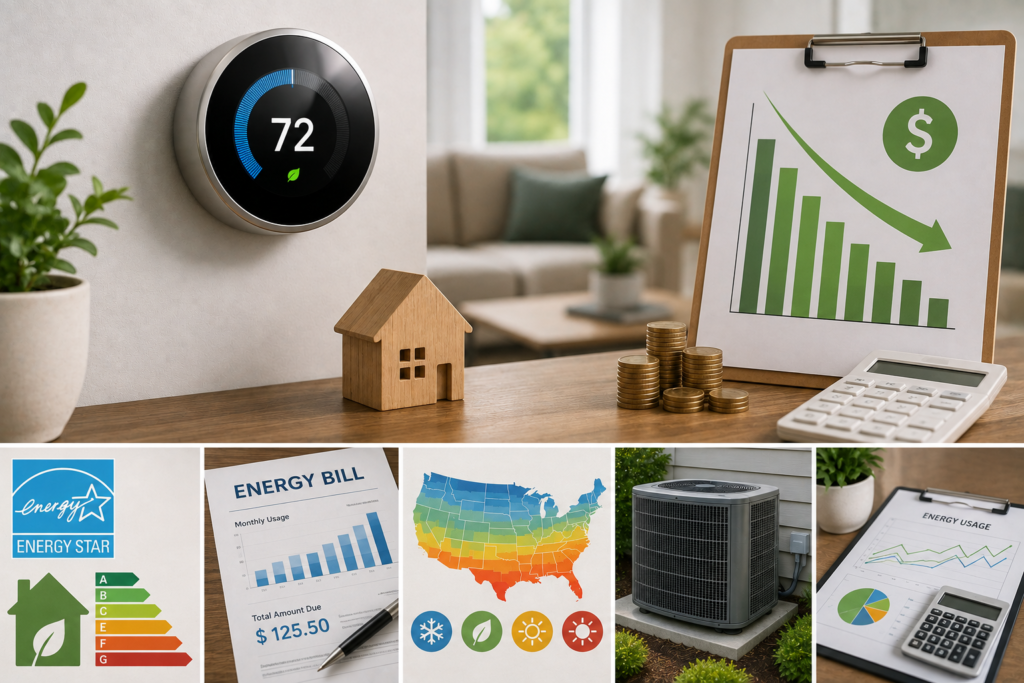
ENERGY STAR’s official average, based on EPA-reviewed field data submitted by manufacturers for certification, is approximately 8 percent of heating and cooling costs, or about $50 per year for a typical household. This is the most conservative, independently verified figure available, and it’s a meaningfully more reliable baseline than manufacturer marketing claims, which sometimes cite savings as high as 20 to 26 percent based on their own internal studies.
The honest, defensible range across independent sources generally falls between 3 and 15 percent of your heating and cooling spend, with the U.S. Department of Energy noting that consistent thermostat setbacks can save up to 10 percent annually on their own, smart automation or not. Where your specific household lands within that range depends on five key factors.
The Five Factors That Determine Your Actual Savings
- Your current thermostat habits: If you’re upgrading from a manual dial or a programmable thermostat you never actually used consistently, you’ll likely see savings toward the higher end of the range, since you’re capturing the full value of consistent scheduling for the first time.
- Your climate zone: Homes in colder climates with higher heating costs generally see faster payback and larger absolute dollar savings, since even a modest percentage reduction translates to more actual dollars when your baseline heating bill is already high.
- Your HVAC system type: Different system types respond differently to smart scheduling and features like geofencing, affecting how much of the theoretical savings translates into your actual bill.
- Your home’s size and insulation: Larger or poorly insulated homes generally have more room for meaningful savings, since temperature setbacks have a bigger absolute impact when there’s more square footage and heat loss to manage.
- Local energy rates: Higher electricity or gas rates mean the same percentage savings translates into more actual dollars saved each year.
Calculating Your Own Realistic Payback Period
Rather than relying on a generic number, you can estimate your own payback period with a simple calculation using your actual home’s numbers.
- The basic formula: Payback period (in months) equals your thermostat’s purchase price minus any rebate, divided by your estimated annual savings divided by 12.
- A conservative example: If your annual heating and cooling costs run $900, an 8 percent savings estimate comes to about $72 per year, or $6 per month. If your thermostat costs $80 with no installation fee and no rebate, that’s a simple payback period of about 1.1 years, and roughly $640 in net savings over a 10-year period.
- A cold-climate example: A household in a colder region spending significantly more on heating each year, say $2,200 annually, could see proportionally larger dollar savings even at the same 8 percent rate, sometimes paying off even a premium thermostat in under a year.
Since most people keep a thermostat for 7 to 10 years, even modest annual savings compound into meaningful total value over the device’s full lifespan, often returning many times the original purchase price.
Comparing Savings Estimates by Source
| Source | Savings Estimate | Notes |
| ENERGY STAR (official average) | ~8% or ~$50/year | Most conservative, EPA-reviewed field data |
| U.S. Department of Energy | Up to 10% from consistent setbacks | Applies to any consistent scheduling, smart or manual |
| Independent aggregated range | 3%–15% | Accounts for household variation |
| Manufacturer-claimed figures | 10%–26% | Based on brand-specific internal studies, treat with more caution |
Don’t Skip This: Checking HVAC Compatibility First
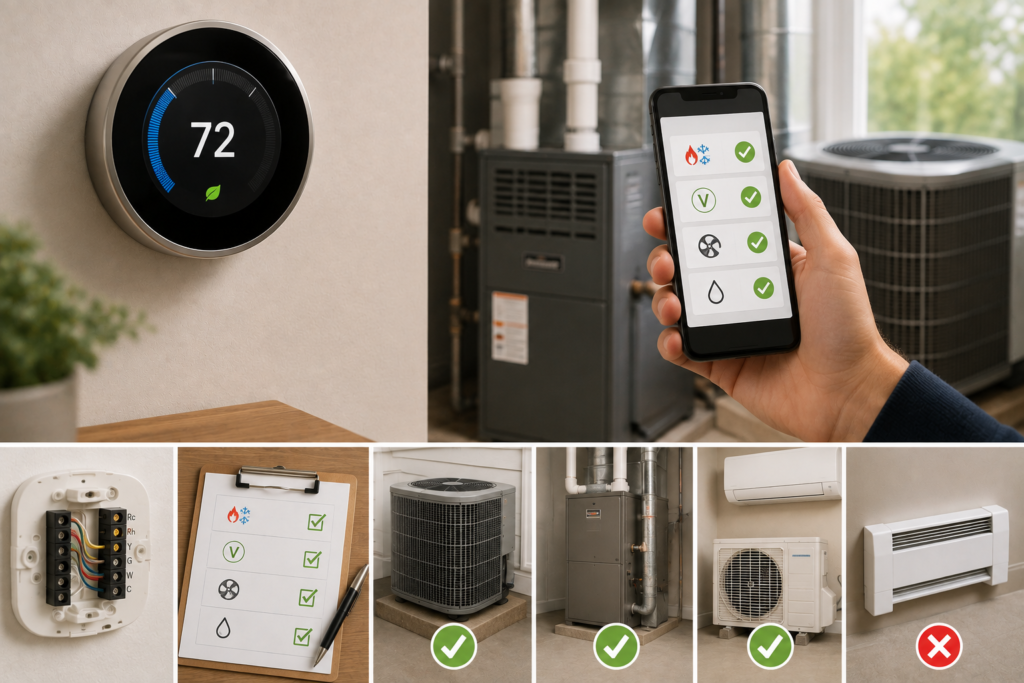
Before getting excited about potential savings, it’s genuinely important to confirm a smart thermostat will actually work with your specific heating and cooling system.
The most important compatibility question isn’t whether you have a C-wire specifically, it’s whether your system is a standard 24-volt low-voltage HVAC setup, which covers the vast majority of American homes. If your system falls outside this standard, certain mainstream smart thermostats may not be compatible without additional adapters or professional installation help.
Compatibility checklist before buying:
- Confirm your system uses standard 24VAC low-voltage wiring
- Check whether you have an existing C-wire, or whether your chosen thermostat includes a power extender kit or adapter for systems without one
- Verify compatibility with your specific system type, including heat pumps, dual-fuel systems, or multi-stage equipment, since not every smart thermostat supports every configuration
- Confirm compatibility with any smart home ecosystem you already use, if voice assistant integration matters to you
Don’t Leave Rebates on the Table
Utility rebates can meaningfully shorten your payback period, sometimes cutting it nearly in half, yet many homeowners never check whether one’s available in their area.
Many U.S. utility providers offer rebates ranging from $25 to $200 for ENERGY STAR certified smart thermostats, and in some cases, rebates cover as much as 50 percent of the device’s cost. Checking your specific utility’s rebate program, along with resources like DSIRE’s database of state and local energy incentives, before you buy can meaningfully improve your specific payback math.
Comparing Smart Thermostat Features Worth Actually Paying For
Not every feature marketed on premium smart thermostats delivers proportional value, and it’s worth understanding which ones genuinely affect savings versus which are mainly about convenience.
- Geofencing: Uses your phone’s location to automatically adjust temperature when you leave or approach home, capturing savings from empty-house periods without requiring manual scheduling.
- Learning algorithms: Some premium models learn your schedule and preferences over time, gradually building an efficient schedule without requiring extensive manual programming upfront.
- Remote sensors: Additional sensors placed in different rooms help balance temperature across a home more evenly, particularly useful in homes with uneven heating or cooling zones.
- Energy usage reports: Detailed usage tracking helps you understand exactly where and when your HVAC system is working hardest, informing further efficiency adjustments over time.
- Voice assistant integration: This is primarily a convenience feature rather than a savings driver, worth prioritizing based on your existing smart home setup rather than expecting it to meaningfully affect your bill.
Who Benefits Most From a Smart Thermostat
Matching this upgrade to your specific situation matters more than assuming universal value for every household.
- You’ll likely see strong value if: You currently use a manual or basic programmable thermostat inconsistently, live in a climate with significant heating or cooling costs, or regularly leave your home empty for extended periods during the day.
- You may see more modest value if: You’re already diligent about manually adjusting your thermostat throughout the day, live in a mild climate with low heating and cooling costs overall, or have a home that’s rarely empty during peak HVAC hours.
- Renters should note: More affordable smart thermostats offer a genuinely quick payback even on lower overall utility bills, and many are designed for straightforward removal and reinstallation if you move, though it’s worth checking with your landlord before making any permanent changes.
Practical Buying Advice
A few specific considerations help you choose confidently and maximize your actual return on this investment.
- Confirm compatibility before purchasing: Double-check your HVAC system type and wiring against the specific thermostat’s requirements, since incompatibility issues are a common source of returns and frustration.
- Check for local rebates first: A quick search of your utility provider’s website or a database like DSIRE can meaningfully reduce your effective purchase price before you even factor in energy savings.
- Prioritize ENERGY STAR certification: This certification requires verified field data demonstrating real-world savings, offering more reliable assurance than uncertified alternatives making similar claims.
- Match features to your actual needs: If you already manually adjust your thermostat diligently, a basic scheduling model may offer sufficient value without paying extra for premium features like advanced learning algorithms.
- Factor in installation costs honestly: While many models are designed for straightforward DIY installation, confirm this matches your comfort level, since professional installation costs can meaningfully extend your payback period if required.
A Genuinely Good Investment for Most Homes
For the large majority of American households, a smart thermostat represents a genuinely sound investment, typically paying for itself within one to two years through ENERGY STAR-verified savings of around 8 percent on heating and cooling costs, with real-world results ranging higher depending on your climate, habits, and HVAC system. The households that benefit most are those currently using a manual or inconsistently programmed thermostat, while already-diligent thermostat managers may see more modest returns. Before buying, confirm your system’s compatibility, check for local utility rebates, and choose ENERGY STAR certification as your baseline standard, and you’ll have a realistic, well-grounded expectation of what this popular smart home upgrade can actually do for your energy bills.
Frequently Asked Questions
1- How much does a smart thermostat actually save on average?
ENERGY STAR’s official average is approximately 8 percent of heating and cooling costs, or about $50 per year, though independent sources show a realistic range of 3 to 15 percent depending on your specific household factors.
2- How long does it take for a smart thermostat to pay for itself?
Most ENERGY STAR certified models pay for themselves within one to two years, and this timeline often shortens considerably with an available utility rebate.
3- Do I need a C-wire to install a smart thermostat?
Not always. The more important question is whether your HVAC system uses standard 24-volt low-voltage wiring, since many smart thermostats include adapters or power extender kits for homes without an existing C-wire.
4- Are manufacturer savings claims of 20% or more realistic?
These figures come from individual company studies rather than independent, EPA-reviewed data, so it’s reasonable to treat them with some caution and rely on ENERGY STAR’s more conservative average as your baseline expectation.
5- Is a smart thermostat worth it if I already manually adjust my thermostat regularly?
The savings potential is somewhat smaller in this case, since much of a smart thermostat’s value comes from automating behavior that wasn’t happening consistently before.
6- Do utility rebates really make a meaningful difference?
Yes, rebates ranging from $25 to $200, and sometimes covering up to half the device cost, can significantly shorten your payback period, making it worth checking your specific utility provider before purchasing.