
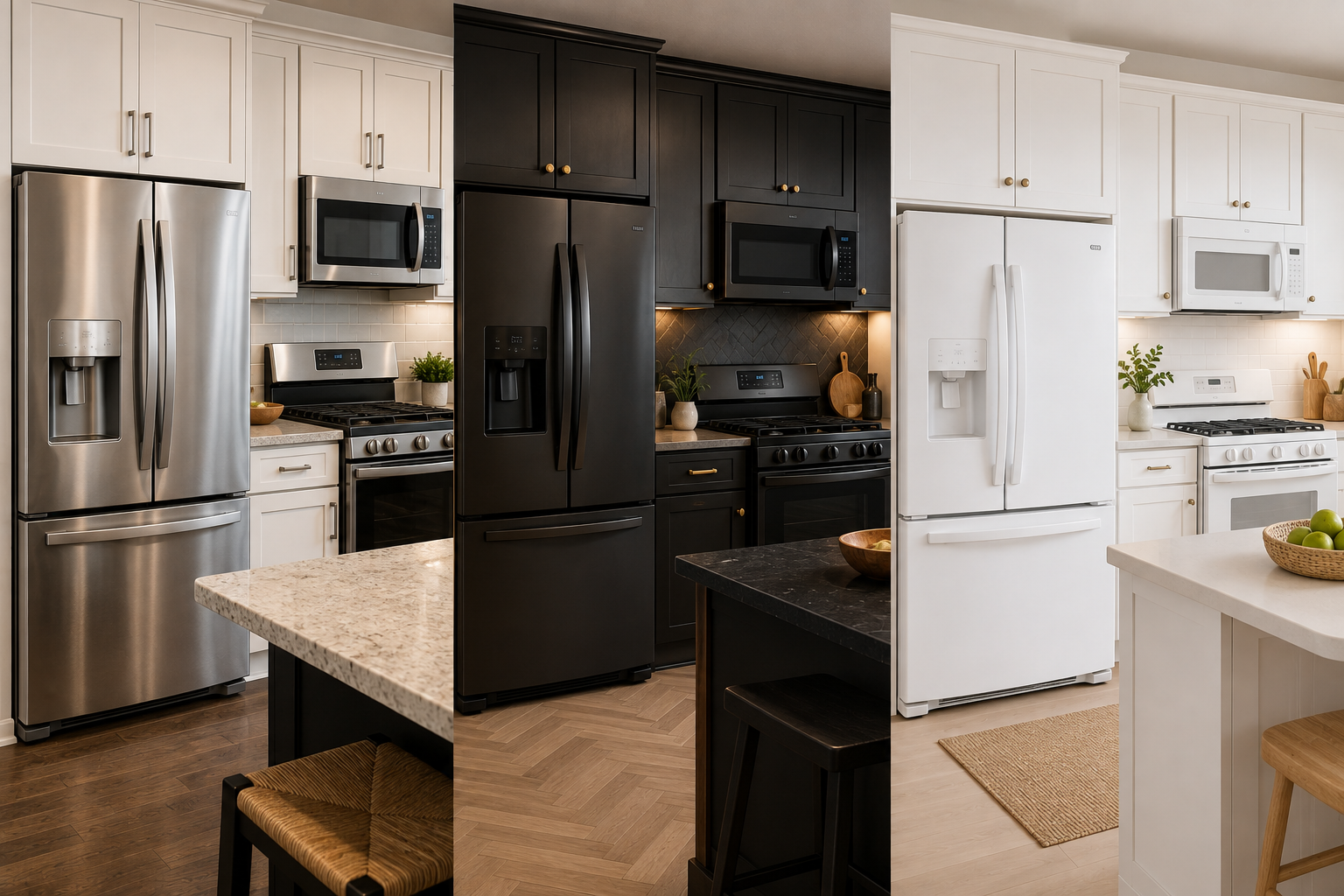
Picking an appliance finish feels like a small decision until you’re standing in a showroom staring at three near-identical refrigerators, each a different colour. The truth is, this choice affects your kitchen’s overall look, your daily cleaning routine, and even your home’s resale value for years to come.
This guide breaks down the real differences among stainless steel, black, and white appliances, covering durability, maintenance, and style so you can choose with genuine confidence. We’ll also cover black stainless steel appliances, matching finishes, and practical buying advice for American homeowners.
By the end, you’ll know exactly which finish suits your kitchen, your household’s cleaning habits, and your long-term plans for the home.
Stainless Steel vs Black vs White Appliances: Which Finish Should You Choose?
If you want the safest resale value and the broadest design compatibility, stainless steel appliances remain the most universally accepted choice among American homeowners. If you prioritise a modern, moody aesthetic and don’t mind a slightly different cleaning routine, black stainless steel offers a striking alternative. If you want a budget-friendly, fingerprint-resistant option that brightens a kitchen, white appliances are worth serious consideration.
There’s no single “best” answer here, since the right choice depends heavily on your kitchen’s style, your household’s cleaning tolerance, and how long you plan to stay in the home. We’ll walk through each option in detail below, covering the genuine pros and cons of each.
Stainless Steel Appliances: The Long-Standing Standard
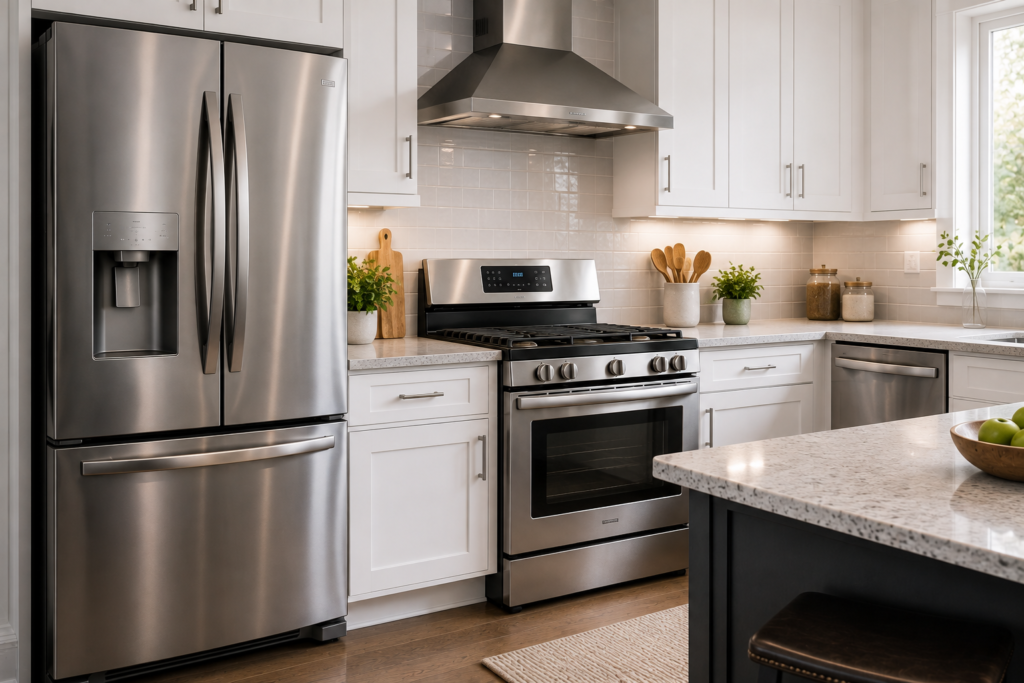
Stainless steel has dominated American kitchens for decades, and it remains the default choice in most new home builds and kitchen renovations across the country.
Pros of Stainless Steel
Stainless steel pairs well with almost any kitchen style, from modern to traditional, making it the safest choice if you’re unsure about your long-term design direction. It’s also widely recognised by home buyers, which tends to support resale value when it eventually comes time to sell.
Most kitchen appliance lines offer stainless steel as the default or most widely available finish, meaning you’ll typically have the widest range of model options and price points to choose from compared with other finishes.
Cons of Stainless Steel
Traditional stainless steel shows fingerprints and smudges more readily than other finishes, particularly on refrigerator doors and dishwasher fronts that get touched often throughout the day. It also requires more frequent wiping to maintain that polished look, especially in households with children or pets.
Scratches on stainless steel can be more visible than on darker or matte finishes, and deeper scratches are generally difficult to fully repair without professional refinishing.
Who Stainless Steel Suits Best
Stainless steel works best for homeowners prioritising resale value, broad style compatibility, and the classic, professional kitchen look that remains a dependable default across nearly every price point and appliance brand.
Black Stainless Steel Appliances: The Modern Alternative
Black stainless steel has grown significantly in popularity over the past decade, offering a deeper, moodier alternative to traditional silver stainless steel finishes.
Pros of Black Stainless Steel
Many black stainless steel lines use a coated finish specifically engineered to resist fingerprints and smudges better than traditional polished stainless. This makes it a genuinely practical choice for busy households, despite its darker overall colour.
Black stainless also pairs strikingly well with dark cabinetry, matte black hardware, and contemporary kitchen designs, giving it a distinct, upscale feel that traditional stainless steel doesn’t quite achieve on its own.
Cons of Black Stainless Steel
Availability can be more limited than traditional stainless steel, particularly across budget and mid-range appliance lines, so you may end up with fewer model choices overall. Pricing also tends to run slightly higher than standard stainless steel for otherwise comparable models.
Resale perception can vary by region and individual buyer preference, since black stainless is a comparatively newer trend without the same decades-long track record as traditional stainless steel.
Who Black Stainless Suits Best
Black stainless works best for homeowners wanting a modern, dramatic kitchen look, particularly when paired with dark or contrasting cabinetry, and who don’t mind a somewhat smaller selection of available appliance models.
White Appliances: The Classic Brightener
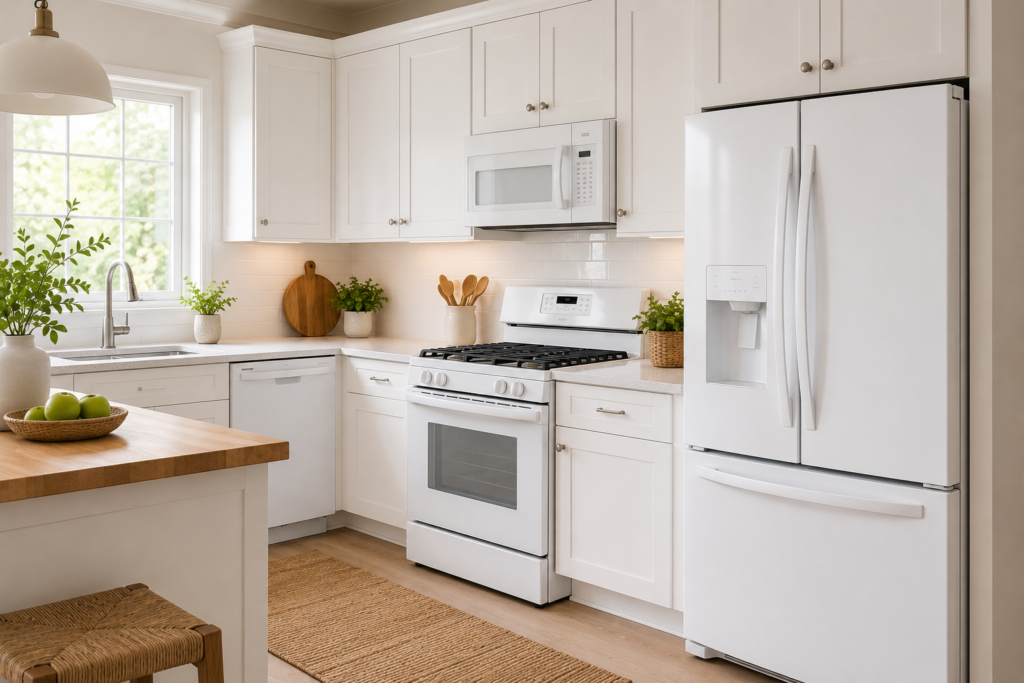
White appliances have cycled in and out of trend for decades but remain a genuinely practical, budget-conscious option that’s well worth reconsidering today.
Pros of White Appliances
White finishes hide fingerprints and smudges far better than polished stainless steel, making them a practical choice for busy kitchens and households with young children. White appliances also tend to sit at a lower price point than comparable stainless steel or black stainless models.
A white finish brightens smaller kitchens and pairs naturally with farmhouse, cottage, and traditional design styles, all of which have seen renewed popularity in recent years across American homes.
Cons of White Appliances
White appliances can show yellowing over time, particularly with older models or lower-quality finishes exposed to heat and direct sunlight. They can also read as somewhat dated in certain design contexts, particularly kitchens aiming for a strictly modern or industrial aesthetic.
Resale perception is more mixed than stainless steel, since some buyers strongly prefer stainless while others genuinely appreciate white’s brighter, more classic overall look.
Who White Appliances Suit Best
White appliances suit homeowners working with a tighter budget, those styling a farmhouse or cottage-inspired kitchen, and households that prioritise fingerprint resistance over achieving a strictly modern appearance.
Side-by-Side Comparison
| Factor | Stainless Steel | Black Stainless | White |
| Fingerprint resistance | Lower, shows prints easily | Higher, coated to resist smudges | High |
| Price | Mid-range | Mid-to-high | Generally lowest |
| Style versatility | Very high | Best in modern/dark kitchens | Farmhouse/traditional |
| Resale perception | Strong, well-established | Growing, but a newer trend | Mixed, more subjective |
| Model availability | Widest selection | More limited | Moderate |
| Maintenance | Frequent wiping needed | Easier daily cleaning | Easy cleaning, can yellow over time |
Matching Appliance Finishes to Your Kitchen Style
Beyond personal preference, certain finishes naturally suit certain kitchen design directions better than others, and it helps to think about this before committing to a full appliance suite.
- Modern and contemporary kitchens: Stainless steel or black stainless both work well here, with black stainless offering a slightly bolder, more dramatic statement overall.
- Farmhouse and cottage kitchens: White appliances pair naturally with this style, especially alongside shaker cabinetry and warm wood accents throughout the room.
- Industrial-style kitchens: Black stainless steel complements exposed metal, dark cabinetry, and raw material finishes particularly well in this design direction.
- Traditional kitchens: Stainless steel remains the safest, most broadly compatible choice, though white can also work well within lighter, classic colour schemes.
- Transitional kitchens: Stainless steel generally offers the most flexibility here, bridging both modern and traditional design elements comfortably without feeling out of place.
Should You Mix and Match Appliance Finishes?
It’s a common question, and the honest answer depends on your kitchen’s overall design intent. Mixing finishes, such as a stainless refrigerator paired with a black stainless range, can absolutely work if there’s a clear, intentional design logic tying the choices together, like matching dark hardware or accents elsewhere in the room.
However, mismatched finishes without any coordinating design element can make a kitchen feel unplanned or visually inconsistent. If you’re unsure, matching all major appliances to the same finish remains the safer, more cohesive choice overall, particularly if resale value is a genuine priority for your household.
Maintenance Considerations by Finish
Cleaning routine is one of the most practical, day-to-day factors in choosing an appliance finish, and it’s worth being honest with yourself about your household’s habits before deciding.
Cleaning Stainless Steel
Traditional stainless steel benefits from wiping in the direction of the grain using a soft cloth and a dedicated stainless steel cleaner, which helps avoid streaking and smearing. Households with children or frequent kitchen traffic should expect to wipe stainless surfaces more often to keep them looking genuinely polished.
Cleaning Black Stainless Steel
Most black stainless finishes can be cleaned with a soft cloth along with mild soap and water, since the coated finish generally resists fingerprints better than traditional stainless. Avoid abrasive cleaners or scouring pads, since these can damage the specialised coating over time.
Cleaning White Appliances
White appliances generally clean easily with standard household cleaners, though it’s worth avoiding harsh chemicals that could contribute to yellowing over the years. Regular, gentle cleaning helps maintain the finish’s brightness for considerably longer.
Resale Value: Does Appliance Finish Really Matter?
Appliance finish can genuinely influence buyer perception, though its actual impact on final sale price is generally modest compared with factors like kitchen layout, cabinetry condition, and the home’s overall condition.
Stainless steel remains the most broadly recognised, neutral choice among home buyers, which is why it’s frequently recommended for homeowners planning to sell within the next several years. Black stainless and white appliances can appeal strongly to buyers who share your specific style preference, but they carry slightly more subjective risk than the well-established neutrality of traditional stainless steel.
If you’re renovating primarily for your own long-term enjoyment rather than an imminent sale, personal style preference should reasonably outweigh purely resale-driven considerations.
Budget Considerations Across Finishes
Price differences between finishes vary by brand and appliance category, but some general patterns hold fairly consistently across most manufacturers and product lines.
- White appliances generally sit at the most accessible price point across most appliance categories and brands
- Traditional stainless steel typically falls into the mid-range, offering the widest range of options across nearly every budget
- Black stainless steel often carries a modest premium over traditional stainless, largely due to the specialised coating process involved
If budget is your primary concern, white appliances often deliver strong value without any significant compromise on function or long-term durability.
Common Mistakes When Choosing Appliance Finish
- Choosing based on current trends alone: Finishes fall in and out of style over time, so it’s worth considering how a finish will look in your kitchen over the next decade, not just this particular year.
- Ignoring your household’s cleaning habits: A finish that looks stunning in photos can quickly become a daily frustration if it doesn’t match how much upkeep your household is realistically willing to commit to.
- Overlooking resale plans: If you plan to sell within a few years, it’s worth weighing broader buyer appeal alongside your own personal preference before committing.
- Mixing finishes without a clear design plan: Combining different finishes without an intentional, coordinating design thread can make a kitchen feel unplanned rather than deliberately curated.
- Assuming all black stainless finishes perform identically: Coating quality varies meaningfully by brand and model, so it’s worth checking fingerprint resistance claims and reviews for the specific model you’re actually considering.
Conclusion
Choosing between stainless steel, black stainless, and white appliances ultimately comes down to balancing your personal style preferences with practical considerations like maintenance, budget, and long-term resale plans. Stainless steel remains the safest, most broadly compatible choice for most kitchens and resale situations, offering the widest selection of models across nearly every price point. Black stainless offers a modern, fingerprint-resistant alternative for bolder design directions, particularly in kitchens built around dark cabinetry and contemporary styling. White appliances bring brightness, affordability, and genuinely easy maintenance, making them especially well suited to farmhouse and traditional kitchen styles. Whichever finish you ultimately choose, make sure it aligns with your household’s real cleaning habits and your kitchen’s overall design direction, rather than simply following whatever finish happens to be trending this year. A thoughtful choice now will serve your kitchen well for many years of daily use, so weigh style, upkeep, cost, and long-term durability together before you buy rather than deciding on looks alone.
Frequently Asked Questions
1- Is black stainless steel harder to maintain than regular stainless steel?
Generally no. Most black stainless finishes are specifically coated to resist fingerprints and smudges better than traditional polished stainless steel.
2- Do white appliances still look modern?
Yes, particularly within farmhouse, cottage, and traditional kitchen designs, where white appliances remain a genuinely popular and stylistically appropriate choice.
3- Does appliance finish affect home resale value?
It can have a modest influence, with stainless steel generally considered the safest, most broadly appealing choice for resale purposes across most markets.
4- Can I mix stainless steel and black stainless appliances?
Yes, particularly if there’s a clear design connection, such as matching dark hardware or accent details elsewhere in the kitchen.
5- Do white appliances yellow over time?
Some white finishes can yellow with age, particularly with prolonged heat or direct sunlight exposure, though quality does vary meaningfully by brand and model.
6- Which finish is easiest to keep clean daily?
Black stainless steel and white finishes generally show fingerprints and smudges noticeably less than traditional polished stainless steel.