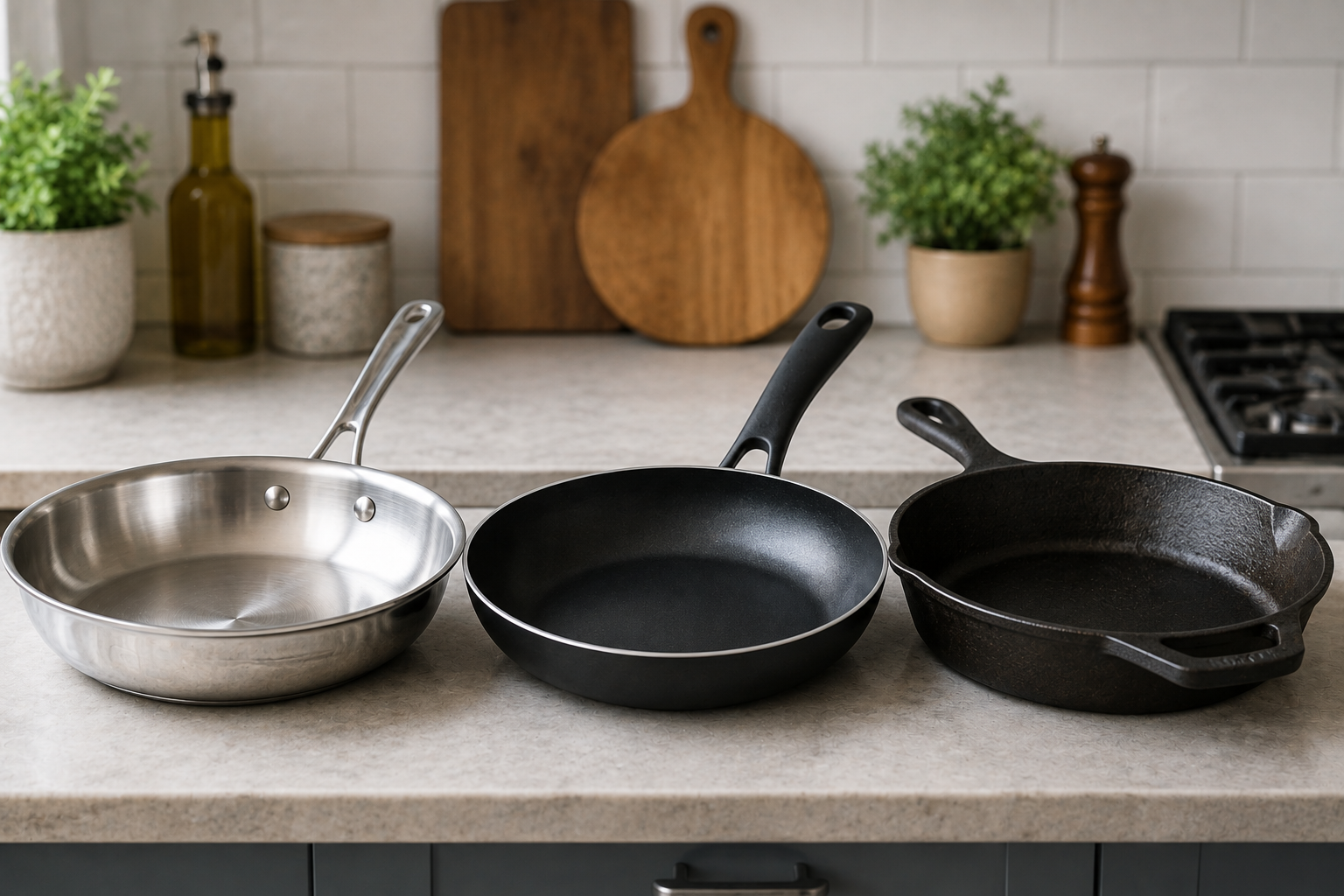
Walk into any cookware aisle and you’ll find these three materials dominating the shelves, and for good reason. Stainless steel vs nonstick vs cast iron isn’t really a competition with one clear winner, it’s three genuinely different tools built for different cooking tasks, each with real strengths and real limitations.
This guide breaks down how each material actually performs, where each one shines, and how most well-equipped kitchens end up using all three rather than choosing just one. By the end, you’ll know exactly which material fits which task in your own cooking routine.
Stainless Steel vs Nonstick vs Cast Iron Cookware
Stainless steel is the most versatile, durable option for everyday cooking, searing, sautéing, and making sauces, without any coating to wear down over time, though it requires proper technique to prevent sticking. Nonstick is unmatched for delicate foods like eggs and fish, offering the easiest cleanup, but its coating degrades over years of use and needs periodic replacement. Cast iron delivers exceptional heat retention and can genuinely last generations with proper care, making it ideal for searing and high-heat cooking, though it requires more maintenance than the other two. Most well-equipped kitchens end up owning all three, using each for the specific tasks it handles best rather than trying to make one material do everything.
How Each Material Actually Works
1- Stainless Steel
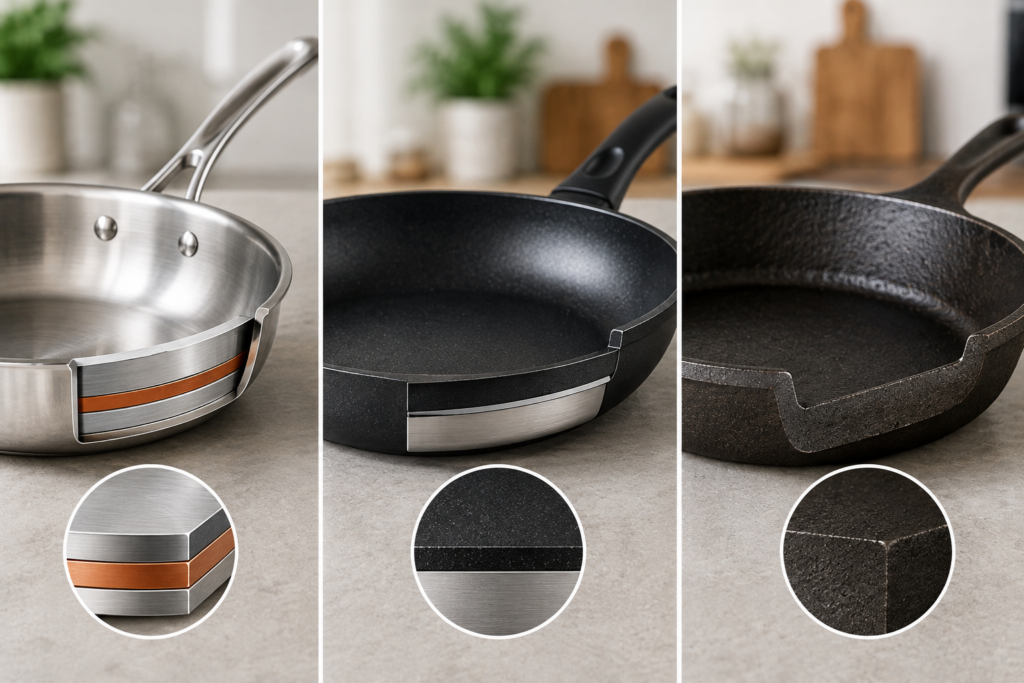
Stainless steel itself doesn’t conduct heat particularly well on its own, which is why quality stainless steel cookware typically includes an aluminum or copper core sandwiched between layers of steel, a construction method known as tri-ply or multi-clad. This combination gives you stainless steel’s durability and non-reactive surface with meaningfully better heat distribution than plain stainless steel alone would provide.
2- Nonstick (PTFE-Coated)
Traditional nonstick cookware uses a PTFE-based coating, commonly known by the brand name Teflon, applied over an aluminum or stainless steel base. This coating creates an extremely low-friction surface that allows food to release with minimal oil, but the coating itself is a separate layer that can wear down, scratch, or degrade with heat and time, unlike stainless steel or cast iron, where the cooking surface is the base material itself.
3- Cast Iron
Cast iron cookware is cast from a single piece of iron, giving it exceptional density and heat retention. Its natural nonstick quality develops gradually through seasoning, a process of baking thin layers of oil onto the surface, which builds up over repeated use and proper care into a genuinely effective, though not indestructible, nonstick layer.
Side-by-Side Comparison
| Feature | Stainless Steel | Nonstick (PTFE) | Cast Iron |
| Nonstick performance | Low (technique-dependent) | Excellent | Good (once seasoned) |
| Durability | Very high | Moderate | Very high (generational) |
| Heat retention | Moderate | Low to moderate | Excellent |
| Maintenance | Low | Low | Higher (seasoning, drying) |
| High-heat cooking/searing | Excellent | Poor (coating degrades) | Excellent |
| Acidic food compatibility | Excellent | Good | Poor (can strip seasoning) |
| Weight | Light to moderate | Light | Heavy |
| Induction compatible | Yes | Usually yes | Yes |
| Dishwasher safe | Usually yes | Rarely recommended | No |
| Typical lifespan | Decades | A few years per pan | Generations |
Cooking Performance: Where Each Material Excels
1- Stainless Steel’s Strengths
Stainless steel handles high-heat searing exceptionally well, developing the browned crust (often called fond) that forms the base for pan sauces, something nonstick surfaces specifically prevent by design. It’s non-reactive, meaning acidic ingredients like tomatoes, wine, or citrus won’t affect the pan or pick up any metallic taste, making it the clear choice for sauces, braises, and deglazing.
2- Nonstick’s Strengths
Nonstick cookware is unmatched for delicate, sticky, or low-fat cooking, eggs, pancakes, crepes, and delicate fish fillets all benefit enormously from a coating that releases food easily without tearing or sticking. It also requires the least amount of added oil of any of the three materials, appealing to cooks specifically minimizing fat in their cooking.
3- Cast Iron’s Strengths
Cast iron’s exceptional heat retention makes it ideal for searing steaks, achieving a deep, even crust that stainless steel can approach but rarely quite matches at the same temperature consistency. It also transitions seamlessly from stovetop to oven, making it a strong choice for dishes like cornbread, frittatas, or a seared steak finished in the oven.
Maintenance and Care Requirements
1- Stainless Steel Maintenance
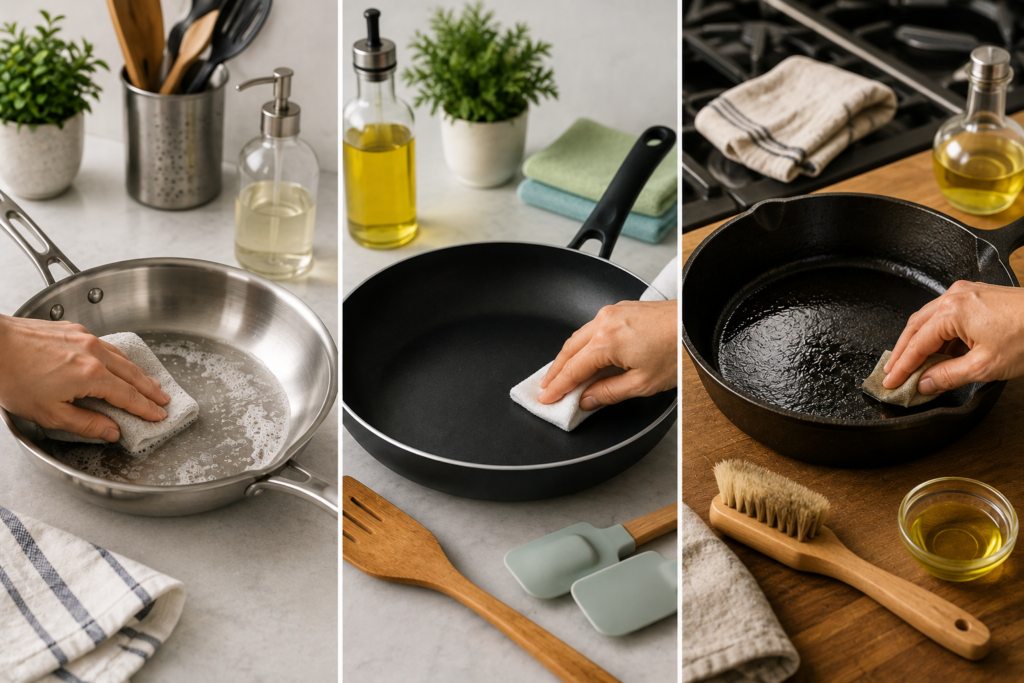
Stainless steel is largely low-maintenance, generally dishwasher-safe (though hand washing helps preserve its finish over time), and doesn’t require seasoning or special drying procedures. Food residue and slight discoloration can typically be removed with basic cleaning products or a stainless steel-specific cleaner.
2- Nonstick Maintenance
Nonstick cookware requires gentler handling: avoiding metal utensils that can scratch the coating, using lower to moderate heat settings since high heat accelerates coating degradation, and typically hand washing rather than dishwasher cycles, which can shorten coating lifespan.
3- Cast Iron Maintenance
Cast iron requires the most involved care of the three: regular seasoning to maintain its nonstick surface and prevent rust, avoiding prolonged soaking in water, and drying thoroughly (often with a light coat of oil) immediately after washing. This higher maintenance requirement is the primary trade-off for cast iron’s exceptional durability and performance.
Durability and Long-Term Value
1- Stainless Steel’s Longevity
Quality stainless steel cookware can genuinely last decades with minimal degradation, since there’s no coating to wear away, just the base metal itself, which resists denting, warping, and staining far better than most alternatives.
2- Nonstick’s Shorter Lifespan
Even well-cared-for nonstick cookware typically needs replacing every few years, since the coating gradually loses effectiveness through normal heat cycling and use, regardless of how carefully you avoid scratches and overheating. This is worth factoring into long-term cost comparisons, since nonstick pans represent a recurring purchase rather than a one-time investment.
3- Cast Iron’s Exceptional Lifespan
Properly maintained cast iron can genuinely last for generations, with many home cooks using pans inherited from parents or grandparents that still perform excellently after decades of consistent use, provided rust and severe damage were avoided along the way.
Health and Safety Considerations
1- Stainless Steel
Quality food-grade stainless steel doesn’t release any coating or PFAS into food, since there’s no coating involved. It’s widely considered one of the more straightforward options from a material-safety standpoint.
2- Nonstick and PFAS
Traditional PTFE-based nonstick coatings have drawn increasing regulatory attention in several states in recent years, with some states now restricting the sale of cookware containing certain PFAS compounds. If continuing to use traditional nonstick cookware, avoiding use once the surface becomes visibly scratched, flaking, or worn is a reasonable precaution, since damage to the coating can increase the risk of material leaching into food. PFAS-free ceramic-coated nonstick alternatives are increasingly available for those wanting nonstick convenience without traditional PTFE coatings.
3- Cast Iron
Cast iron introduces no synthetic coating at all, relying instead on natural seasoning built from repeated use with cooking oil. Some studies have noted that cooking acidic foods in cast iron can slightly increase dietary iron intake, generally considered a minor and often beneficial effect for most people, though it’s worth being aware of for those managing specific iron-related health conditions.
Which Material Suits Which Cooking Tasks?
| Cooking Task | Best Material | Why |
| Searing steak | Cast iron or stainless steel | Superior heat retention and browning |
| Scrambled eggs, omelets | Nonstick | Effortless release, minimal oil needed |
| Tomato-based sauces | Stainless steel | Non-reactive with acidic ingredients |
| Cornbread, stovetop-to-oven dishes | Cast iron | Excellent heat retention, oven-safe |
| Pancakes, crepes | Nonstick | Even, delicate release without tearing |
| Deglazing for pan sauces | Stainless steel | Fond development, non-reactive surface |
| Long-term, heirloom-quality investment | Cast iron | Can genuinely last generations |
| Everyday quick sautéing | Stainless steel or nonstick | Depends on food type and stickiness |
Building a Balanced Cookware Collection
Rather than choosing one material exclusively, most well-equipped kitchens benefit from owning pieces across all three categories:
- A large stainless steel skillet or sauté pan for searing, sauces, and everyday high-heat cooking
- A small nonstick pan dedicated specifically to eggs and delicate foods
- A cast iron skillet for steaks, cornbread, and stovetop-to-oven dishes
- A stainless steel stockpot or saucepan for soups, pasta, and general boiling tasks
This combination covers the overwhelming majority of home cooking needs, letting each material handle the specific tasks it performs best rather than compromising with a single material trying to do everything.
Which Should You Buy First?
If You’re Starting From Scratch
A mid-sized stainless steel skillet and saucepan cover the widest range of everyday cooking tasks, making them a reasonable starting point before adding specialized pieces.
If You Cook a Lot of Eggs or Delicate Foods
Prioritize a quality nonstick pan early, since stainless steel and cast iron both handle these specific foods considerably less gracefully without extensive technique refinement.
If You Sear Meat Regularly
A cast iron skillet is worth prioritizing, given its unmatched heat retention for achieving a proper sear, along with its long-term durability justifying the investment even for a first purchase.
Cost Comparison Over Time
Nonstick cookware typically has the lowest upfront cost per pan but represents a recurring expense, since coatings need replacing every few years regardless of care. Stainless steel carries a moderate to higher upfront cost but essentially becomes a one-time purchase given its multi-decade lifespan. Cast iron often has the lowest long-term cost of all three, since even basic cast iron skillets are relatively affordable and can realistically outlast every other piece of cookware in your kitchen with proper care.
Common Mistakes to Avoid
- Using metal utensils on nonstick cookware, accelerating coating wear and reducing its usable lifespan
- Cooking acidic foods in cast iron regularly, which can strip seasoning and require more frequent reseasoning
- Expecting stainless steel to behave like nonstick without proper technique, leading to frustrating sticking issues that proper preheating and oil usage would prevent
- Continuing to use visibly damaged nonstick cookware, increasing the risk of coating material transferring into food
- Choosing one material for every cooking task, rather than matching material to the specific job at hand
Conclusion
The stainless steel vs nonstick vs cast iron debate doesn’t really have a single winner, because each material was genuinely built for different jobs. Stainless steel offers unmatched everyday versatility and durability, nonstick makes delicate foods effortless, and cast iron delivers exceptional searing performance and a lifespan that can outlast its owner. Rather than choosing just one, building a collection that includes all three, and knowing which one to reach for based on what you’re actually cooking, will serve your kitchen far better than trying to make a single material handle every task.
Frequently Asked Questions
1- Is stainless steel or nonstick better for everyday cooking?
Neither is universally better, they suit different tasks. Stainless steel handles searing, sauces, and acidic ingredients better, while nonstick excels specifically at eggs, delicate fish, and other foods prone to sticking.
2- Is cast iron better than stainless steel for searing?
Cast iron generally offers slightly better heat retention for searing due to its density, though quality stainless steel with a thick aluminum or copper core performs very well too, and many cooks find the difference marginal in practice.
3- How long does nonstick cookware typically last?
Most nonstick cookware needs replacing every few years, even with proper care, since the coating gradually degrades through normal heat cycling and use over time.
4- Can I use metal utensils on cast iron?
Yes, cast iron’s surface, unlike nonstick coatings, can generally tolerate metal utensils without significant damage, since there’s no separate coating layer to scratch away.
5- Do I need to season stainless steel cookware?
No, seasoning isn’t necessary or particularly effective on stainless steel the way it is on cast iron or carbon steel, since stainless steel’s surface doesn’t develop the same polymerized oil layer.
6- Is it safe to cook acidic foods in cast iron?
Occasional acidic cooking is generally fine, but regular, prolonged cooking of highly acidic foods like tomato sauce can strip cast iron’s seasoning over time, requiring more frequent reseasoning to maintain its nonstick quality.
7- Which material is best for a first-time cookware buyer?
A versatile stainless steel skillet and saucepan generally offer the most practical starting point, covering the widest range of everyday cooking tasks before adding a dedicated nonstick pan and cast iron skillet as specific needs become clear.