
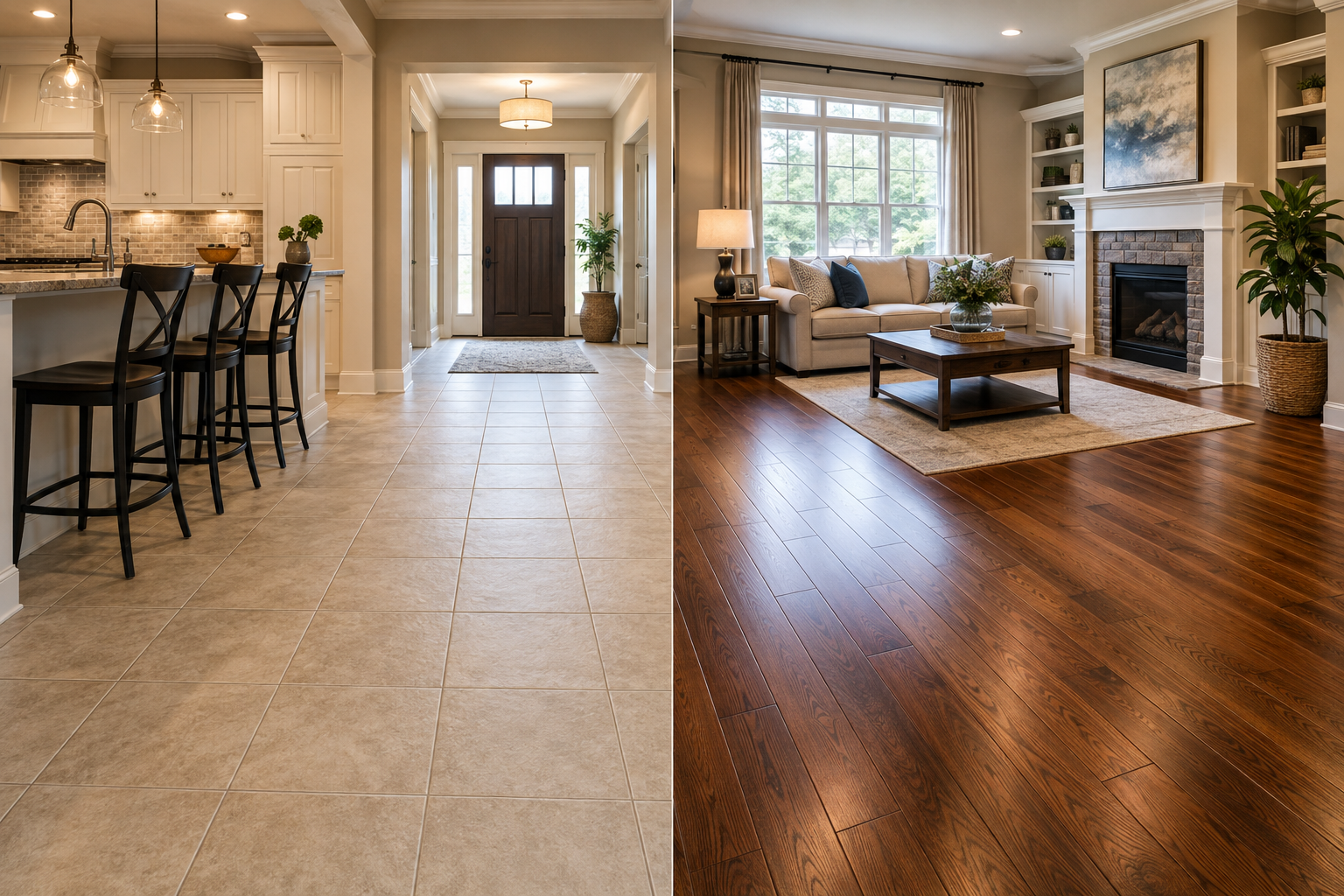
These two flooring materials represent genuinely different philosophies: tile prioritizes durability and water resistance above nearly everything else, while hardwood prioritizes warmth, comfort, and a timeless natural material. The tile vs hardwood flooring decision comes up constantly for American homeowners, particularly when planning kitchens, entryways, or open-concept spaces that connect multiple room types.
This guide compares these two materials in depth, covering durability, water resistance, comfort, cost, and maintenance, so you can confidently choose the right flooring for each specific space in your home.
Tile vs Hardwood Flooring
Tile is the stronger choice for rooms with significant moisture exposure or heavy traffic, bathrooms, entryways, mudrooms, and kitchens, thanks to its outstanding water resistance and scratch-proof surface. Hardwood remains the preferred choice for living rooms, bedrooms, and dining rooms, where its warmth, comfort underfoot, and classic aesthetic matter more than water resistance, and where its potential positive influence on home resale value is a genuine consideration. For kitchens specifically, both materials have real advocates, tile handles water and heavy use exceptionally well, while hardwood offers a warmer, more forgiving surface for a room where people often stand for extended periods.
Understanding Each Material
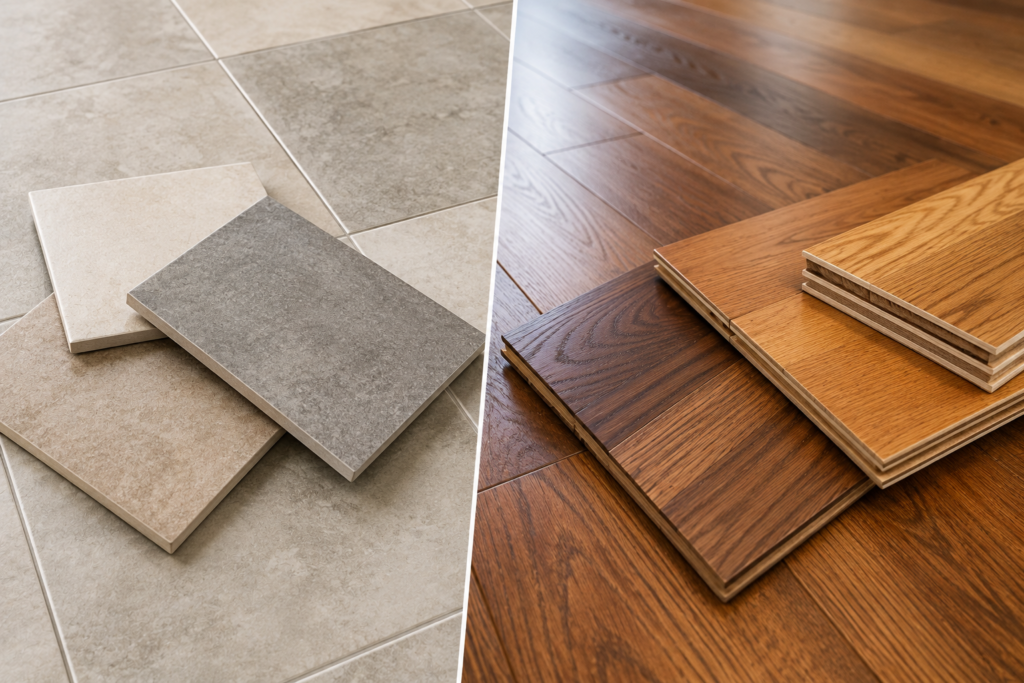
Tile
Ceramic and porcelain tile are manufactured from clay-based materials fired at high temperatures, creating an extremely hard, water-resistant surface. Porcelain is generally denser and less porous than ceramic, offering slightly better water resistance and durability, though both perform well in most residential applications.
Hardwood
Hardwood flooring comes as either solid hardwood, milled from a single piece of wood throughout its thickness, or engineered hardwood, featuring a real wood veneer bonded over a plywood or composite core for improved dimensional stability. Both offer a genuine natural wood surface, distinct from synthetic wood-look alternatives like laminate or vinyl.
Side-by-Side Comparison
| Feature | Tile | Hardwood |
| Water resistance | Excellent | Poor to low |
| Durability | Very high (won’t scratch or dent easily) | High (but scratches and dents more easily) |
| Refinishing | Not applicable (doesn’t wear the same way) | Yes, can be sanded and refinished |
| Comfort underfoot | Hard, cold | Warmer, more forgiving |
| Sound | Can echo, harder acoustics | Warmer acoustics |
| Typical cost | Moderate | Moderate to higher |
| Installation | Professional recommended | Often professional, some DIY options |
| Best rooms | Bathrooms, kitchens, entryways | Living rooms, bedrooms, dining rooms |
| Lifespan | Very long (structurally, tile itself rarely wears out) | Decades, with periodic refinishing |
Durability Compared
Tile’s Structural Durability
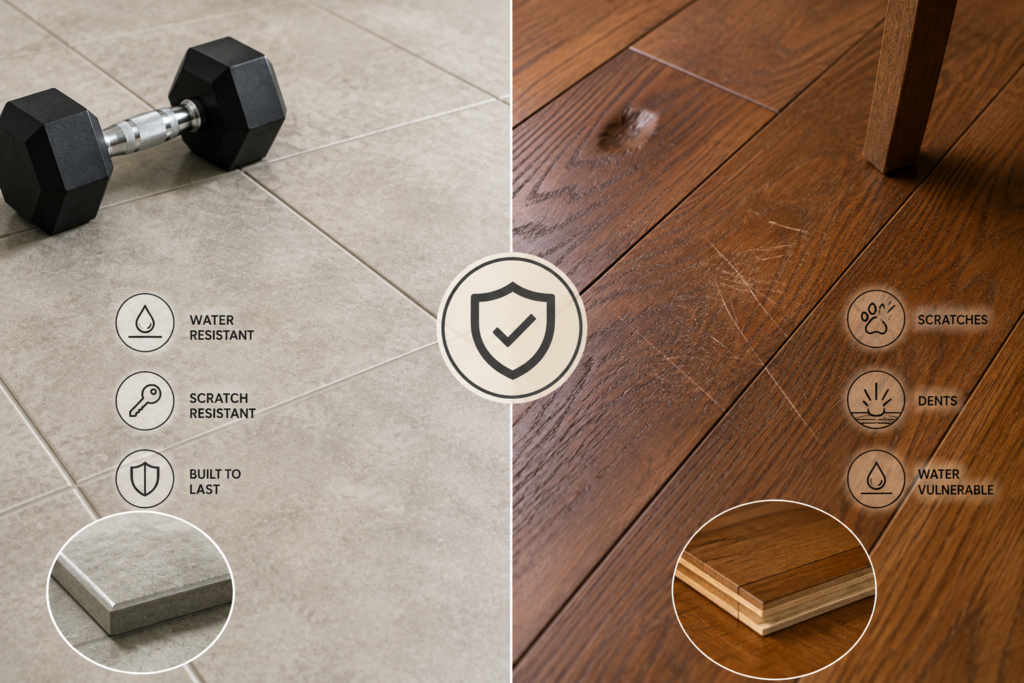
Tile, particularly porcelain, is exceptionally resistant to scratching, denting, and general wear, since its hard, fired surface doesn’t degrade the way organic materials can. Structurally, tile itself has an extremely long functional lifespan, with grout maintenance being the more common long-term concern rather than the tile material failing outright.
Hardwood’s Different Kind of Durability
Hardwood is more vulnerable to surface scratches, dents from dropped items, and general wear over time, but its key durability advantage is the ability to be sanded and refinished, sometimes multiple times over its lifespan, restoring its original appearance even after significant surface wear.
Which “Wins” on Durability?
This depends on what durability means to you. If avoiding scratches, dents, and moisture damage matters most, tile is the more durable choice. If you value a material that can be restored to like-new condition after years of wear rather than simply resisting wear entirely, hardwood’s refinishing capability offers a different, genuinely valuable form of long-term durability.
Water Resistance: Tile’s Clear Advantage
Tile offers outstanding water resistance, making it the traditional standard for bathrooms and other consistently wet spaces. Properly sealed grout further reinforces this resistance, though grout itself does require periodic resealing to maintain optimal water resistance over time.
Hardwood, by contrast, is genuinely vulnerable to water damage. Moisture exposure can cause warping, cupping, staining, and in more severe or prolonged cases, structural damage to the wood itself. This makes solid hardwood generally unsuitable for bathrooms and other consistently wet areas, and even engineered hardwood requires caution and prompt cleanup of any spills.
Comfort and Temperature Underfoot
Tile’s Hard, Cool Surface
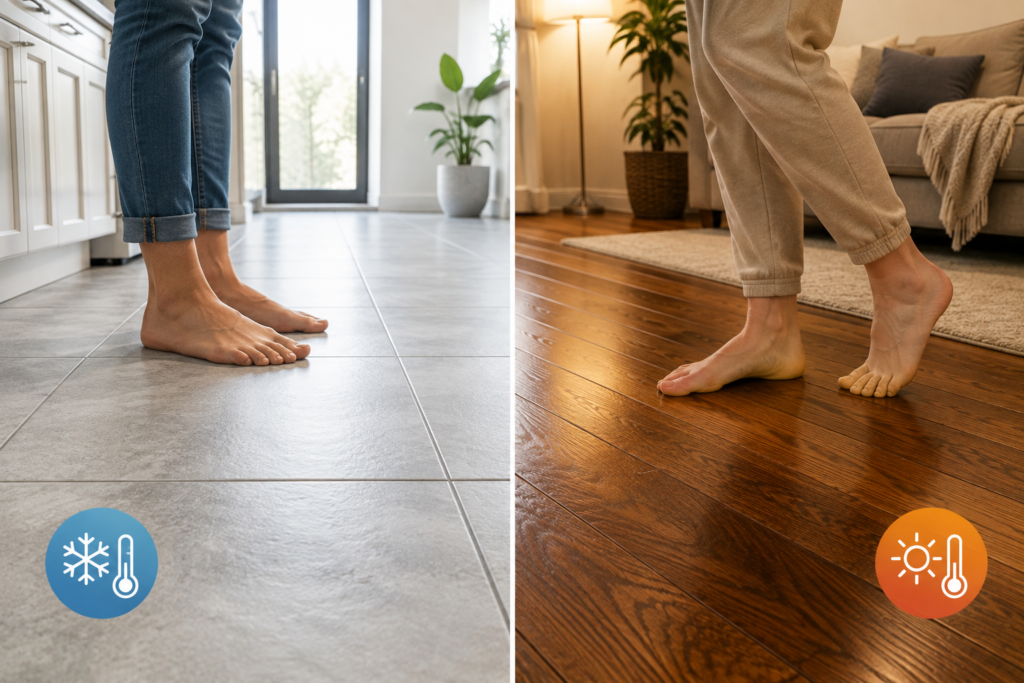
Tile is a hard, unforgiving surface, which can be tiring to stand on for extended periods and genuinely cold underfoot, particularly in colder climates or during winter months, unless paired with radiant floor heating.
Hardwood’s Warmer Feel
Hardwood offers a noticeably warmer, more forgiving surface underfoot compared to tile, both in terms of actual surface temperature and the material’s natural give compared to tile’s rigid hardness.
Radiant Heat Flooring Options
For homeowners specifically concerned about tile’s cold surface, radiant floor heating (electric or hydronic systems installed beneath the tile) can meaningfully improve comfort, warming the tile surface directly rather than relying solely on ambient room heating. This addition is more commonly paired with tile than hardwood, given tile’s excellent heat conductivity and the popularity of radiant heat specifically in bathrooms.
Sound and Acoustics
Tile’s hard, dense surface tends to reflect sound more than absorb it, which can create a slightly echoing quality in larger, more open tiled spaces. Hardwood offers somewhat warmer acoustics, absorbing sound marginally better than tile, though both are considerably more reflective than carpet.
Cost Comparison
Tile Costs
Tile pricing varies considerably based on material (ceramic generally costs less than porcelain), size, and design complexity, with basic options representing a moderate investment and premium, large-format, or intricately patterned tile costing considerably more.
Hardwood Costs
Hardwood, particularly solid hardwood, generally represents one of the higher-cost flooring investments, reflecting the cost of genuine wood material and often more involved, professional installation. Engineered hardwood typically costs somewhat less than solid hardwood while still offering a genuine wood surface.
Long-Term Cost Considerations
While hardwood’s upfront cost is often higher, its refinishing capability can extend its usable lifespan considerably, potentially offsetting some of that initial cost difference over many years. Tile’s primary long-term cost consideration is periodic grout maintenance and resealing, generally a lower ongoing expense than hardwood refinishing.
Installation Comparison
Tile Installation
Tile installation is a more involved, technical process requiring proper substrate preparation, precise cutting, and careful setting to ensure a level, properly adhered surface, generally recommended as a professional installation for most homeowners rather than a DIY project.
Hardwood Installation
Solid hardwood typically also benefits from professional installation, given the precision needed for proper acclimation and installation technique. Engineered hardwood sometimes offers more accessible click-lock installation options, making certain engineered products more approachable for experienced DIYers than solid hardwood or tile.
Best Flooring for Kitchens: Tile or Hardwood?
This is one of the most commonly debated room-specific flooring decisions, and both materials have genuine merit here.
Tile’s case for kitchens centers on its outstanding resistance to spills, splashes, and heavy daily use, along with easy cleanup, making it a practical, low-worry choice for a room that sees frequent moisture and activity.
Hardwood’s case for kitchens centers on comfort, many people spend considerable time standing at a kitchen counter, and hardwood’s warmer, more forgiving surface can be genuinely more comfortable than tile’s hard surface over extended periods. Hardwood also often visually connects a kitchen seamlessly to adjoining living or dining spaces already floored in wood.
The right choice ultimately depends on how much you prioritize water resistance and easy cleanup (favoring tile) versus comfort and visual continuity with adjoining wood-floored spaces (favoring hardwood, with careful attention to spill cleanup).
Choosing by Room
| Room | Recommended Choice | Why |
| Bathroom | Tile | Essential water resistance |
| Kitchen | Either (tile or hardwood) | Depends on priority: water resistance vs comfort |
| Entryway/mudroom | Tile | Handles moisture, dirt, and heavy traffic well |
| Living room | Hardwood | Comfort and warmth priority |
| Bedroom | Hardwood | Comfort and warmth priority |
| Dining room | Hardwood | Comfort and classic aesthetic |
| Laundry room | Tile | Water resistance for washing machine area |
Hardwood Flooring Pros and Cons
Pros:
- Genuine natural material with lasting character and warmth
- Can be sanded and refinished multiple times over its lifespan
- Comfortable, warm feel underfoot
- Frequently cited as a positive factor in home resale value
Cons:
- Vulnerable to water damage, unsuitable for consistently wet rooms
- More prone to scratches and dents than tile
- Generally higher upfront cost than many tile options
- Requires periodic refinishing to maintain long-term appearance
Tile Pros and Cons
Pros:
- Outstanding water resistance, ideal for wet or high-moisture rooms
- Extremely durable surface, resistant to scratching and denting
- Wide range of styles, sizes, and design options
- Long structural lifespan with proper grout maintenance
Cons:
- Hard, cold surface underfoot without radiant heating
- Can feel acoustically harsh or echo in larger spaces
- Grout requires periodic cleaning and resealing
- Installation is more technical, generally requiring professional work
Porcelain Tile vs Hardwood: A Closer Look
Since porcelain represents the higher-performing tile option, it’s worth a specific comparison against hardwood for homeowners weighing premium choices in both categories. Porcelain offers meaningfully better water and stain resistance than any hardwood option, along with superior scratch and dent resistance, making it the more practically durable choice for demanding, high-traffic, or wet environments. Hardwood, even at a premium level, still carries the inherent moisture vulnerability common to all wood flooring, though it offers a warmth, comfort, and natural material authenticity that porcelain, despite increasingly realistic wood-look designs, doesn’t fully replicate.
Maintenance Comparison
Tile Maintenance
Requires regular sweeping and mopping, with occasional deeper cleaning of grout lines, which can accumulate dirt and staining over time without regular attention. Grout resealing every one to two years helps maintain water resistance and stain protection.
Hardwood Maintenance
Requires regular sweeping or vacuuming and prompt cleanup of any spills to prevent moisture damage. Periodic refinishing, typically needed every several years to a decade or more depending on traffic and wear, restores the surface’s appearance and protective finish.
Resale Value Considerations
Hardwood flooring is frequently cited by real estate professionals as a material that can positively influence buyer perception, particularly in main living areas, given its enduring popularity and association with quality. Tile, particularly in bathrooms and kitchens, is generally an expected standard in these specific rooms and, while perhaps less frequently cited as a standalone value-boosting feature, contributes to a home’s overall practical appeal and move-in readiness when well-installed and properly maintained.
Common Mistakes to Avoid
- Installing hardwood in bathrooms or consistently wet areas, where its vulnerability to moisture makes it a genuinely poor material match
- Underestimating tile’s cold, hard surface without considering radiant heating for rooms where comfort matters
- Skipping grout sealing and maintenance, allowing tile’s water resistance advantage to diminish over time
- Choosing hardwood for a kitchen without planning for prompt spill cleanup, given the room’s inherently higher moisture exposure
- Overlooking installation complexity, attempting a DIY tile or solid hardwood installation without adequate experience or preparation
Conclusion
The tile vs hardwood flooring decision comes down to weighing water resistance and durability against warmth and comfort for each specific room in your home. Tile remains the clear choice for bathrooms, entryways, and other consistently wet or high-traffic spaces, while hardwood’s comfort and classic appeal make it the preferred choice for living rooms, bedrooms, and dining spaces. For kitchens specifically, either material can work well depending on your priorities, water resistance and easy cleanup, or comfort and visual continuity with adjoining living spaces. Matching each room’s actual conditions and your household’s genuine priorities, rather than choosing one material throughout your entire home, will give you flooring that performs well and feels right in every space.
Frequently Asked Questions
1- Is tile or hardwood better for a kitchen?
Both have genuine merit. Tile offers superior water resistance and easy cleanup, while hardwood offers a warmer, more comfortable surface for standing, with the right choice depending on which priority matters more to your household.
2- Can hardwood flooring be used in bathrooms?
Generally not recommended, given hardwood’s vulnerability to moisture damage from regular water exposure. Tile remains the more practical, durable choice for bathrooms specifically.
3- Is porcelain tile better than ceramic tile?
Porcelain is generally denser and slightly more water-resistant and durable than ceramic, though both perform well in most standard residential applications.
4- Does hardwood flooring increase home resale value more than tile?
Hardwood is frequently cited by real estate professionals as a material that can positively influence buyer perception in main living areas, though tile is generally an expected standard in bathrooms and kitchens specifically.
5- Can I add radiant heat under tile flooring?
Yes, radiant floor heating pairs particularly well with tile given its excellent heat conductivity, commonly used in bathrooms to address tile’s naturally cold surface underfoot.
6- Which is more expensive, tile or hardwood?
This varies by specific product, but hardwood, particularly solid hardwood, generally represents a higher upfront investment than most standard tile options, though premium tile can approach or exceed hardwood pricing in some cases.
7- How often does hardwood flooring need to be refinished?
This depends on traffic and wear, but hardwood typically needs refinishing every several years to a decade or more to restore its appearance and protective finish.