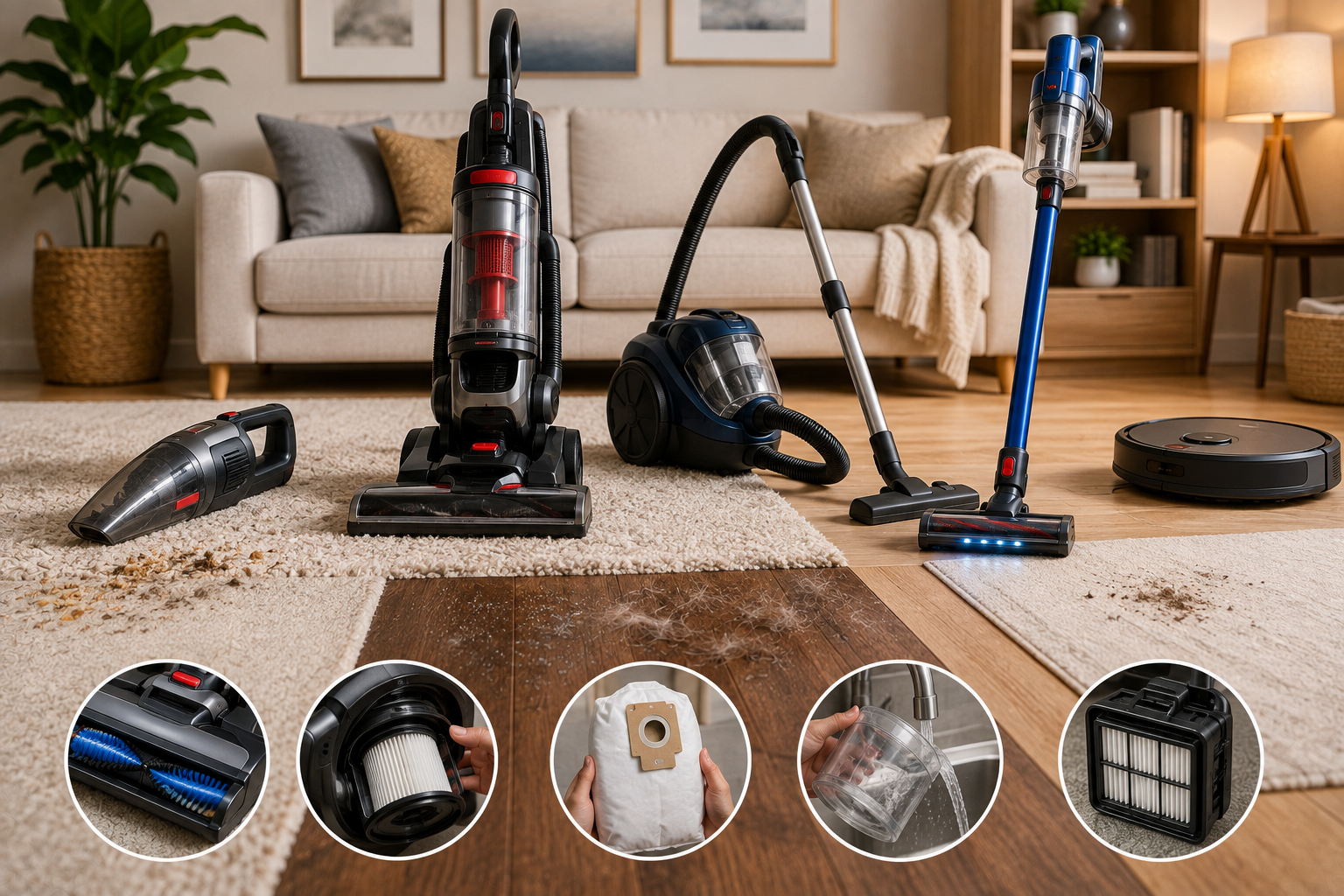
Standing in the vacuum aisle, you’re facing a genuinely confusing set of choices, upright or canister, bagged or bagless, HEPA or standard filtration, all before you’ve even gotten to brand or price. A proper vacuum cleaner buying guide starts by matching vacuum type to your actual home, your flooring, your allergy concerns, and whether pets are part of the picture, since the “best” vacuum genuinely varies depending on what you’re asking it to do.
This guide breaks down every major vacuum category, explains the real trade-offs between bagged and bagless, HEPA and standard filtration, and walks through exactly which type suits which household, so you can shop with confidence instead of guessing based on price tag alone.
Vacuum Cleaner
For most American homes with a mix of carpet and hard flooring, a full-size upright or canister vacuum with a HEPA filter remains the strongest all-around choice, offering the deepest cleaning power and largest debris capacity. Canister vacuums generally edge out uprights for quieter operation and better maneuverability into tight spaces and upholstery, while uprights typically offer stronger suction and larger capacity for heavy-duty carpet cleaning. If allergies are a genuine concern in your household, prioritize a bagged model with a sealed HEPA system, since bagged vacuums generally contain allergens more effectively during disposal than bagless models. For smaller homes, quick cleanups, or as a supplement to a full-size vacuum, a cordless stick vacuum adds genuine convenience without replacing the deeper cleaning power a full-size unit provides.
The Major Vacuum Types Explained
Upright Vacuums
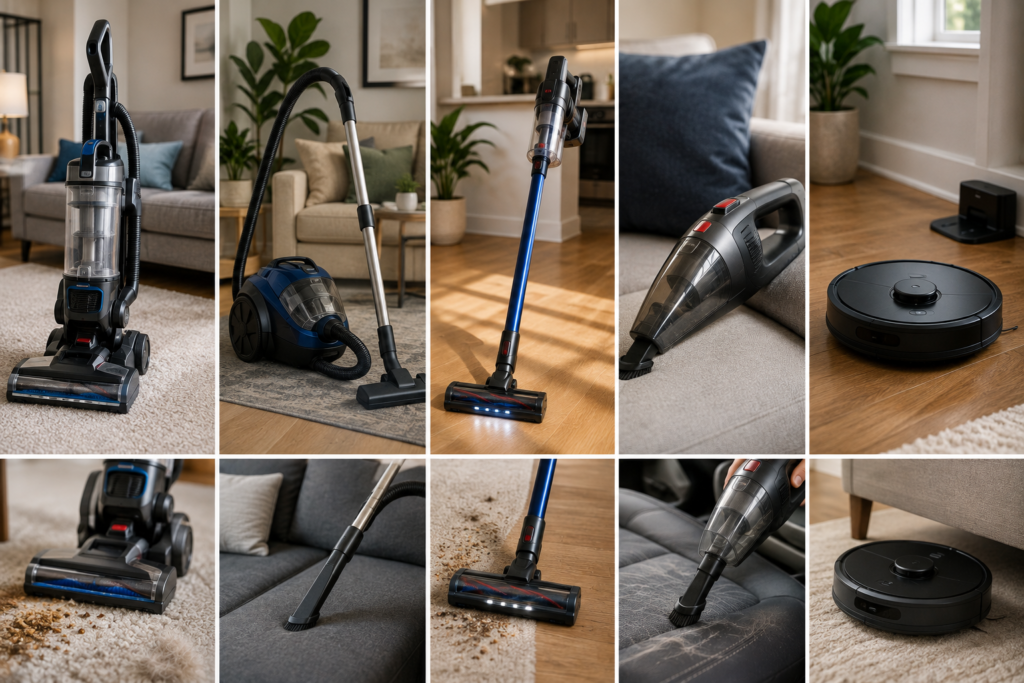
Upright vacuums combine the motor, brush roll, and dust collection into a single, self-contained unit you push directly across the floor. They generally deliver strong, consistent suction and larger dust capacity than other types, and their compact footprint fits nicely into a closet or narrow storage space, making them a popular default choice for many American homes.
Canister Vacuums
Canister vacuums separate the motor and dust compartment (the canister itself) from the cleaning head, connected by a flexible hose. This separation makes the actual cleaning wand lighter and easier to maneuver, particularly valuable for cleaning stairs, upholstery, and tight spaces a bulkier upright struggles to reach. Canisters also tend to run quieter than comparable uprights, though they can be somewhat trickier to store given their multiple separate parts.
Stick Vacuums
Lightweight and often cordless, stick vacuums prioritize convenience and maneuverability over raw cleaning power. They’re genuinely excellent for quick spills, tight corners, and smaller living spaces, and many current models use a combination brush tool that transitions between hard floors and low-pile carpet with a simple switch. Most experts position stick vacuums as an excellent supplement to a full-size vacuum rather than a complete replacement for it.
Handheld Vacuums
The smallest and most portable category, handheld vacuums are built specifically for quick, targeted cleanup, car interiors, stairs, upholstery spot-cleaning, rather than whole-home vacuuming duty.
Robot Vacuums
Robot vacuums run automatically on a schedule, handling daily maintenance cleaning without any manual effort. They genuinely excel at preventing dirt and pet hair from accumulating, but they can’t clean stairs and generally can’t match a full-size vacuum’s suction power on thick carpet, making them a complement to, rather than a replacement for, a traditional vacuum in most households.
Vacuum Type Comparison
| Type | Suction Power | Maneuverability | Best For |
| Upright | Strong, larger capacity | Moderate | Whole-home cleaning, thick carpet |
| Canister | Strong, quieter operation | High (lightweight wand) | Stairs, upholstery, tight spaces |
| Stick | Light to moderate | Very high | Quick cleanups, small spaces |
| Handheld | Light | Very high | Spot cleaning, cars, stairs |
| Robot | Varies (2,000–12,000+ Pa) | N/A (automated) | Daily maintenance, hard floors |
Bagged vs Bagless: The Debate That Never Really Ends
The Case for Bagged Vacuums
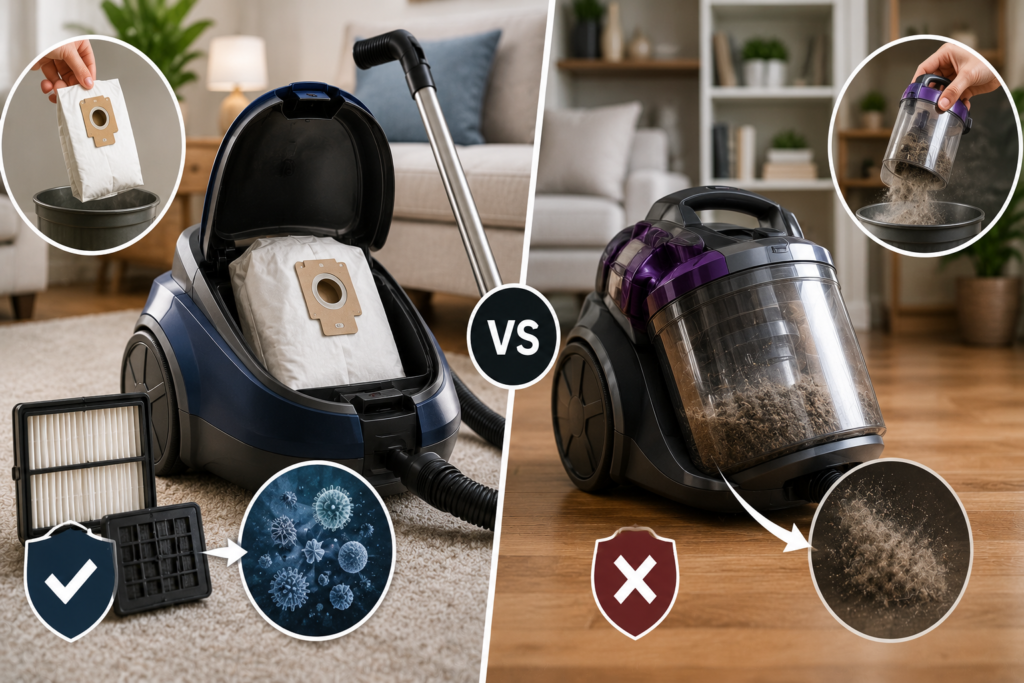
Bagged vacuums trap dust and debris inside a sealable, disposable bag, and this sealed disposal method generally contains allergens more effectively than emptying an open dust bin. This makes bagged vacuums the more commonly recommended choice specifically for households managing allergies or asthma, since the bag can be removed and disposed of without exposing you to a cloud of trapped dust and particulates.
The Case for Bagless Vacuums
Bagless vacuums collect debris in a reusable plastic bin, eliminating the recurring cost of buying replacement bags and typically holding more debris before needing to be emptied. Modern bagless models with strong HEPA filtration have also improved considerably in emission control, with some testing organizations finding certain bagless models achieve genuinely low particle emissions comparable to bagged alternatives.
The Genuine Trade-Off
Bagless models are undeniably messier to empty, dumping a bin of collected dust and debris creates more direct dust exposure than removing a sealed bag, and it’s worth going outdoors specifically to empty a bagless bin if allergies are a concern in your household. Bagged models, meanwhile, involve an ongoing cost for replacement bags and can lose suction power gradually as the bag fills, meaning you’ll want to keep an eye on the bag-full indicator rather than waiting until performance noticeably drops.
Bagged vs Bagless at a Glance
| Factor | Bagged | Bagless |
| Allergen containment | Generally stronger | Improved with HEPA, but bin-emptying creates more exposure |
| Ongoing cost | Bags require regular repurchase | No bag cost, reusable bin |
| Capacity before emptying | Generally holds more before needing attention | Varies, often requires more frequent emptying |
| Suction consistency | Can decline as bag fills | Generally more consistent throughout |
| Maintenance mess | Cleaner disposal | Messier, dust exposure during emptying |
Understanding HEPA Filtration (And Why It Genuinely Matters)
What HEPA Actually Means
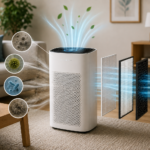
A true HEPA (High-Efficiency Particulate Air) filter is capable of trapping approximately 99.97 percent of particles down to 0.3 microns in size, including dust mites, pet dander, and pollen, particles considerably smaller than what a standard vacuum filter typically captures.
Why a Sealed System Matters Just as Much as the Filter Itself
A HEPA filter alone isn’t the whole story, a vacuum also needs a genuinely sealed system, meaning air passing through the machine is fully filtered rather than leaking out through gaps in the housing before it ever reaches the filter. A HEPA filter paired with a non-sealed vacuum body won’t deliver the same allergen-reduction benefit as one with both components working together.
Who Should Prioritize HEPA Specifically
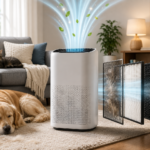
While HEPA filtration benefits any household, it matters most for anyone managing allergies, asthma, or general respiratory sensitivity, along with households with pets, where dander and hair are a constant, ongoing airborne concern.
Choosing a Vacuum Based on Your Flooring
Homes With Mostly Carpet
Prioritize an upright vacuum with strong, sustained suction and an adjustable brush roll height, since carpet, particularly thick pile, needs more aggressive agitation and lifting power than hard flooring to pull embedded dirt out effectively.
Homes With Mostly Hard Flooring
A canister vacuum, or an upright with a dedicated hard floor setting, works well here, and it’s worth specifically choosing a non-abrasive brush head for hardwood floors, since a rough or overly stiff brush roll can scratch delicate wood finishes over time.
Mixed Flooring Homes
Most modern uprights and canisters include a switch or automatic sensor to adjust suction and brush roll behavior between carpet and hard floor, making a versatile, adjustable model the practical choice for the majority of American homes with a genuine mix of both.
Choosing a Vacuum for Pet Hair
What Actually Matters for Pet Owners
Pet hair presents a genuinely unique cleaning challenge, it clings to surfaces, carries static charge, and embeds deeply into carpet fibers in a way ordinary dust doesn’t. Look specifically for a vacuum marketed for pet hair pickup, which typically includes stronger suction, a specialized brush roll designed to resist hair tangling, and dedicated pet hair attachments for upholstery and stairs.
Bag Type and Pet Hair
For households with pets, bag changes (in bagged models) generally need to happen more frequently than the standard monthly recommendation, since pet hair and dander fill bags considerably faster than regular household dust and debris.
Attachments and Accessories Worth Prioritizing
A good vacuum, regardless of type, should come with a reasonably complete set of attachments to handle tasks the main cleaning head can’t reach on its own.
- Crevice tool: For narrow gaps along baseboards, between cushions, and tight corners
- Upholstery attachment: For couches, chairs, and mattress cleaning
- Dusting brush: For delicate surfaces like blinds, lampshades, and electronics
- Extension hose: For reaching high or awkward spots without moving the whole unit
- Non-abrasive floor brush: Specifically for hardwood and other delicate hard flooring
Matching Vacuum Type to Your Household
| Household Situation | Recommended Vacuum Type |
| Allergy or asthma concerns | Bagged, HEPA-filtered, sealed system |
| Pets in the home | Upright or canister with pet-specific brush roll and attachments |
| Small apartment or limited storage | Stick vacuum or compact canister |
| Multi-level home with stairs | Canister (lighter wand for stairs) or cordless stick |
| Large home, mostly carpet | Full-size upright with strong, sustained suction |
| Households wanting hands-off daily maintenance | Robot vacuum, paired with a traditional model for deep cleaning |
Noise Level: An Overlooked but Genuine Consideration
If quiet operation matters to your household, particularly in homes with young children, home offices, or noise-sensitive occupants, canister and central vacuum systems generally run quieter than comparable uprights, worth factoring in alongside suction power and filtration when narrowing your options.
Practical Buying Tips
- Choose bagged with a sealed HEPA system if allergies are a genuine household concern, and commit to changing bags before the indicator shows full rather than waiting for suction to visibly decline
- Match brush roll and suction settings to your actual flooring mix, thick carpet needs different agitation than delicate hardwood
- Prioritize pet-specific attachments and tangle-resistant brush rolls if pet hair is a regular challenge in your home
- Consider a lighter canister model specifically if stairs or upholstery cleaning is a frequent task in your household
- Treat a stick or robot vacuum as a genuine supplement to, not a replacement for, a full-size vacuum’s deeper cleaning power
Common Mistakes to Avoid
- Choosing bagless purely for lower upfront cost without considering allergy needs, when bagged models generally contain allergens more effectively during disposal
- Using an abrasive brush head on hardwood floors, risking visible scratching over time
- Assuming any HEPA-labeled vacuum is equally effective, without checking whether the system is genuinely sealed to prevent air leaking around the filter
- Waiting for visible suction loss before changing a bagged vacuum’s bag, rather than monitoring the fill indicator proactively
- Buying only a stick or robot vacuum and skipping a full-size model entirely, missing out on the deeper cleaning power thick carpet and heavy messes genuinely require
Conclusion
Choosing the right vacuum comes down to matching type, filtration, and bag system to your household’s actual needs, flooring mix, allergy concerns, and whether pets are part of daily life, rather than defaulting to whichever model happens to be on sale. This vacuum cleaner buying guide covers the fundamentals that matter most: bagged versus bagless for allergen control, genuinely sealed HEPA filtration for cleaner air, and the right vacuum type for your specific flooring and household size. Get these fundamentals right, and you’ll end up with a vacuum that genuinely performs for years, rather than one that looked impressive in the store but disappoints once it’s actually cleaning your home.
Frequently Asked Questions
1- Is a bagged or bagless vacuum better for allergies?
Bagged vacuums are generally recommended for allergy and asthma sufferers, since sealed bag disposal contains dust and allergens more effectively than emptying an open bagless bin, though modern bagless models with strong HEPA filtration have narrowed this gap considerably.
2- What is a HEPA filter, and do I actually need one?
A true HEPA filter traps approximately 99.97 percent of particles down to 0.3 microns, including dust mites and pet dander. It’s genuinely worth prioritizing for anyone managing allergies, asthma, or households with pets, though it benefits any home to some degree.
3- Should I buy an upright or canister vacuum?
Uprights generally offer stronger suction and larger capacity, ideal for whole-home carpet cleaning, while canisters offer a lighter, more maneuverable wand better suited to stairs, upholstery, and tight spaces, along with quieter operation.
4- What vacuum is best for pet hair?
Look for a vacuum specifically marketed for pet hair, featuring strong suction, a tangle-resistant brush roll design, and dedicated pet hair attachments for furniture and stairs, and expect to change bags more frequently than standard households.
5- Do I need both a full-size vacuum and a stick or robot vacuum?
Many households find real value in both, a full-size vacuum handles deep, thorough cleaning, while a stick or robot vacuum adds convenience for quick cleanups or daily maintenance a full-size unit isn’t practical to use every day.
6- How often should I change a vacuum bag?
Change bags at least once a month under normal use, though households with pets or children generally need more frequent changes given the higher volume of debris being collected.
7- Can a rough brush roll damage hardwood floors?
Yes, an abrasive or overly stiff brush head can scratch delicate wood finishes over time, making a non-abrasive floor brush attachment or a dedicated hard floor setting genuinely important for hardwood-heavy homes.