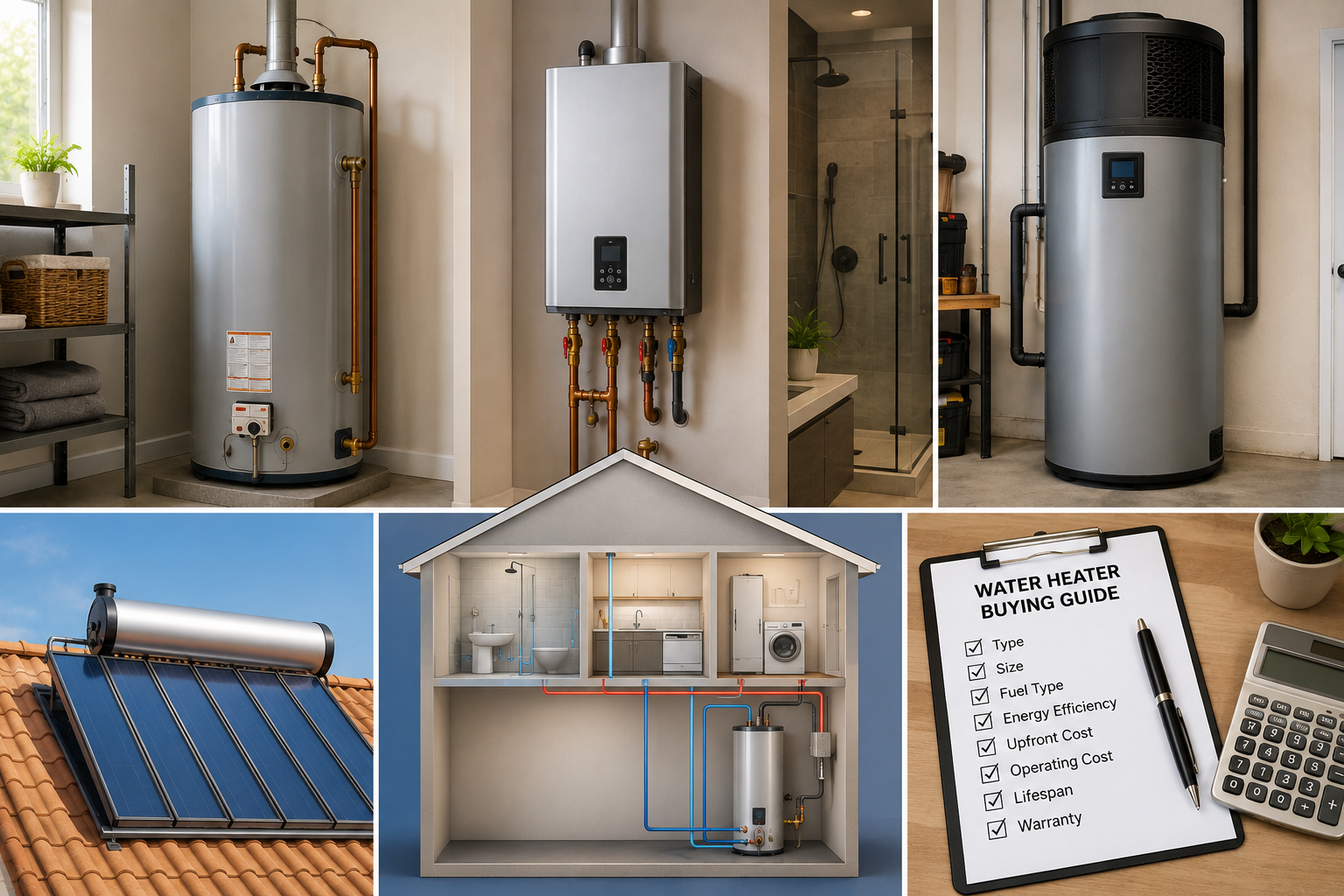
A water heater is one of those appliances you rarely think about until it fails, usually at the worst possible moment. With tank, tankless, and heat pump options all genuinely competing for your attention, and a significant federal efficiency rule change on the horizon that will reshape what’s available, choosing the right one takes more than picking whatever’s cheapest at the hardware store.
This water heater buying guide walks through every major type, how to size one correctly for your household, real cost differences, and what the upcoming DOE efficiency standards mean for your next purchase, so you can buy with genuine confidence.
How To Find The Right Water Heater
For most households replacing a standard electric or gas tank water heater, a comparable tank model remains the simplest, lowest-upfront-cost choice, though a heat pump water heater offers meaningfully lower operating costs over its lifespan despite a higher purchase price. Tankless water heaters suit households prioritizing continuous hot water and space savings, at a higher upfront cost with generally lower long-term energy use for gas-fired models. If you’re replacing a larger electric tank (above 35 gallons) any time near the end of this decade, it’s worth understanding that federal efficiency rules will require heat pump technology for that size category starting in 2029, which is likely to affect both pricing and availability as that date approaches.
Types of Water Heaters Explained
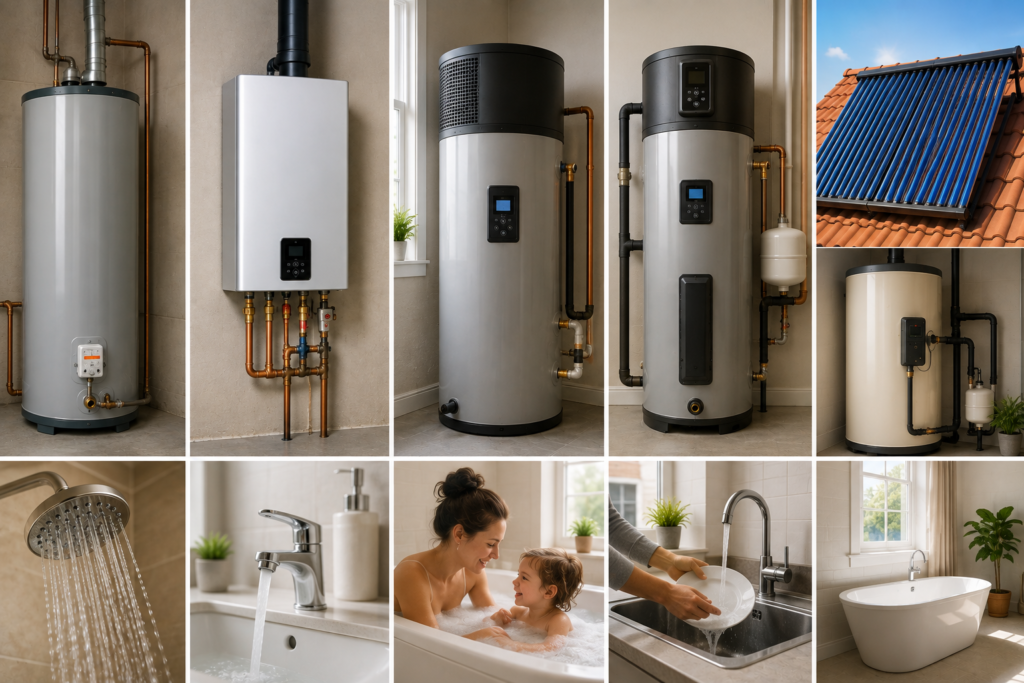
Conventional Tank Water Heaters
The traditional, most familiar option, a tank water heater continuously heats and stores a set volume of water (commonly 30 to 80 gallons), ready for use whenever a tap is opened. They’re available in both gas and electric versions, generally offer the lowest upfront cost, and are widely serviceable by most plumbers and technicians.
Tankless (On-Demand) Water Heaters
Tankless units heat water directly as it flows through the unit, rather than storing a set volume, providing continuous hot water without the capacity limits a tank imposes. They take up considerably less physical space than a tank, though they generally cost more upfront and may require upgraded gas lines or electrical service depending on the specific model.
Heat Pump Water Heaters
Rather than generating heat directly, heat pump water heaters pull ambient heat from the surrounding air and transfer it into the water, a considerably more energy-efficient process than conventional electric resistance heating. They cost more upfront than standard electric tanks but offer substantially lower operating costs over the unit’s lifespan.
Hybrid Water Heaters
Hybrid models combine heat pump technology with a backup electric resistance element, automatically switching to the resistance element during periods of high demand or when the heat pump alone can’t keep up, offering a practical middle ground between efficiency and reliable performance.
Solar Water Heaters
Using rooftop solar collectors to heat water directly (often paired with a conventional backup system for cloudy days or high demand), solar water heaters offer strong long-term efficiency in suitable climates, though they involve a considerably larger upfront installation investment.
Water Heater Type Comparison
| Type | Upfront Cost | Operating Cost | Space Needed | Best For |
| Conventional tank | Lowest | Moderate to higher | Moderate to large | Simple, lowest upfront cost |
| Tankless | Higher | Lower (gas), moderate (electric) | Minimal | Continuous hot water, space savings |
| Heat pump | Higher | Lowest | Moderate (needs air volume) | Long-term energy savings |
| Hybrid | Higher | Low | Moderate | Balance of efficiency and reliability |
| Solar | Highest | Lowest (climate-dependent) | Roof space + tank | Sunny climates, long-term investment |
Tank vs Tankless Water Heater: A Closer Look
Why Tank Remains the Default Choice
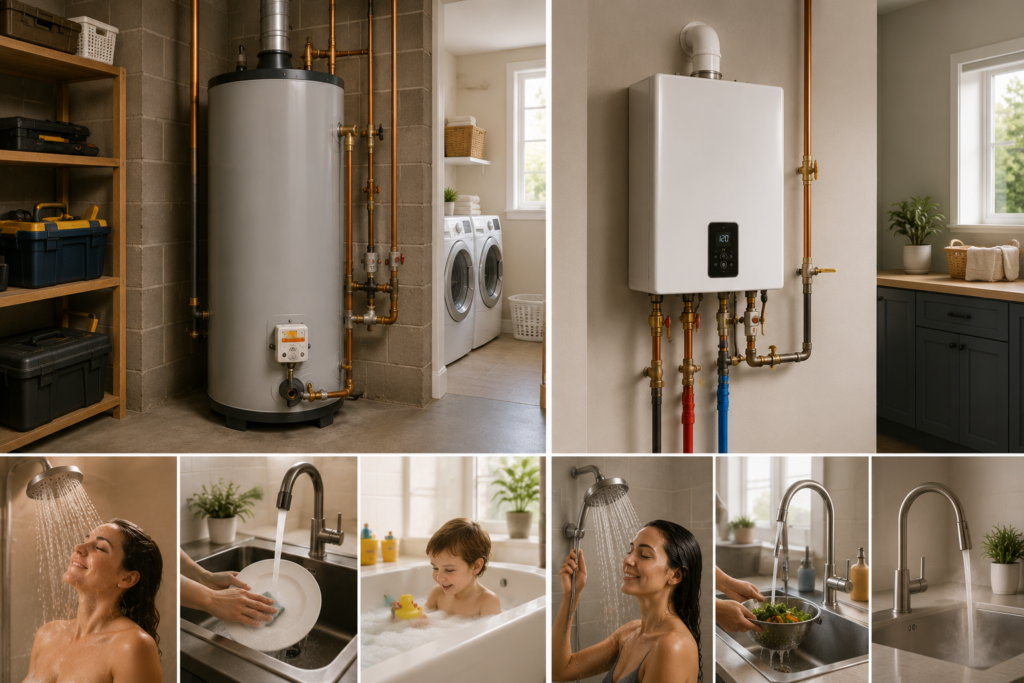
Tank water heaters remain the most commonly installed option in American homes, largely due to their lower upfront cost, straightforward installation (particularly as a like-for-like replacement), and wide availability of service and repair.
Where Tankless Genuinely Wins
Tankless units never run out of hot water mid-shower the way a tank can once its stored volume is depleted, and their compact size frees up meaningful closet or utility space, particularly valuable in smaller homes or apartments.
The Real Trade-Off
Tankless units cost considerably more upfront and, particularly for gas models, may require an upgraded gas line to supply the higher instantaneous demand these units place on the gas supply. Electric tankless models can require significant electrical service upgrades in many homes, worth confirming with an electrician before committing to this option.
Heat Pump Water Heater Pros and Cons
Pros:
- Significantly lower operating costs than standard electric resistance tanks
- Often eligible for utility rebates (federal tax credit availability has changed, more on this below)
- Long expected lifespan, often 12 to 15 years or more
Cons:
- Higher upfront purchase price than a standard electric tank
- Requires adequate surrounding air volume and moderate ambient temperature to operate efficiently, typically not well suited to small, enclosed closets
- Can produce more noise than a standard tank, given the compressor and fan components involved
Important: The 2029 Federal Efficiency Standard Change
What’s Actually Changing
The Department of Energy has finalized new minimum efficiency standards for residential water heaters, and one specific change matters considerably for larger households: starting May 6, 2029, electric storage water heaters with a capacity above 35 gallons will be required to use heat pump technology to meet the new minimum efficiency standard. This isn’t a recommendation, it’s a manufacturing requirement that will affect what’s available to purchase once it takes effect.
What This Means If You’re Buying Now
If you currently own, or are considering, a standard electric tank above 35 gallons, replacement units of that traditional type will become unavailable once the 2029 standard takes effect. Some homeowners choose to buy a current, soon-to-be-discontinued model now for lower upfront cost, understanding it will likely need replacement with a heat pump unit down the road, while others opt to make the switch to heat pump technology proactively.
Smaller Tanks Are Affected Differently
Households with smaller electric tanks (roughly 20 to 35 gallons) will also see some efficiency-related changes under the new standards, though the specific requirement mandating heat pump technology applies specifically to the above-35-gallon category. It’s worth checking current manufacturer specifications for your exact tank size as this transition approaches.
Gas Water Heaters Face Separate, More Modest Changes
The new standards also include moderate efficiency improvements for gas-fired storage water heaters, though these changes are less dramatic than the heat pump requirement affecting larger electric tanks. Gas-fired instantaneous (tankless) water heaters remain under separate ongoing evaluation.
A Note on Tax Credits: What’s Actually Available Now
If you’ve heard about a 30 percent federal tax credit (up to $2,000) for heat pump water heaters, it’s important to know this specific 25C tax credit terminated for equipment placed in service after December 31, 2025, following federal legislation. Don’t assume this credit is currently available when budgeting for a purchase, always verify current incentive status directly with the IRS or a tax professional, and separately check for any current state or utility-level rebates in your area, since these vary by region and change independently of federal programs.
Sizing Your Water Heater Correctly
What Size Water Heater Do I Need?
Water heater sizing depends primarily on household size and peak simultaneous hot water demand, running a shower while the dishwasher and washing machine are both operating, for example, requires more capacity than a single person living alone.
| Household Size | Recommended Tank Capacity |
| 1–2 people | 30–40 gallons |
| 2–3 people | 40–50 gallons |
| 3–4 people | 50–60 gallons |
| 5+ people | 60–80 gallons |
Sizing a Tankless Unit
Tankless water heaters are sized by flow rate (gallons per minute, or GPM) rather than storage capacity, and the right size depends on how many fixtures might run simultaneously. A household regularly running multiple showers and appliances at once needs a higher-GPM unit, or potentially two units installed in tandem, to avoid a noticeable drop in hot water performance during peak simultaneous use.
Fuel Type Considerations
Electric
Widely available and generally simpler to install (no gas line or venting required), electric water heaters, particularly standard resistance tanks, typically cost more to operate than gas equivalents, a gap that heat pump technology substantially narrows or reverses.
Natural Gas
Gas water heaters generally have lower operating costs than standard electric resistance tanks in most regions, given typically lower natural gas prices compared to electricity, though they require proper venting and a gas line connection.
Propane
Similar performance characteristics to natural gas, propane water heaters suit homes without access to a natural gas line, though propane itself often costs more per unit of energy than natural gas.
Installation and Space Considerations
Venting Requirements for Gas Units
Gas water heaters require proper venting to safely exhaust combustion byproducts, either through a traditional flue or, for higher-efficiency condensing models, PVC venting, worth confirming compatibility with your home’s existing setup before purchasing.
Space Requirements for Heat Pump Units
Heat pump water heaters need adequate surrounding air volume (generally a minimum room size specified by the manufacturer) and perform best in spaces that stay within a moderate temperature range, making a small, enclosed closet a poor location for this technology.
Tankless Space Savings
Tankless units mount on a wall and take up a fraction of the floor space a tank requires, a meaningful advantage in smaller homes, condos, or utility closets where reclaiming that space matters.
Warranty and Lifespan Expectations
Typical Lifespans by Type
Conventional tank water heaters typically last 8 to 12 years, tankless units often last 15 to 20 years with proper maintenance, and heat pump water heaters frequently carry warranties suggesting a 12 to 15 year (or longer) expected service life.
Reading Warranty Terms Carefully
Compare warranty length across specific models as one indicator of manufacturer confidence, though also check what’s actually covered, some warranties cover only the tank itself while excluding labor or specific components, details worth clarifying before purchase.
Practical Buying Tips
- Confirm your home’s existing fuel type and electrical or gas capacity before choosing a water heater type that might require infrastructure upgrades
- Size your unit based on realistic peak household demand, not just average daily use
- If replacing a large electric tank, factor the 2029 federal efficiency requirement into your long-term planning, even if you choose a conventional model now
- Verify current tax credit and rebate status directly rather than assuming a previously advertised federal incentive still applies
- Compare warranty terms and expected lifespan alongside upfront price, since a cheaper unit with a shorter lifespan may cost more over time
Common Mistakes to Avoid
- Assuming the 25C federal tax credit is currently available, when this credit expired for equipment placed in service after the end of 2025
- Undersizing a water heater for actual peak household demand, resulting in inconsistent hot water availability
- Installing a heat pump water heater in a small, enclosed space, undermining its efficiency due to inadequate air volume
- Overlooking gas line or electrical capacity requirements for tankless units, leading to unexpected installation costs
- Ignoring the upcoming 2029 efficiency standard change, particularly for households considering a large electric tank replacement in the coming years
Conclusion
Choosing the right water heater comes down to matching type, size, and fuel source to your household’s actual hot water demand and your home’s existing infrastructure, while also keeping the upcoming 2029 federal efficiency standard in mind if you’re considering a larger electric tank. Whether you choose a straightforward tank replacement, a space-saving tankless unit, or a heat pump model built for long-term savings, verifying current incentive availability and sizing correctly for your household will ensure you end up with a water heater that genuinely fits your home, your budget, and your long-term energy costs.
Frequently Asked Questions
1- What size water heater do I need for my household?
This depends on household size and peak simultaneous demand, but as a general guide, a household of 3 to 4 people typically needs a 50 to 60 gallon tank, or an appropriately rated tankless unit based on flow rate.
2- Is a heat pump water heater worth the extra cost?
For most households, yes, over the appliance’s lifespan, given significantly lower operating costs compared to standard electric resistance tanks, though the higher upfront cost matters more if you’re planning a shorter-term stay in your home.
3- Are tankless water heaters better than tank water heaters?
Neither is universally better, tankless offers continuous hot water and space savings at a higher upfront cost, while tank models offer simpler, more affordable installation and remain the most common choice for straightforward replacements.
4- Is the federal tax credit for heat pump water heaters still available?
No, the 25C tax credit that previously offered up to $2,000 for qualifying heat pump water heaters expired for equipment placed in service after December 31, 2025. Check for current state or utility rebates separately.
5- What is changing with water heater regulations in 2029?
Starting May 6, 2029, new DOE efficiency standards will require electric storage water heaters above 35 gallons to use heat pump technology, meaning conventional electric tanks of that size will no longer be manufactured after that date.
6- How long do water heaters typically last?
Conventional tank water heaters typically last 8 to 12 years, while tankless and heat pump units often last considerably longer, frequently 12 to 20 years, with proper maintenance.
7- Can I install a heat pump water heater anywhere in my home?
Not quite anywhere, these units need adequate surrounding air volume and a moderate ambient temperature to operate efficiently, making small, enclosed closets a poor installation location.