
Replacing a light switch feels manageable. Adding a new circuit for an EV charger clearly doesn’t. But a lot of home electrical work falls somewhere in between, and knowing exactly where that line sits can be genuinely confusing for homeowners trying to save money without taking unnecessary risks.
This guide gives you a clear, practical framework for deciding when to call a licensed electrician, covering permit requirements, genuine safety risks, and the specific tasks that separate reasonable DIY projects from jobs that belong to professionals. We’ll also cover electrical permits, licensed electrician costs, and code compliance for American homeowners weighing this decision.
By the end, you’ll know exactly where that line sits for your specific project, and why crossing it without professional help rarely saves as much as it seems to.
When Should You Call an Electrician?
Call a licensed electrician anytime a project involves your electrical panel, requires a permit, adds a new circuit, involves 240-volt equipment, or leaves you uncertain whether the power is genuinely off. Simple tasks like replacing a cover plate, resetting a tripped GFCI, or swapping a light switch are generally low-risk enough for confident homeowners to handle themselves.
If your project requires a permit, it also requires a licensed electrician in nearly every jurisdiction, making this one of the clearest signals for when professional help isn’t optional.
Tasks That Are Genuinely Safe to DIY
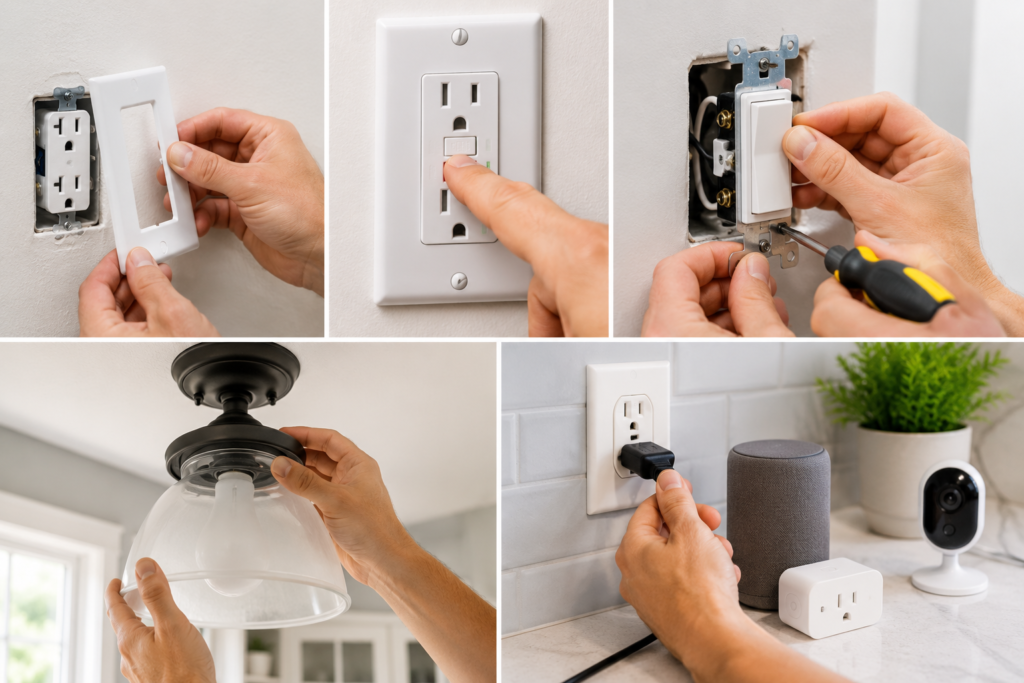
Certain electrical tasks carry minimal risk and are reasonable for most homeowners to handle without professional help.
- Replacing a broken outlet or switch cover plate
- Resetting a tripped GFCI outlet using the test and reset buttons
- Swapping a light switch or outlet with the power confirmed off, provided you’re comfortable with basic wiring
- Replacing a light fixture using existing wiring, again with power confirmed off
- Installing a battery-operated or plug-in device, like a smart plug or basic smart thermostat, that doesn’t involve altering wiring
These tasks share a common thread: they don’t involve the electrical panel, don’t require running new wire, and generally don’t require a permit in most areas.
Tasks That Should Always Go to a Licensed Electrician
Certain projects cross into territory where the risks, both physical and legal, clearly outweigh any DIY savings.
Any Work Inside the Electrical Panel
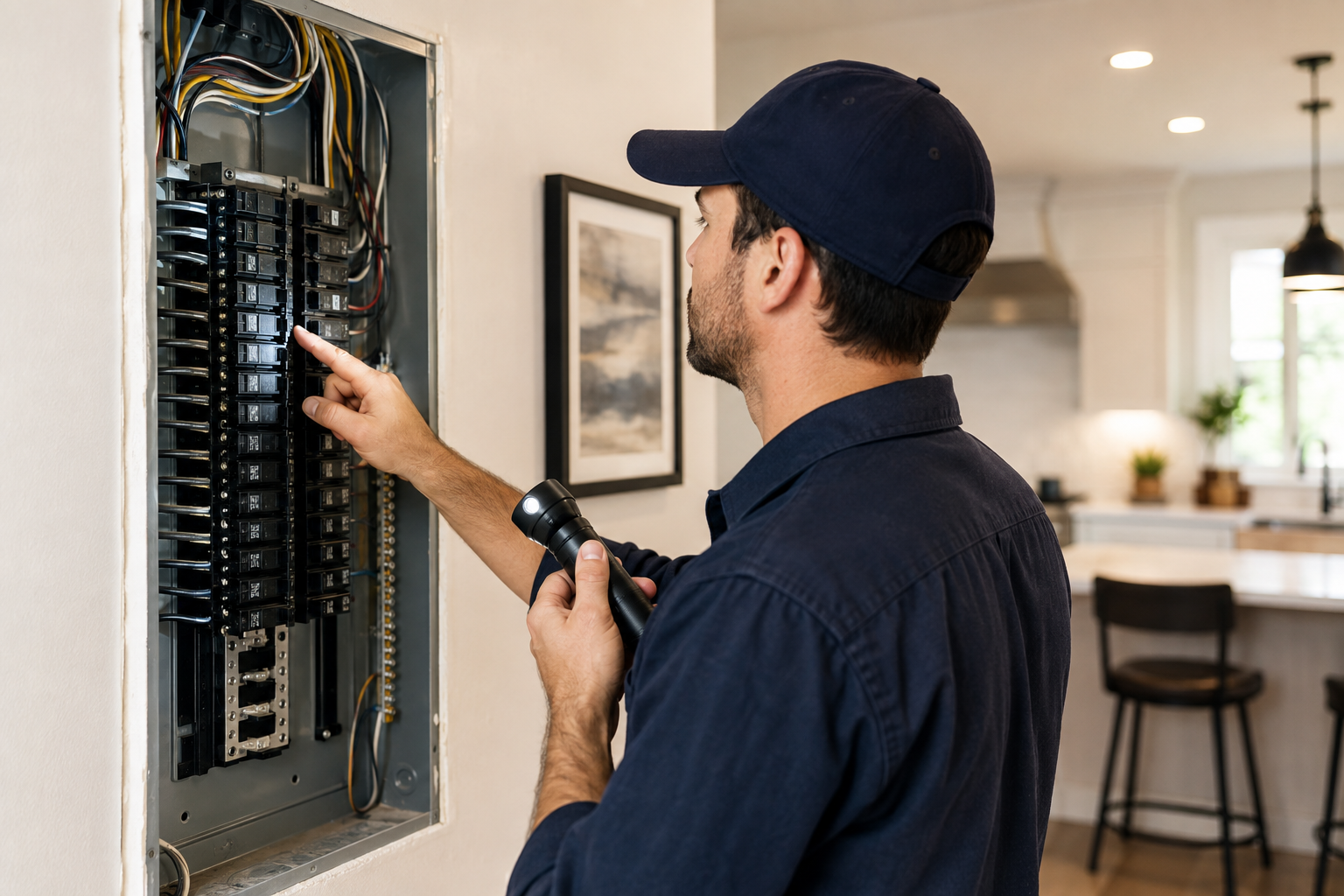
Adding, removing, or replacing breakers, or any work inside the panel beyond simply flipping an existing breaker, should always go to a licensed electrician. Working inside a panel exposes you to live bus bars carrying hundreds of amps, and even with the main breaker off, the incoming utility lines remain fully energized and can cause fatal electrocution. In most jurisdictions, panel work also legally requires both a permit and a licensed electrician regardless of a homeowner’s comfort level.
Adding a New Circuit
Running new wire from the panel to a new location requires understanding proper wire gauge for the intended load, correct breaker sizing, and code-compliant routing through walls and framing. Getting any of these details wrong creates a fire risk that may not become apparent immediately, sometimes not until years later.
Installing 240-Volt Circuits
Circuits for an EV charger, an electric range, or a hot tub carry substantially more current than standard outlets and require correct wire gauge, breaker sizing, and typically a permit and inspection. This is not a project where guesswork is an acceptable approach.
Aluminum Wiring or Knob-and-Tube Systems
Older wiring types like aluminum wiring or knob-and-tube systems have specific handling requirements that aren’t intuitive to someone without electrical training, and improper connections to either type carry real fire risk. Homes with these older systems should have any electrical work assessed by a professional familiar with their specific quirks.
Any Uncertainty About Whether Power Is Off
If there’s any doubt about which breaker controls a given circuit, or your panel isn’t clearly labeled, that uncertainty alone is reason enough to stop and call a professional rather than proceed on a guess.
Why Permits Matter More Than They Seem
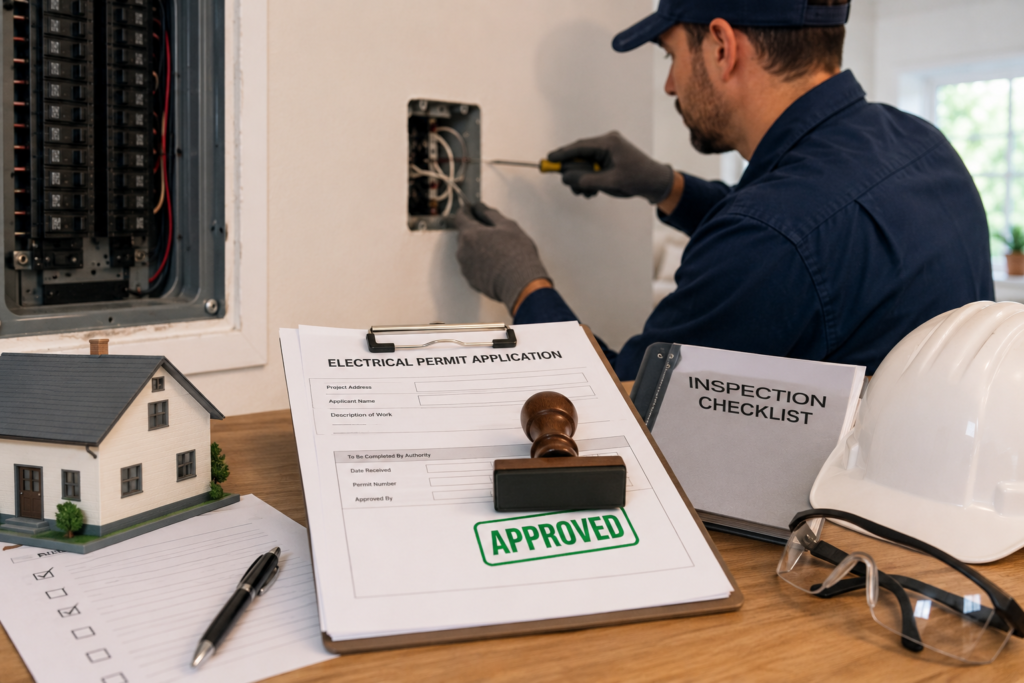
Permits often feel like unnecessary bureaucracy, but they serve a genuinely important safety function that’s easy to underestimate.
Permits typically apply to major installations, extensive rewiring, or adding new circuits, and skipping this step can lead to costly fines beyond just the immediate safety risk. The permit process generally includes an inspection that catches potential hazards and confirms the work was completed correctly, functioning as a genuine safety check rather than pure paperwork.
Beyond the immediate risk, unpermitted electrical work can create serious problems down the road. If unpermitted work is discovered during a home inspection at the time of sale, it can delay or completely derail the transaction, often forcing the seller to hire a licensed electrician to remove improper wiring, pull retroactive permits, and have everything properly inspected and corrected, typically at a much higher cost than doing it right the first time.
The Real Risks of DIY Electrical Work
Beyond the obvious shock hazard, DIY electrical work carries several risks that homeowners frequently underestimate.
- Serious injury or electrocution: Electricity is powerful, and even a seemingly minor mistake can lead to severe shock or worse, particularly with panel-level work.
- Fire hazards: Faulty wiring, overloaded circuits, and improper installations are common causes of electrical fires, and a DIY project gone wrong can put an entire home at risk.
- Code violations: Electrical work must adhere to specific local safety codes, and unknowingly violating them can create safety hazards while also complicating a future home sale.
- Voided insurance coverage: DIY electrical work that doesn’t meet code can affect homeowner’s insurance coverage, particularly if that work later contributes to a fire or other damage claim.
- Hidden problems: Electrical issues can lurk beneath the surface, unseen by an untrained eye, meaning a DIY fix might resolve a visible symptom while leaving a more serious underlying issue unaddressed.
Comparing DIY vs Professional Electrical Work
| Factor | DIY-Appropriate Tasks | Professional-Required Tasks |
| Panel involvement | None | Any panel work |
| Permit required | Generally no | Generally yes |
| Wiring type | Existing, simple swaps | New circuits, aluminum, knob-and-tube |
| Voltage | Standard 120V outlets/switches | 240V circuits |
| Power certainty | Confirmed off, clearly labeled | Any uncertainty |
| Consequence of error | Minor, easily corrected | Fire, shock, code violation |
Electrician vs Handyman: Knowing the Difference
It’s worth understanding when a general handyman is appropriate versus when the job genuinely requires a licensed electrician.
A handyman can be practical for basic non-electrical repairs, like patching drywall, fixing trim, replacing cabinet hardware, or hanging shelves. However, if a job touches wiring, breakers, panels, circuits, outlets, lighting, grounding, permits, or any genuine safety concern, the appropriate call is always a licensed electrician rather than a general handyman, even if the handyman feels confident about the task.
The distinction matters because electrical work requires licensed training, proper testing equipment, and safe repair methods from the very start of a project, not just at the finishing stages.
Factors That Complicate a DIY Project
Even tasks that seem straightforward can become more complicated depending on your home’s specific electrical history and condition.
- Your home’s age: Older homes often have wiring configurations, materials, or panel setups that make even “simple” tasks more complex than expected.
- Previous electrical work: If earlier work in your home wasn’t done to code, this can create complications for anyone attempting a new project in the same area, even a licensed professional.
- Local regulations: Rules about what homeowners can legally do themselves vary by state and municipality, so it’s worth verifying local requirements before starting any project beyond the most basic tasks.
- Unexpected discoveries mid-project: If you encounter something that doesn’t match your expectations, exposed wiring, unusual connections, or signs of previous unpermitted work, that’s a clear signal to stop and call a professional rather than continue.
What to Expect When You Hire a Licensed Electrician
Understanding what a licensed electrician actually provides helps clarify why their involvement is worth the cost for the right projects.
- Verified credentials: A reputable electrician will readily provide their state license number, confirming they’ve passed the required training and testing.
- Permit and inspection handling: Licensed electricians typically manage the permit application and inspection process directly, saving you the hassle of navigating this yourself.
- Code-compliant, tested work: Professional work is completed to current safety codes and properly tested, reducing the risk of hidden issues surfacing later.
- Future planning insight: A good electrician can also advise whether your panel could support future additions, like an EV charger or a renovation, helping you plan ahead rather than discovering limitations mid-project.
Conclusion
Deciding whether to DIY or call a licensed electrician comes down to a few clear signals: panel involvement, permit requirements, new circuits, 240-volt equipment, and any uncertainty about whether power is truly off. Simple, low-risk tasks like swapping a switch or resetting a GFCI are reasonable for confident homeowners, but anything beyond that carries real safety, legal, and financial risk if done incorrectly. When in doubt, choosing a licensed electrician over a DIY attempt or a general handyman remains the safest, most reliable way to protect both your home and your household’s safety.
Frequently Asked Questions
1- Can I replace an outlet or switch myself?
Yes, this is generally considered a reasonable DIY task if you’re comfortable with basic wiring and confirm the power is off first. If you’re unfamiliar with electrical work, it’s still worth consulting a licensed electrician.
2- Do I really need a permit for adding a new outlet?
It depends on your local regulations and the scope of the work. Adding a new circuit typically requires a permit, while simple like-for-like replacements often don’t, though it’s worth confirming locally.
3- What happens if I skip a required permit?
Unpermitted work can lead to fines, and if discovered during a future home sale, it can delay or derail the transaction, often requiring costly retroactive corrections.
4- Is it more expensive to hire an electrician than to DIY?
Electricians cost more upfront, but a failed DIY project can end up costing significantly more in repairs, code corrections, or damage than hiring a professional from the start.
5- How do I know if my home’s wiring is aluminum or knob-and-tube?
A licensed electrician can identify your home’s wiring type during an inspection, which is particularly important before attempting any DIY work in an older home.
6- Should I call an electrician or a handyman for a flickering light?
If the flickering is tied to a simple bulb or fixture issue, a handyman may help, but persistent or unexplained flickering often signals an underlying electrical issue that requires a licensed electrician.