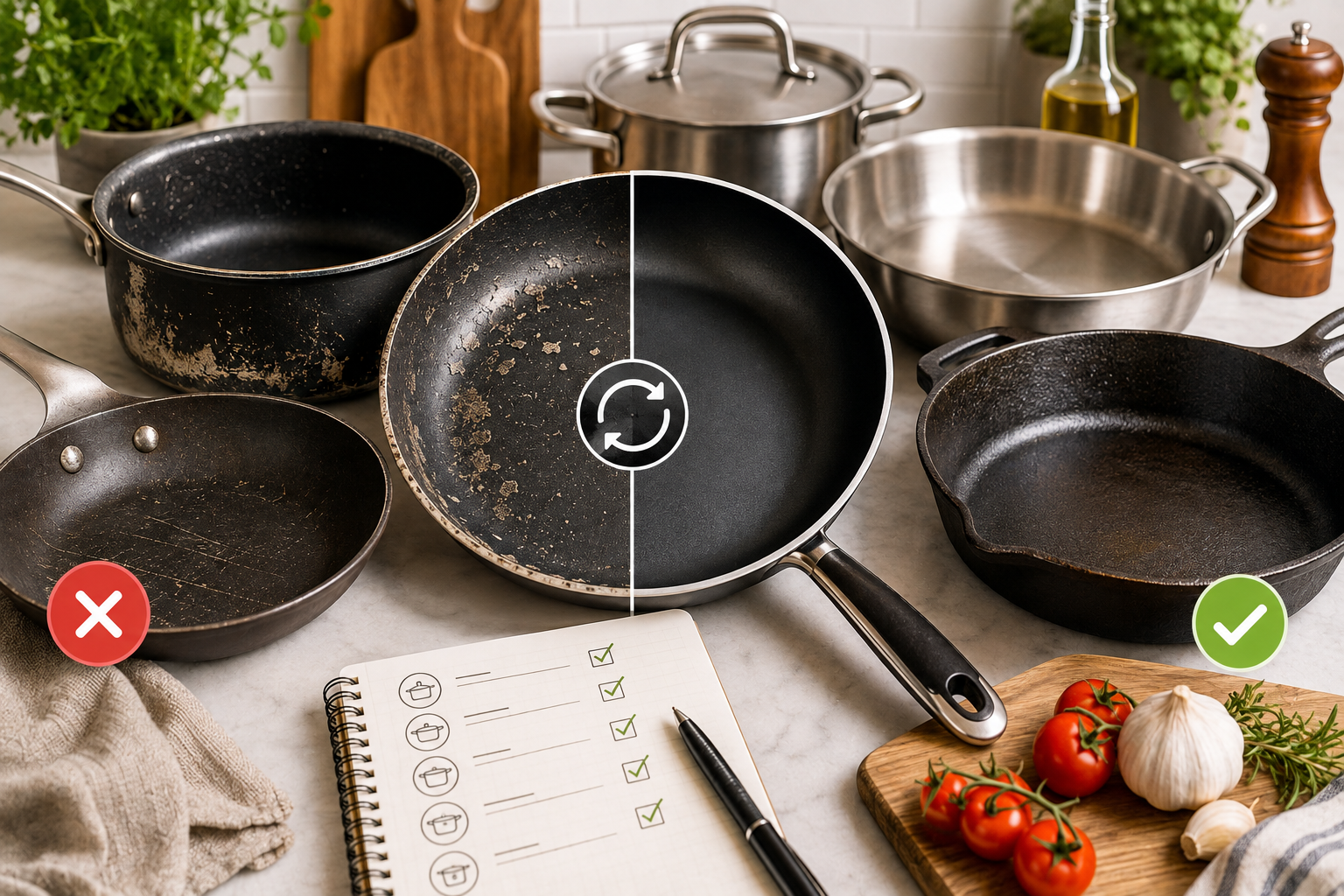
Pots and pans don’t come with an expiration date, but they do wear out, and using damaged cookware past its useful life can affect both cooking results and, in some cases, food safety. Knowing when to replace cookware isn’t always obvious, since wear often happens gradually.
This guide covers the clearest signs it’s time to replace your pots and pans, how lifespan varies by material, and practical buying advice for replacements. We’ll also cover non-stick pan safety, cookware lifespan, and material-specific replacement guidance for American homeowners.
By the end, you’ll know exactly what to look for across non-stick, stainless steel, cast iron, and other common cookware materials, so you can replace pieces at the right time rather than too early or too late.
When Should You Replace Cookware?
Replace non-stick pans as soon as you see visible coating damage, such as scratches, peeling, or flaking, since a damaged coating can release material into food. Most non-stick pans need replacing every one to five years depending on the coating type and how well they’re cared for, while ceramic-coated non-stick options often need replacing sooner, generally within two to three years.
Stainless steel and cast iron, by contrast, can last decades or even a lifetime with proper care, and typically only need replacement due to warping, cracking, or damage rather than routine wear.
Signs It’s Time to Replace Non-Stick Pans
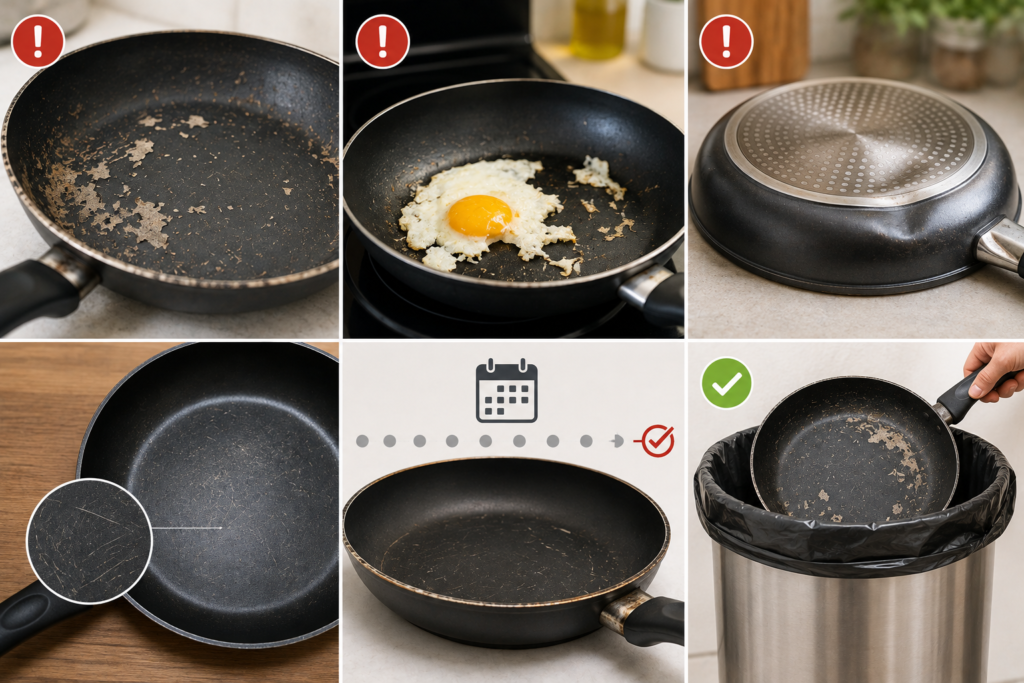
Non-stick cookware has the shortest lifespan of any common cookware material, and there are clear, specific warning signs to watch for.
Visible Coating Damage
Scratches, peeling, flaking, or chipping on the non-stick surface are the clearest sign it’s time to replace the pan. Cookware testing experts consistently recommend discarding a non-stick pan as soon as any chips or scratches appear, since damaged coating is more likely to flake into food during cooking. In fact, research has found that a broken PTFE coating can release large numbers of microplastic particles, with even a single surface crack shedding thousands of plastic particles into food during preparation.
Food Sticks Despite Proper Technique
If food consistently sticks to a non-stick pan even with correct heat levels and adequate oil, the coating has likely worn down and lost its non-stick properties. This is a functional sign the pan is no longer performing as intended, separate from any safety consideration.
Warping or Uneven Surfaces
A pan that no longer sits flat on the stovetop can cause uneven heating and inconsistent cooking results. Warping is generally not repairable and is a clear signal the pan needs replacing.
The Pan Has Reached Its Typical Age Range
Most non-stick pans last between one and five years, with PTFE-coated pans generally outlasting ceramic-coated alternatives. If your pan is approaching or has passed this range, it’s worth inspecting closely for early signs of coating wear even if damage isn’t immediately obvious.
Understanding Non-Stick Coating Safety Concerns
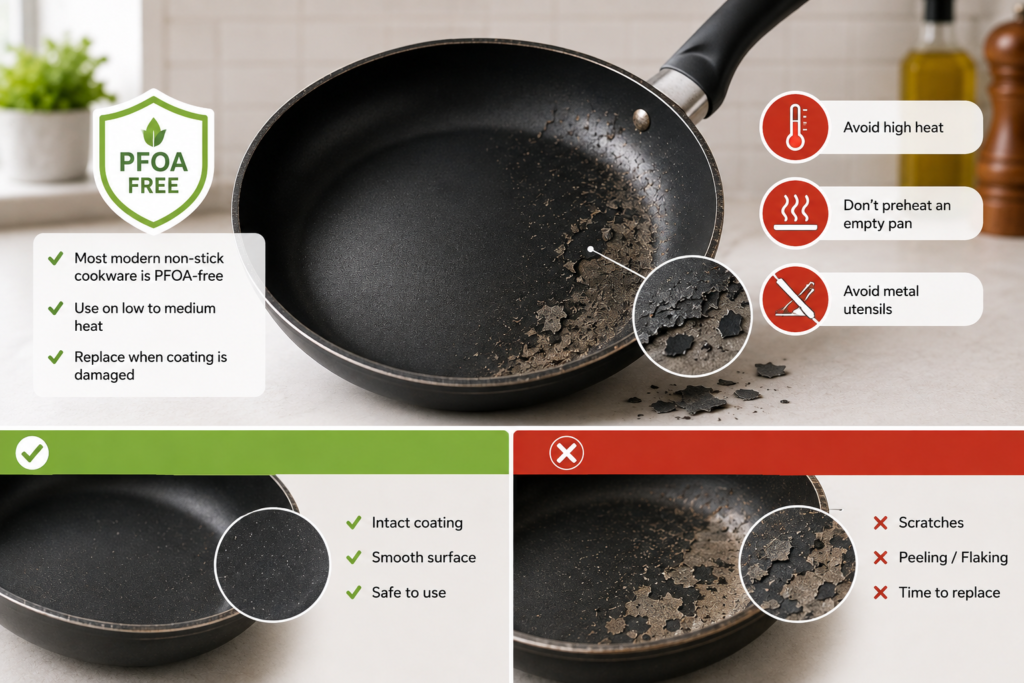
Non-stick cookware safety has become an increasingly discussed topic, and it’s worth understanding the current landscape before deciding how to handle aging pans.
Most reputable manufacturers have moved away from PFOA, a chemical once used in non-stick coatings and linked to health risks, with products made after 2015 generally free of the substance. That said, testing has found “PFOA-free” labeling doesn’t always guarantee a complete absence of PFOA, and newer PFAS replacement chemicals are facing increasing regulatory scrutiny.
Some states have begun introducing specific regulations around these chemicals in cookware, reflecting growing regulatory attention to PFAS chemicals broadly. These regulatory shifts don’t necessarily mean older cookware already in use poses immediate danger, but they do suggest replacing damaged or aging non-stick cookware with PFAS-free alternatives aligns with where safety standards are heading.
Practical safety tips while using non-stick cookware:
- Avoid preheating an empty pan, since this can release fumes at high temperatures
- Cook on low to medium heat rather than high heat
- Use wooden, silicone, or nylon utensils to avoid scratching the coating
- Replace the pan immediately once any chips, scratches, or flaking appear
Signs It’s Time to Replace Stainless Steel Cookware
Stainless steel is one of the most durable cookware materials, so replacement signs here are less about routine wear and more about structural damage.
- Warping: A stainless steel pan that no longer sits flat, often from thermal shock or extreme temperature changes, needs replacing since warping generally can’t be corrected.
- Persistent sticking despite proper technique: If food sticks consistently even with correct preheating and oiling, the surface may have developed permanent damage affecting its performance.
- Loose or damaged handles: A handle that wobbles or has become detached poses a safety risk and typically isn’t cost-effective to repair on most cookware.
- Deep scratches affecting performance: Light scratching is cosmetic and doesn’t require replacement, but deep gouges that trap food or affect heat distribution are worth addressing.
Signs It’s Time to Replace Cast Iron Cookware
Cast iron is famous for lasting generations, and true replacement is rarely necessary if the cookware is cared for properly.
- Cracks in the pan: Unlike surface rust, which is fixable, actual cracks in the cast iron body compromise structural integrity and mean the pan should be replaced.
- Severe, deeply pitted rust: Light surface rust is fixable with steel wool and re-seasoning, but rust that has deeply pitted the metal’s surface may be beyond restoration.
- Warping from extreme heat or thermal shock: While rare given cast iron’s durability, sudden extreme temperature changes can occasionally cause warping that affects how the pan sits on burners.
Signs It’s Time to Replace Ceramic Cookware
Ceramic-coated cookware has become increasingly popular as a PFAS-free alternative, though it has its own specific replacement considerations.
- Reduced non-stick performance: Ceramic coatings generally degrade faster than PTFE coatings, often needing replacement within two to three years even with proper care.
- Visible dullness or surface wear: A ceramic coating that looks worn, dull, or scratched has likely lost much of its non-stick effectiveness and should be replaced.
- Chipping or cracking: Similar to PTFE coatings, damaged ceramic surfaces are more likely to affect food and should prompt replacement rather than continued use.
Signs It’s Time to Replace Copper Cookware
Copper cookware, while durable overall, has a few specific wear points worth monitoring, since it typically relies on a tin or stainless steel lining rather than bare copper.
- Worn or exposed lining: If the tin or stainless steel lining has worn through to reveal bare copper underneath, the piece needs relining or replacement, since cooking directly on copper isn’t food-safe.
- Significant dents affecting cooking surface: Minor dents are usually cosmetic, but deeper dents that affect how the pan sits on a burner or distributes heat may warrant replacement.
- Cracked or separated handles: Riveted handles can loosen over years of use, and a handle that no longer sits securely poses a safety risk during cooking.
How Usage Frequency Affects Replacement Timing
How often you use a pan meaningfully affects how quickly it wears out, regardless of material. A non-stick pan used daily for eggs will typically show wear faster than one used occasionally.
Households that cook frequently at high heat, or that regularly use metal utensils out of habit, should expect non-stick and ceramic cookware to wear out toward the faster end of the typical range.
This is worth factoring into replacement planning: heavier households may benefit from budgeting for more frequent non-stick replacement, or investing upfront in durable stainless steel or cast iron.
Environmental Considerations When Replacing Cookware
Frequent cookware replacement, particularly for non-stick and ceramic pans needing renewal every few years, carries a cumulative environmental cost worth considering.
Choosing more durable materials like stainless steel or cast iron for frequently used pieces can reduce how often you need to replace cookware, lowering both cost and environmental impact. When non-stick or ceramic replacement is necessary, look for manufacturer take-back or recycling programs, since cookware isn’t typically accepted through standard curbside recycling.
Comparing Replacement Costs Over Time
Understanding long-term cost, not just upfront price, can help you decide which cookware materials make the most financial sense for your household.
| Material | Approx. Replacement Frequency | Long-Term Cost Pattern |
| Non-stick (PTFE) | Every 1–5 years | Recurring cost over time |
| Non-stick (Ceramic) | Every 2–3 years | Recurring cost, often sooner |
| Stainless Steel | Rarely, decades | Higher upfront, lower lifetime cost |
| Cast Iron | Rarely, lifetime+ | Higher upfront, lowest lifetime cost |
While stainless steel and cast iron often cost more initially, their extended lifespan frequently makes them the more cost-effective choice over a decade or more of regular use.
Comparing Cookware Lifespans by Material
| Material | Typical Lifespan | Main Replacement Trigger |
| Non-stick (PTFE) | 1–5 years | Visible coating damage |
| Non-stick (Ceramic) | 2–3 years | Reduced performance, wear |
| Stainless Steel | Decades | Warping, structural damage |
| Cast Iron | Lifetime+ | Cracks, severe pitting |
| Copper | Decades | Lining wear, dents |
Cookware Alternatives Worth Considering
If you’re replacing damaged non-stick cookware and want to explore alternatives, several materials offer different combinations of durability, performance, and PFAS-free composition.
- Stainless steel: Highly durable, versatile, and free of coating-related replacement concerns, though it requires proper preheating technique to prevent sticking.
- Cast iron: Naturally non-stick when properly seasoned, extremely durable, and free from PFAS chemicals, making it a long-term investment piece for most kitchens.
- Carbon steel: Similar to cast iron in composition and seasoning requirements, but generally lighter and more responsive to temperature changes.
- Ceramic-coated cookware: A PFAS-free non-stick alternative, though it typically has a shorter lifespan than PTFE-coated options and requires similarly gentle care.
How to Extend Cookware Lifespan Before Replacement Is Needed
While some replacement is inevitable, proper care can meaningfully delay when you need to buy new cookware.
- Use appropriate utensils: Wooden, silicone, or nylon utensils prevent scratching across non-stick and ceramic surfaces
- Avoid high heat on non-stick and ceramic cookware: Excessive heat accelerates coating breakdown and can release fumes
- Hand wash delicate coatings: Dishwasher detergents and prolonged heat exposure can degrade non-stick and ceramic coatings faster
- Store cookware properly: Stacking pans without protection between them causes unnecessary scratching over time
- Season cast iron regularly: Consistent seasoning maintains cast iron’s natural non-stick surface and prevents rust
Buying Advice for Replacement Cookware
When it’s time to replace a pan, a few practical considerations can help you choose cookware that lasts longer and performs well.
- Consider your cooking habits: If you frequently cook eggs or delicate foods, a non-stick or ceramic option remains convenient, though you’ll want to budget for periodic replacement. If you prioritize longevity, stainless steel or cast iron are worth the investment.
- Check coating composition where relevant: If avoiding PFAS chemicals is a priority, look specifically for cookware marketed as PTFE-free rather than relying solely on “PFOA-free” labeling, since testing has shown these claims aren’t always fully accurate.
- Match cookware to your stovetop: Confirm compatibility with induction, gas, or electric stovetops before purchasing, since not all cookware materials work with every stovetop type.
- Prioritize build quality over price alone: Thicker gauge stainless steel and cast iron with even construction tend to perform better and last longer than lower-quality budget alternatives.
Conclusion
Knowing when to replace your pots and pans comes down to understanding your cookware’s specific material and watching for the right warning signs. Non-stick and ceramic-coated cookware need the most frequent attention, with visible coating damage serving as a clear signal to replace rather than continue using the pan. Stainless steel and cast iron, by contrast, can last decades or longer when properly maintained, generally only requiring replacement due to structural damage rather than routine wear. Paying attention to these material-specific signs helps you replace cookware at the right time, keeping your kitchen both safer and better equipped for everyday cooking.
Frequently Asked Questions
1- How do I know if my non-stick pan is still safe to use?
If the coating is fully intact, without scratches, peeling, or flaking, and you’re using it within manufacturer-recommended heat limits, it’s generally considered safe. Once damage appears, replacement is recommended.
2- How long do stainless steel pans typically last?
Stainless steel pans can last decades with proper care, since they don’t have a coating that degrades the way non-stick surfaces do.
3- Is it dangerous to keep using a scratched non-stick pan?
Using a scratched non-stick pan can allow coating material to flake into food, and cookware safety experts generally recommend replacing pans once damage appears rather than continuing to use them.
4- Do ceramic pans last as long as traditional non-stick pans?
Generally no. Ceramic coatings tend to degrade faster than PTFE coatings, often needing replacement within two to three years compared with up to five years for some PTFE options.
5- Can cast iron really last a lifetime?
Yes, with proper seasoning and care, cast iron cookware can last for generations and rarely needs replacement unless cracked or severely damaged.
6- What’s the safest cookware alternative to traditional non-stick?
Stainless steel and cast iron are widely considered safe, durable, PFAS-free alternatives, while ceramic-coated cookware offers a non-stick experience without PTFE, though with a shorter overall lifespan.