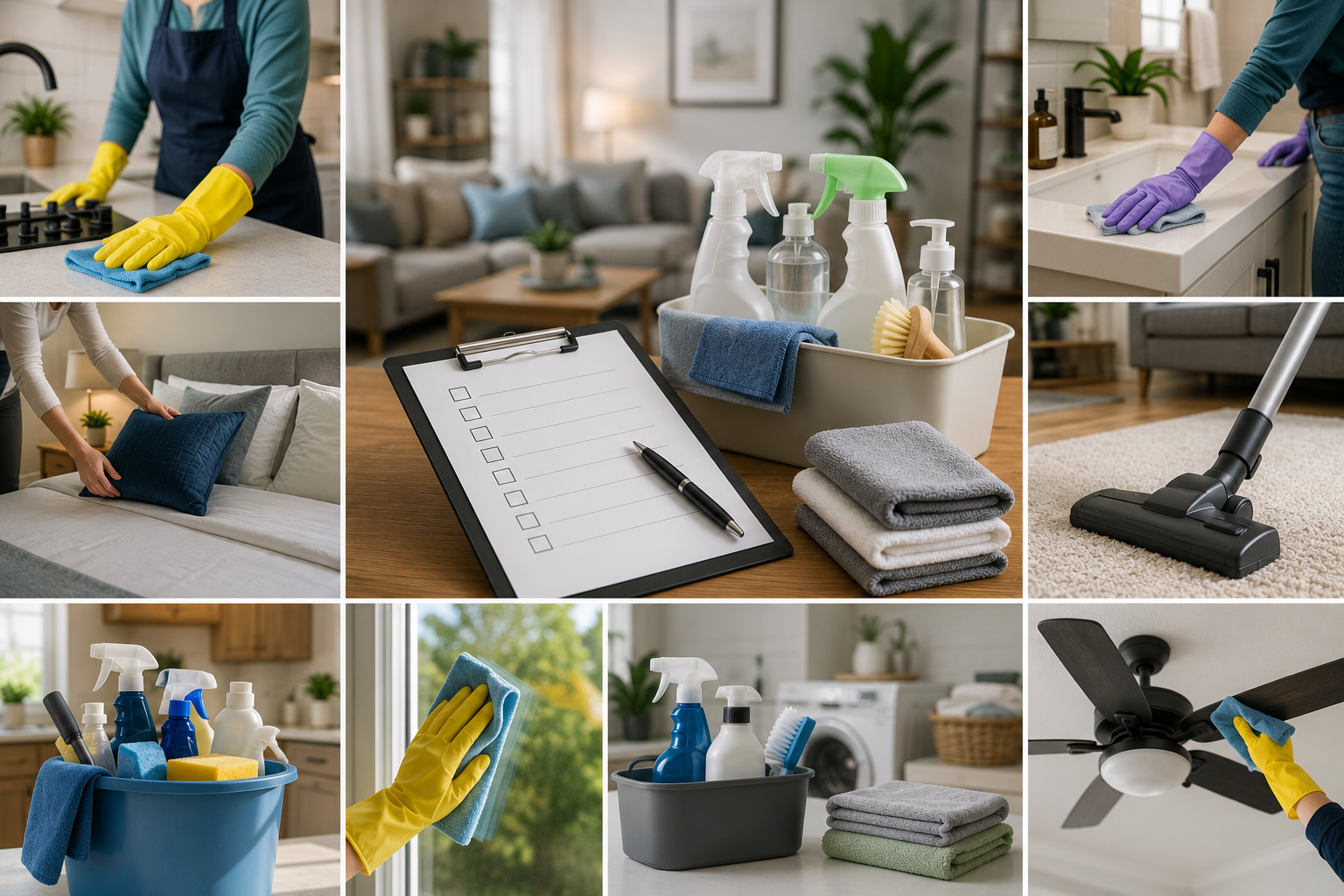
Trying to clean your entire home in one exhausting weekend session is a recipe for burnout, and it’s honestly not necessary. The real secret to a consistently clean home isn’t working harder, it’s separating tasks by how often they actually need attention, so you’re never trying to do everything at once.
This guide breaks down a complete whole-house cleaning checklist organized by daily, weekly, monthly, and seasonal tasks, plus a room-by-room breakdown for anything that needs more specific attention. We’ll also cover deep cleaning schedules, room-by-room cleaning, and practical routine-building advice for American homeowners wanting a system that actually sticks.
By the end, you’ll have a clear, realistic checklist you can start using today, without feeling pressured to tackle your entire home in a single exhausting session.
How Should You Organize a Cleaning Checklist?
The most effective approach sorts every cleaning task by frequency, daily maintenance, weekly deep-ish cleaning, monthly reset tasks, and seasonal deep cleaning, rather than mixing everything into one overwhelming master list. Wiping kitchen counters belongs on your daily list, while washing windows fits better on a monthly or seasonal schedule; mixing these together creates confusion about what actually needs doing today versus what can reasonably wait.
This time-based structure lets you maintain steady progress without burning out, since you always know exactly what today requires without feeling pressured about everything else on the list.
Daily Tasks: The Habits That Prevent the Snowball
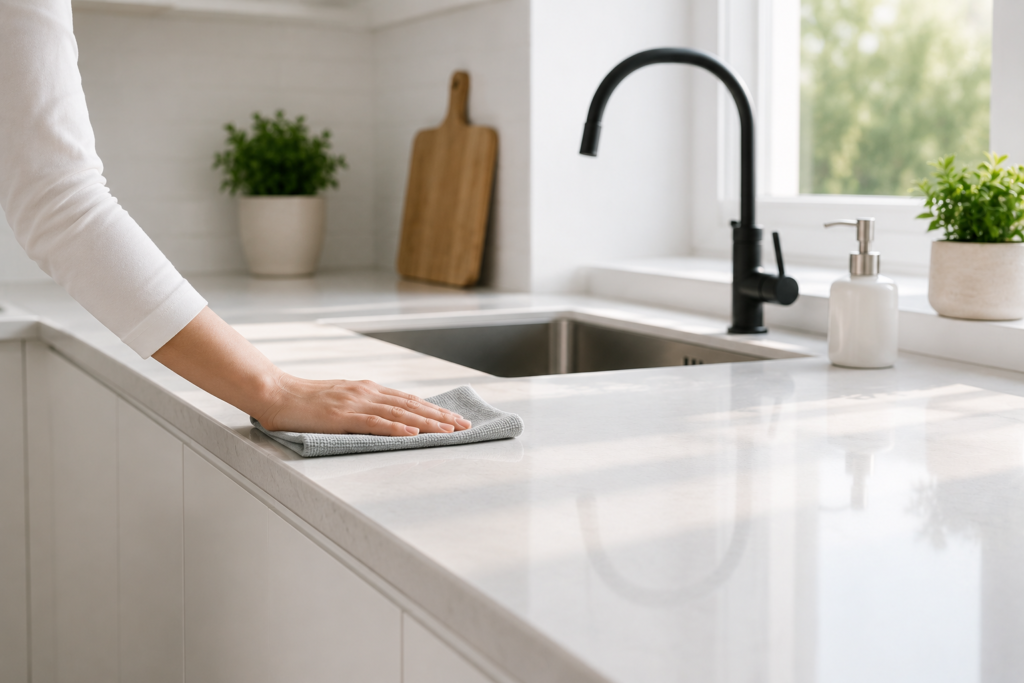
A daily cleaning routine isn’t about deep scrubbing, it’s about preventing small messes from snowballing into an overwhelming weekend project. Spending just ten to fifteen minutes on these tasks keeps your home from ever reaching that genuinely stressful “where do I even start” stage.
Daily whole-home checklist:
- Wipe kitchen counters and stovetop after cooking
- Load or unload the dishwasher, never letting dishes stack up overnight
- Make beds each morning
- Do a five-minute clutter sweep before bed, putting items back where they belong and clearing surfaces
- Take out trash and recycling as needed
- Wipe down bathroom sink and counters after use
- Do a quick sweep or spot-vacuum of high-traffic areas
These small, consistent habits form the genuine foundation of every effective cleaning routine, and they’re what keeps your weekly and monthly tasks from becoming overwhelming later.
Weekly Tasks: The Deeper Reset
Weekly cleaning tackles the tasks that daily maintenance simply doesn’t cover, restoring your whole home to a genuinely clean baseline roughly once every seven days.
Weekly whole-home checklist:
- Vacuum all carpets and rugs throughout the home
- Mop hard flooring in kitchens, bathrooms, and entryways
- Clean bathrooms thoroughly, including toilets, sinks, tubs, and showers
- Change bed linens
- Dust furniture, shelves, and accessible surfaces
- Wipe down door handles, light switches, and other high-touch areas
- Run a load or two of laundry, adjusting frequency based on household size
- Clean mirrors and glass surfaces
This task matters more than it might seem. NSF’s household germ study found that, contrary to popular belief, the kitchen, not the bathroom, consistently ranks as the germiest area of the home, with high-touch surfaces like faucet handles and stove knobs among the most contaminated spots people tend to overlook during routine cleaning.
A practical way to manage this without dedicating an entire day to cleaning is choosing one or two weekly tasks per day rather than attempting the whole list at once. Assigning one room per day, for example, spreads the workload evenly across the week instead of concentrating it into a single exhausting session.
Monthly Tasks: Catching What Weekly Routines Miss
Monthly cleaning targets the spots that weekly routines consistently miss, functioning as a genuine reset that keeps your home from slowly sliding backward over time.
Monthly whole-home checklist:
- Clean interior windows and window sills
- Dust blinds, ceiling fans, and light fixtures
- Wipe down baseboards throughout the home
- Deep clean kitchen appliances, including the inside of the microwave and refrigerator
- Vacuum upholstered furniture, including under cushions
- Clean showerheads and faucets to remove mineral buildup
- Wash shower curtains or liners
- Audit your cleaning supplies, replacing worn sponges, refilling products, and swapping vacuum filters if needed
This is also a smart time to check on cleaning tools themselves. A mop head that’s stopped absorbing properly or a clogged vacuum filter quietly undermines your cleaning effectiveness even though the tool still looks fine at a glance.
Seasonal Tasks: The Deep Clean That Resets Everything
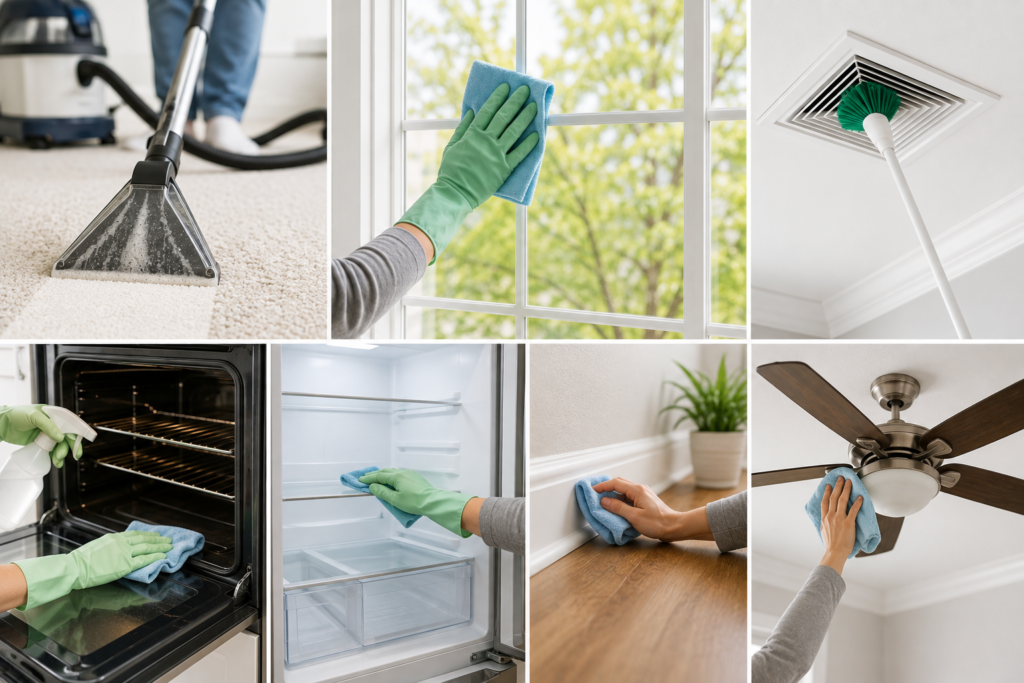
Certain chores only need attention a few times a year, and adding them to a seasonal calendar prevents them from being forgotten entirely between deep cleans.
Seasonal whole-home checklist:
- Deep clean carpets and rugs, either professionally or with a rented machine
- Wash interior and exterior windows thoroughly
- Clean out and organize closets, donating or discarding what’s no longer needed
- Deep clean behind and underneath large appliances
- Clean air vents and replace HVAC filters
- Wash curtains and drapes
- Declutter and reorganize storage areas like garages, basements, and attics
- Deep clean grout lines throughout bathrooms and kitchens
Seasonal cleaning is also a genuinely good time to step back and ask whether anything in your home is creating unnecessary ongoing work. Sometimes removing clutter or simplifying a space reduces your future cleaning burden more effectively than adding another recurring chore to the calendar.
Comparing Cleaning Frequency at a Glance
| Frequency | Time Investment | Example Tasks |
| Daily | 10–15 minutes | Wipe counters, make beds, clutter sweep |
| Weekly | 1–3 hours | Vacuum, mop, clean bathrooms, laundry |
| Monthly | 2–4 hours | Windows, baseboards, appliance deep clean |
| Seasonal | Half day–full day | Carpet deep clean, closets, vents, curtains |
Room-by-Room Breakdown: Kitchen
The kitchen sees daily use and generates grease, food residue, and bacteria risk that call for a slightly more detailed breakdown.
- Daily: Wipe counters and stovetop, wash or load dishes, wipe down the sink.
- Weekly: Clean the microwave interior, wipe down cabinet fronts, mop the floor, sanitize the sink and disposal.
- Monthly: Deep clean the oven, wipe down the refrigerator interior and check for expired items, clean the dishwasher filter, degrease the range hood.
- Seasonal: Clean behind and underneath the refrigerator and stove, deep clean cabinet interiors, wash walls near the cooking area.
Room-by-Room Breakdown: Bathroom
Bathrooms combine moisture, soap scum, and germs, making consistent attention particularly important here.
- Daily: Wipe down the sink and counter, squeegee the shower after use.
- Weekly: Scrub the toilet, tub, and shower thoroughly, mop the floor, replace hand towels.
- Monthly: Clean the showerhead and faucet aerators, wash the shower curtain or liner, wipe down cabinet exteriors.
- Seasonal: Deep clean grout lines, check and address any mildew in caulking, declutter and reorganize under-sink storage.
Room-by-Room Breakdown: Bedroom
Bedrooms generally see lighter daily mess but still benefit from a consistent weekly and monthly rhythm.
- Daily: Make the bed, put away clothing rather than letting it pile up.
- Weekly: Change and wash bed linens, dust surfaces, vacuum the floor.
- Monthly: Rotate or flip the mattress if applicable, vacuum under the bed, dust light fixtures and ceiling fans.
- Seasonal: Wash pillows and comforters, declutter closets, deep clean carpets or rugs.
Room-by-Room Breakdown: Living Room
Living rooms handle everyday family activity and often accumulate dust and clutter faster than other lower-traffic spaces.
- Daily: Quick tidy of pillows, blankets, and surfaces, spot-clean any spills immediately.
- Weekly: Vacuum carpets and upholstery, dust furniture and electronics, clean glass surfaces like coffee tables or TV screens.
- Monthly: Vacuum under cushions and furniture, dust blinds and ceiling fans, wipe down baseboards.
- Seasonal: Deep clean upholstery, wash curtains, clean windows thoroughly.
Building a Realistic Schedule That Actually Sticks
A checklist only works if you actually follow it, and a few practical strategies make that considerably more likely.
- Spread weekly tasks across the week: Rather than tackling everything on a single day, assign specific tasks or rooms to specific days, so no single day feels overwhelming.
- Use monthly tasks as a rolling checklist, not a single event: Choosing a few monthly tasks each week, rather than one giant deep-cleaning day, prevents the burnout that comes from trying to do everything at once.
- Keep the checklist visible: A printed or digital checklist kept somewhere easy to reference, like a home binder or a note on your phone, removes the mental burden of trying to remember everything yourself.
- Adjust based on your actual household: Larger households, homes with pets, or families with young kids may need certain weekly tasks handled more frequently, while smaller or quieter households might comfortably stretch some tasks further apart.
- Don’t aim for perfection every time: You don’t need to complete every single task on a list every time you clean; use the checklist as a flexible guide and focus on what your home genuinely needs that particular day.
Adapting Your Checklist Seasonally by Climate
Cleaning needs can shift meaningfully depending on the season and your specific regional climate, so it’s worth adjusting your seasonal checklist accordingly.
- Spring: Focus on deep cleaning after winter, including windows, carpets, and any accumulated dust from closed-up winter months.
- Summer: Prioritize managing increased outdoor dirt and allergens tracked indoors, along with more frequent attention to air conditioning filters during heavy use.
- Fall: Prepare for the return of more indoor time by deep cleaning vents, washing heavier bedding and curtains, and decluttering before the busier holiday season arrives.
- Winter: Focus on managing salt, snow, and mud tracked in from outside, along with maintaining indoor air quality during a season when windows generally stay closed.
Common Cleaning Checklist Mistakes to Avoid
- Trying to do everything at once: Attempting a full whole-house deep clean in a single session is a fast route to burnout and an abandoned checklist within weeks.
- Mixing all tasks into one undifferentiated list: Without separating by frequency, it’s genuinely hard to know what actually needs attention today versus what can reasonably wait until next month.
- Ignoring your household’s actual constraints: A checklist built for a different family size, home layout, or lifestyle often fails simply because it doesn’t reflect your real, day-to-day capacity.
- Forgetting to audit and replace cleaning supplies: Continuing to use a worn-out mop head or a clogged vacuum filter quietly reduces your cleaning effectiveness even when you’re following the schedule perfectly.
- Not building in flexibility: A checklist that assumes every task gets done every single time often collapses the first week life gets busy; treating it as a flexible guide rather than a strict mandate keeps it sustainable long-term.
Sort by Frequency, Then Just Start
A genuinely effective whole-house cleaning checklist comes down to sorting tasks by how often they actually need attention, daily habits that prevent buildup, weekly resets, monthly deep-dives, and seasonal overhauls, rather than treating every cleaning session as an all-or-nothing event. Spreading tasks across the week, keeping your checklist visible and realistic, and adjusting for your household’s actual size and pace makes the difference between a system that sticks and one that gets abandoned after a few weeks. Start with just your daily habits this week, then layer in weekly and monthly tasks gradually, and you’ll find a consistently clean home is far more achievable than any single overwhelming cleaning day ever was.
Frequently Asked Questions
1- How long should daily cleaning tasks actually take?
Daily maintenance tasks generally take just ten to fifteen minutes and focus on preventing mess buildup rather than deep cleaning, things like wiping counters, making beds, and a quick evening clutter sweep.
2- Do I need to do every weekly task every single week?
Not necessarily. Use the checklist as a flexible guide and prioritize based on what your home actually needs, rather than treating it as a strict requirement every time.
3- What’s the difference between monthly and seasonal cleaning tasks?
Monthly tasks catch things weekly routines miss, like windows and baseboards, while seasonal tasks involve deeper resets like carpet deep cleaning, closet decluttering, and vent cleaning done only a few times a year.
4- How can I keep from feeling overwhelmed by a whole-house checklist?
Spread tasks across the week or month rather than attempting everything at once, and consider assigning specific rooms or task categories to specific days.
5- Should my cleaning checklist change with the seasons?
Yes, seasonal shifts like increased outdoor debris in summer or closed windows in winter often call for adjusting which tasks get priority throughout the year.
6- Is it okay to skip a task if I’m busy that week?
Yes, a good cleaning checklist should flex with real life; missing a task occasionally won’t undo your overall routine, especially if your daily habits stay consistent.