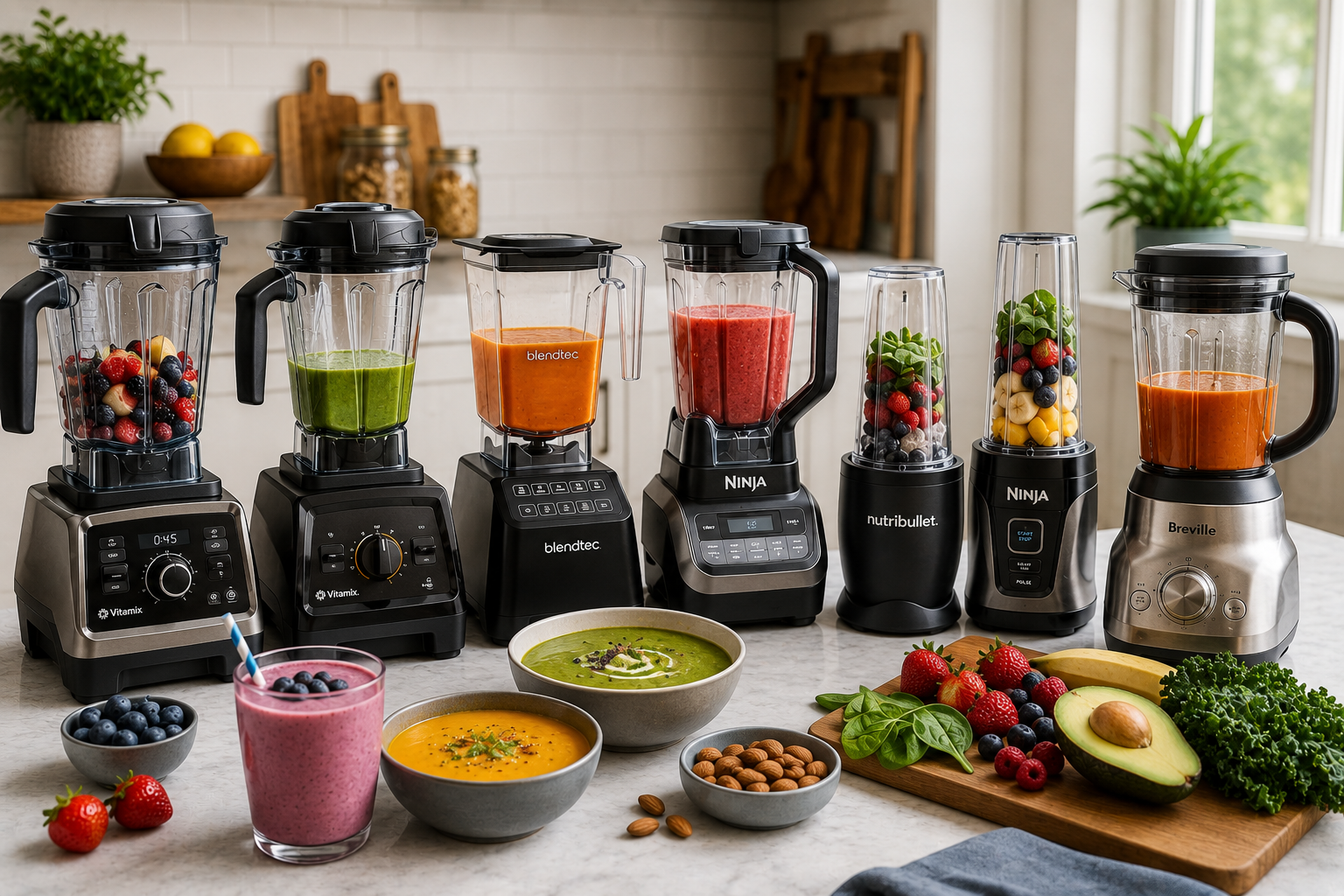
A good blender does far more than make smoothies. It purées soups, crushes ice, blends sauces, and even makes nut butter, provided you choose one with the right power and features for how you actually cook. But with best blenders for smoothies searches turning up everything from $30 personal blenders to $500 professional-grade machines, narrowing down the right choice can feel overwhelming.
This guide covers 12 well-regarded blenders across different categories, budget, mid-range, high-performance, and personal-sized, along with a complete buying guide covering power, jar material, noise level, and which features actually matter for your kitchen appliances.
How to Choose the Right Type of Blender First
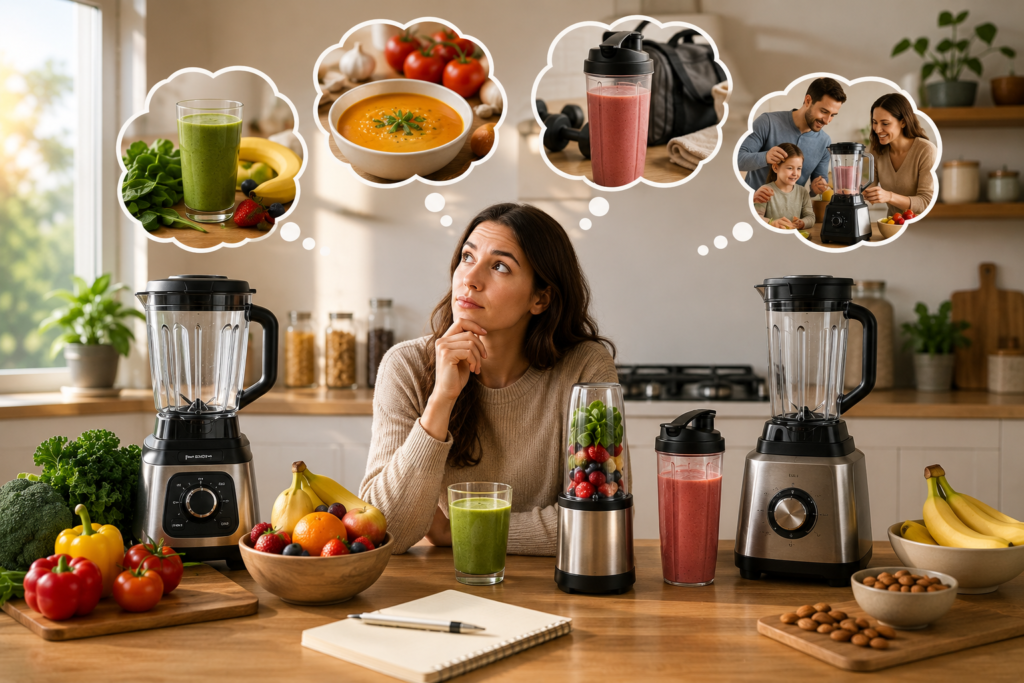
Before comparing specific models, it helps to understand the broad categories blenders fall into, since this affects which specific machine makes sense for you.
Full-size jug blenders sit on the counter and handle larger batches, making them suited to households that blend soups, sauces, or smoothies for multiple people at once.
Personal blenders are compact, single-serving machines, often blending directly into a portable cup, designed for individuals making one smoothie or shake at a time.
High-performance blenders use more powerful motors, typically 1,000 watts or more, to handle tougher ingredients like ice, frozen fruit, and fibrous vegetables with a smoother end result.
Budget blenders trade some power and durability for a lower price point, still handling everyday smoothies and light blending tasks reasonably well.
A Quick Comparison Table
| Blender | Type | Best For | Price Range |
| Vitamix A3500 | High-performance, full-size | Daily use, tough ingredients, longevity | Highest |
| Vitamix Ascent X5 | High-performance, full-size | Versatile all-around performance | Highest |
| Vitamix Propel 510 | Full-size | Soups, nut butter, smoothies | High |
| Blendtec Total Classic | High-performance, full-size | Crushing ice and frozen fruit | High |
| Ninja Professional BL610 | Full-size | Budget-friendly everyday blending | Lower to mid |
| Ninja Foodi Power Nutri DUO | Full-size + personal hybrid | Flexible single or batch blending | Mid-range |
| Ninja BlendBoss | Personal | Powerful single-serve smoothies | Lower to mid |
| NutriBullet Pro 900 | Personal | Simple, compact single-serve blending | Lower |
| Breville Fresh & Furious | Full-size | Mid-range performance and quiet operation | Mid-range |
| KitchenAid Pure Power | Full-size | Everyday household blending | Mid-range |
| Black+Decker Quiet Blender | Full-size | Noise-conscious households | Lower to mid |
| Braun TriForce | Full-size | Versatile all-rounder | Mid to high |
The 12 Best Blenders for Smoothies, Soups and More
1. Vitamix A3500
The Vitamix A3500 is frequently recommended as a top pick among serious home cooks and smoothie enthusiasts, known for its durable build and strong track record in professional kitchen settings. Vitamix machines in this range typically come with lengthy warranties, often around a decade, reflecting the brand’s confidence in long-term durability.
2. Vitamix Ascent X5
The Ascent X5 offers similarly strong blending performance to the A3500, with smart programmable settings that automatically adjust blending time and speed based on the selected preset. It’s a strong choice for households wanting consistent results across smoothies, soups, and frozen desserts without manually adjusting settings each time.
3. Vitamix Propel 510
This mid-tier Vitamix model includes settings for smoothies, hot soups, and frozen desserts, along with a pulse function for handling ice and other ingredients that tend to stick to the blades. It’s often highlighted as offering strong performance at a more accessible price point within the Vitamix lineup.
4. Blendtec Total Classic
Blendtec is one of the most recognized competitors to Vitamix, and its motors are known for high peak horsepower, making the Total Classic particularly effective at crushing ice and blending frozen fruit into smooth, drinkable textures. Its blade design differs notably from Vitamix, shorter and blunter, which some users prefer for certain textures.
5. Ninja Professional BL610
Built around a 1,000-watt motor and Ninja’s Total Crushing Technology, the BL610 delivers dependable performance for everyday smoothie-making at a noticeably lower price point than premium high-performance blenders. It’s a strong pick for households wanting solid results without a large upfront investment.
6. Ninja Foodi Power Nutri DUO
This model offers flexibility between full-size batch blending and personal single-serve cups, making it a practical choice for households where some members want a quick individual smoothie while others want to blend a larger batch at once.
7. Ninja BlendBoss
A personal blender with a notably powerful motor for its category, the BlendBoss is designed to handle tougher ingredients like ice and frozen fruit even in a compact, single-serving format, addressing a common weak point of smaller personal blenders.
8. NutriBullet Pro 900
The NutriBullet Pro 900 is a widely recognized personal blender, designed for making single-serving smoothies and shakes that you blend and drink from the same cup. It’s a strong option for individuals with a consistent daily smoothie habit who don’t need a full-size blender’s batch capacity.
9. Breville Fresh & Furious
This mid-range blender maintains solid blending performance with frozen ingredients while operating more quietly than many competitors in its price range. Its Tritan jug, straightforward controls, and auto-clean function make it a practical everyday choice for households not ready to invest in a premium high-performance model.
10. KitchenAid Pure Power
KitchenAid’s blender lineup offers dependable everyday performance, suited to households wanting a trusted, familiar brand for regular smoothie and food prep tasks without stepping into premium high-performance pricing.
11. Black+Decker Quiet Blender
Featuring a cyclone glass jar design aimed at reducing noise during operation, this model suits noise-conscious households, such as those blending early in the morning without wanting to wake others in the home.
12. Braun TriForce
Recognized as a versatile all-around performer, the Braun TriForce handles a range of blending tasks, from smoothies to soups, making it a solid choice for households wanting one reliable blender that doesn’t specialize narrowly in just one type of task.
Full-Size vs Personal Blenders: Which Do You Need?
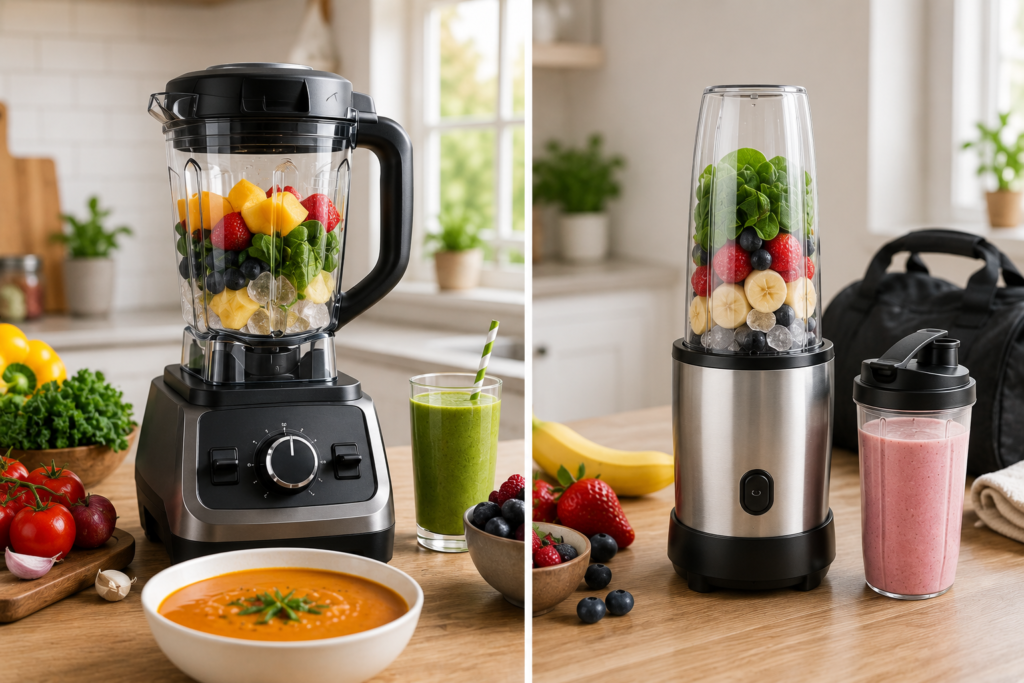
Choose a Full-Size Blender If:
You regularly blend for multiple people, make soups, sauces, or nut butter in addition to smoothies, or need the capacity to prepare larger batches at once for meal prep.
Choose a Personal Blender If:
You primarily make single-serving smoothies or shakes, want a compact appliance that takes up minimal counter space, or value the convenience of blending directly into a portable cup you can take with you.
Consider a Hybrid Model If:
Your household has mixed needs, some members wanting quick individual servings, others wanting to blend larger batches, a hybrid model like the Ninja Foodi Power Nutri DUO can cover both use cases without needing two separate appliances.
Key Features to Consider
Motor Power
Motor wattage affects how well a blender handles tough ingredients like ice, frozen fruit, and fibrous vegetables. Higher wattage generally means smoother results with less manual intervention, though blade design and jar shape also significantly affect actual blending performance, not wattage alone.
Jar Material
Blender jars are typically made from either plastic (often Tritan, a durable BPA-free plastic) or glass. Plastic jars are lighter and more resistant to cracking, while glass jars resist scratching and don’t retain odors from strong-flavored ingredients as easily over time. Tritan, the material most commonly used in blender jars, is manufactured to be free of BPA and other bisphenol compounds, according to Eastman’s official product information, the company that produces it. It’s a detail worth checking if BPA-free materials matter to you when choosing kitchen appliances.
Preset Programs
Many mid-range and premium blenders include preset programs for specific tasks like smoothies, soups, or frozen desserts, automatically adjusting blend time and speed for consistent results without guesswork.
Noise Level
Blender noise varies considerably between models, and this matters more than many buyers initially expect, particularly for early morning use in a household with sleeping family members. Some brands specifically market noise-reduction features, like enclosed jar designs, for this reason.
Ease of Cleaning
Look for blenders with self-cleaning or auto-clean cycles, along with dishwasher-safe components, to reduce the daily hassle of cleaning blades and jars after each use worth pairing with a consistent kitchen cleaning schedule so appliances don’t get neglected.
Warranty
Warranty length often reflects a manufacturer’s confidence in a blender’s durability. Premium high-performance blenders frequently carry warranties of 7 to 10 years, while budget models typically offer shorter coverage, often one to two years.
Blenders for Specific Tasks
Best for Smoothies
Nearly any full-size or personal blender can handle basic smoothies, but high-performance models with strong ice-crushing ability, such as those from Vitamix or Blendtec, tend to produce the smoothest, most consistent texture with frozen fruit and ice.
Best for Soups
Full-size blenders with a hot soup preset, common in higher-end Vitamix models, can actually heat soup through the friction generated during blending, eliminating the need for a separate stovetop step.
Best for Nut Butter and Thick Mixtures
Thicker mixtures like nut butter require a powerful motor and often a tamper tool to keep ingredients moving toward the blades, a feature found in several premium Vitamix models.
Best for Single Servings
Personal blenders remain the most practical choice for anyone making one smoothie or shake at a time, offering convenience and easy cleanup without the size or cost of a full jug blender.
Budget Planning
Blender prices span an enormous range depending on power, brand, and features. Budget personal blenders and basic full-size models represent the most affordable entry point, suitable for everyday smoothies and light blending tasks. Mid-range full-size blenders, offering stronger motors and additional presets, occupy the middle of the price spectrum. Premium high-performance blenders from brands like Vitamix and Blendtec represent the top end, reflecting stronger motors, longer warranties, and generally more durable long-term construction.
Common Mistakes to Avoid
- Choosing based on price alone, without considering whether the blender can actually handle the ingredients you use most often, like ice or frozen fruit
- Buying a personal blender for a multi-person household, then finding batch capacity insufficient for daily needs
- Overlooking noise level, particularly for households blending early in the morning
- Ignoring jar material preferences, since plastic and glass jars each come with different durability and maintenance trade-offs
- Underestimating cleaning effort, choosing a model without dishwasher-safe parts or a self-cleaning cycle
- These same buying mistakes, choosing on price alone, ignoring maintenance needs, show up across almost every kitchen purchase, including our air purifier buying guide.
Conclusion
Finding the best blender for home use comes down to matching motor power, capacity, and features to how you actually cook and drink, whether that’s a quick daily smoothie, a batch of soup for the whole family, or both. Full-size, high-performance blenders offer the most versatility and durability for households blending frequently, while personal blenders provide a convenient, affordable option for individuals with simpler needs. Think honestly about what you’ll actually use it for most often, and let that guide your decision rather than choosing based on brand recognition or price alone.
Frequently Asked Questions
1- What is the best blender for smoothies specifically?
High-performance blenders like the Vitamix A3500 or Blendtec Total Classic are frequently recommended for smoothies, thanks to their strong motors and consistent ability to crush ice and frozen fruit smoothly.
2- Is a personal blender good enough for daily smoothies?
Yes, for individuals making one smoothie at a time. Personal blenders like the NutriBullet Pro 900 or Ninja BlendBoss are well suited to daily single-serving use, though they aren’t designed for larger batches or non-smoothie tasks like soups.
3- How much should I spend on a blender?
This depends on your usage frequency and the types of ingredients you typically blend. Occasional smoothie makers can do well with a budget or mid-range model, while daily users blending tough ingredients like ice may find a premium high-performance blender pays off in durability and consistent results.
4- Can a regular blender make soup?
Yes, most full-size blenders can purée soup, though some premium models include a dedicated hot soup setting that heats the mixture through blending friction alone, eliminating a separate stovetop step.
5- What’s the difference between Vitamix and Blendtec?
Both are premium high-performance brands with strong reputations, differing mainly in motor specifications and blade design. Vitamix tends to use a taller jar and different blade geometry compared to Blendtec’s shorter, blunter blade design, though both achieve strong results.
6- Do more expensive blenders actually perform better?
Generally, yes, particularly for tougher ingredients like ice and frozen fruit, where stronger motors and more refined blade design produce smoother results with less manual intervention. However, mid-range and budget blenders can still perform well for everyday smoothies and lighter blending tasks.
7- How long should a good blender last?
This varies considerably by brand and usage, but premium high-performance blenders are often built to last many years of regular use, reflected in their longer warranty periods, while budget models may have a shorter practical lifespan under heavy daily use.