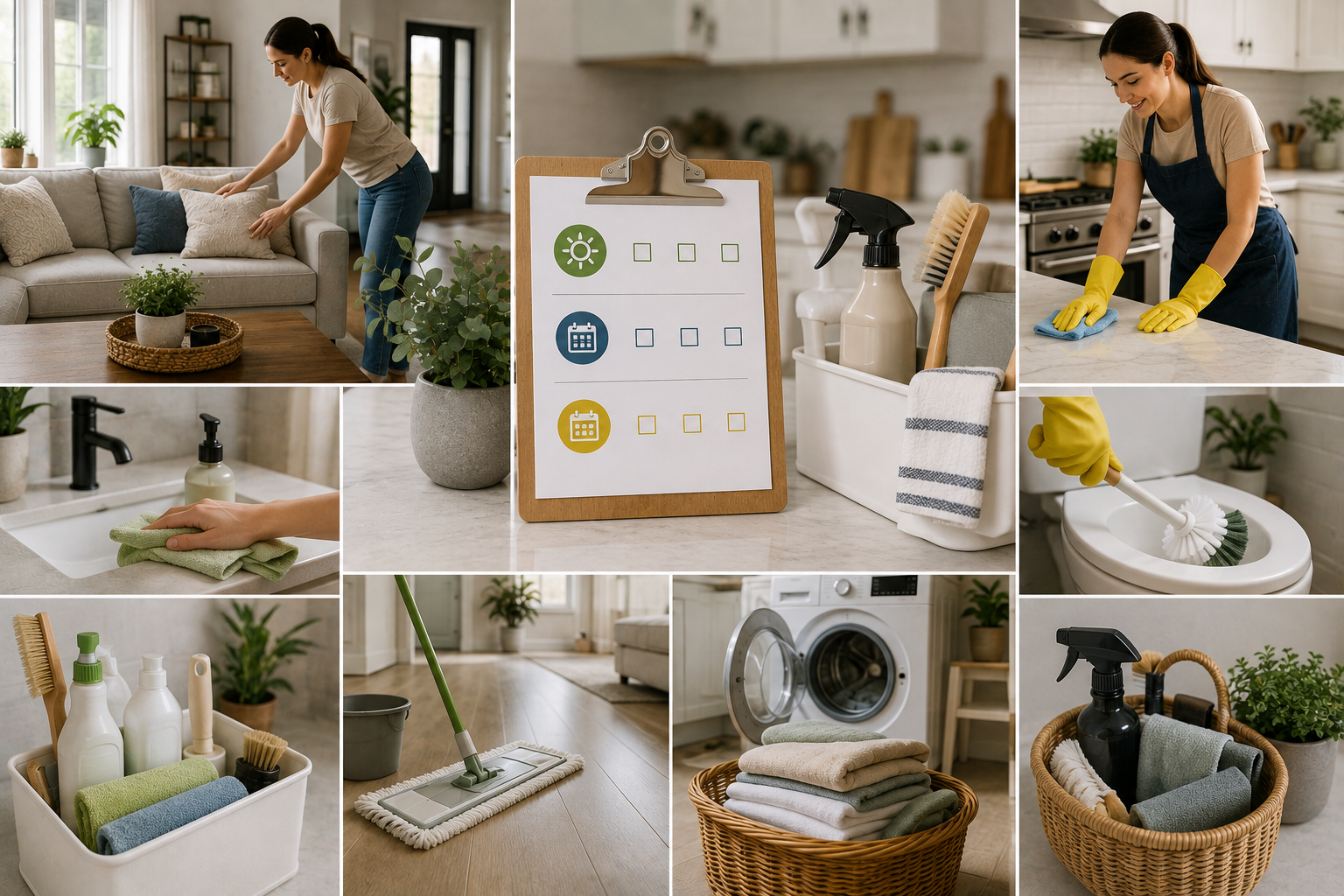
If cleaning only happens when your house has reached “overwhelming,” you’re not alone and you’re also making it harder on yourself than it needs to be. The secret to a consistently clean home isn’t more effort. It’s spreading a few small tasks across daily, weekly, and monthly routines so mess never has the chance to build up in the first place.
A realistic cleaning schedule breaks tasks into three tiers, daily tasks (10 to 15 minutes) that prevent buildup, weekly tasks (30 to 90 minutes, often split across a few days) that keep surfaces and floors genuinely clean, and monthly tasks that handle the spots regular cleaning misses, like baseboards, appliances, and light fixtures. Once you have this rhythm in place, cleaning stops feeling like a single dreaded event and becomes a series of small, manageable habits.
This guide breaks down exactly what belongs in each tier, how to build a schedule that fits your actual household, and practical tips to make the whole system stick.
Why a Tiered Cleaning Schedule Works Better Than “Cleaning When It’s Dirty”
Waiting until a room feels genuinely messy before cleaning it means you’re always doing the hardest version of the job grease that’s had time to set, dust that’s thickened into visible buildup, a bathroom that needs real scrubbing instead of a quick wipe-down.
A tiered schedule flips this. Daily tasks stop small messes from becoming big ones. Weekly tasks handle the things that get dirty on a predictable cycle. Monthly tasks catch the areas that don’t need constant attention but still need to be addressed before they become a real project. Together, they keep your home consistently clean with far less total effort than periodic deep-cleaning sessions.
Daily Cleaning Tasks: The 10 to 15 Minute Habits
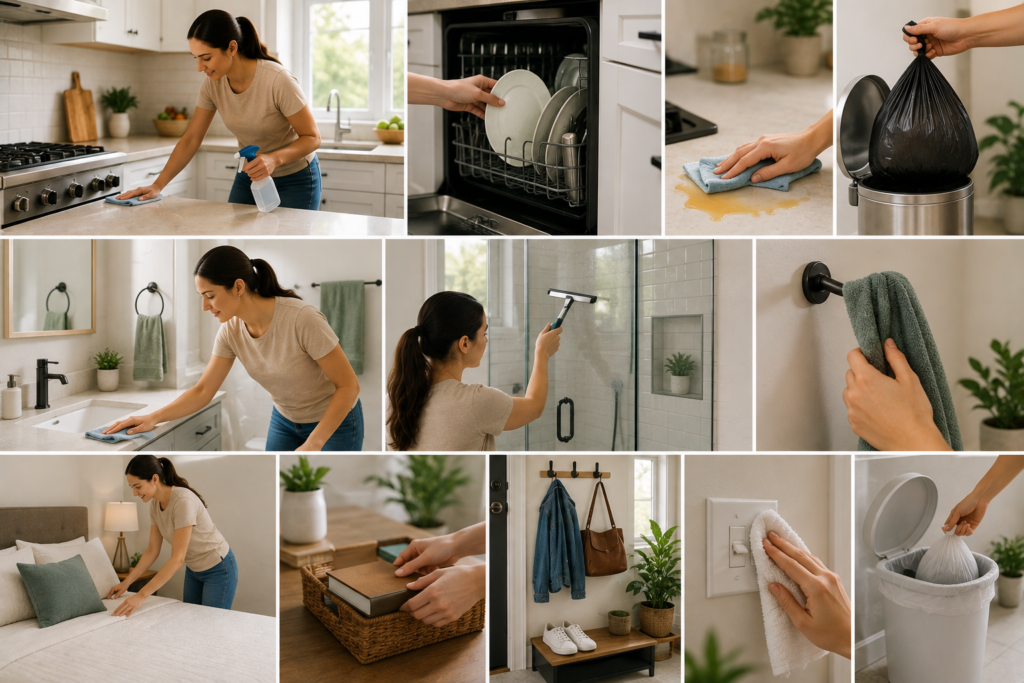
Daily tasks aren’t about deep cleaning they’re about preventing the buildup that makes cleaning feel overwhelming in the first place. These are quick, repeatable habits that fit into a normal day.
Kitchen (5–7 minutes)
- Wipe down counters and the stovetop after cooking
- Wash, load, or unload dishes avoid letting them pile up overnight
- Wipe up spills immediately rather than letting them dry
- Take out any full trash or recycling
Bathroom (2–3 minutes)
- Wipe down the sink and counter
- Squeegee the shower or tub walls after use to prevent water spots and mildew buildup
- Hang towels properly to dry rather than leaving them bunched up
- There’s a practical reason the squeegee habit matters. The US Environmental Protection Agency says the key to mold control is moisture control. For bathrooms where mold keeps returning, it recommends running a fan or opening a window and cleaning more frequently.
Living Areas and Bedrooms (3–5 minutes)
- Make the bed each morning
- Do a quick clutter sweep return items to their designated spot, clear surfaces
- Fluff and straighten throw pillows and blankets
- Hang up jackets, bags, or shoes near the entryway instead of leaving them out
General Daily Habits
- Wipe down high-touch surfaces occasionally (light switches, doorknobs, remotes)
- Empty any full trash cans around the house
- Do a five-minute end-of-day reset putting stray items back where they belong before bed
Why this matters: These small, consistent habits are what keep your home from ever reaching the point where a “quick clean” turns into a multi-hour project.
Weekly Cleaning Tasks: The Bigger Reset
Weekly tasks take longer than daily ones and typically involve actual cleaning products, not just tidying. Many households find it easier to spread these across the week rather than tackling everything in one sitting for example, dusting on one day, vacuuming on another, and bathrooms midweek.
Kitchen
- Scrub the sink thoroughly (a sprinkle of baking soda with a damp sponge works well for general grime)
- Degrease the stovetop and wipe down appliance fronts
- Wipe down cabinet exteriors and handles
- Sweep and mop the floor
Bathrooms
- Scrub the toilet, inside and out
- Clean the sink, counter, and faucet thoroughly
- Wipe down mirrors
- Scrub the shower or tub walls and floor
- Mop the bathroom floor
Living Areas and Bedrooms
- Vacuum all floors and rugs
- Dust shelves, surfaces, and furniture
- Wipe down light switches, remotes, and other frequently touched items
- Vacuum or mop bedroom floors
- Change bed sheets and pillowcases
Whole-House Weekly Tasks
- Take out trash and recycling from every room, not just the kitchen
- Run one or two loads of laundry to avoid a backlog
- Vacuum high-traffic areas and entryways more thoroughly
A Practical Way to Spread Out Weekly Tasks
| Day | Focus Area |
| Monday | Dusting throughout the house |
| Tuesday | Vacuuming all rooms |
| Wednesday | Bathroom deep clean |
| Thursday | Kitchen deep clean |
| Friday | Mopping and floor care |
| Weekend | Laundry, sheets, general catch-up |
This kind of spread keeps each individual task short usually 15 to 30 minutes while still covering the full house by the end of the week.
Monthly Cleaning Tasks: The Spots Regular Cleaning Misses
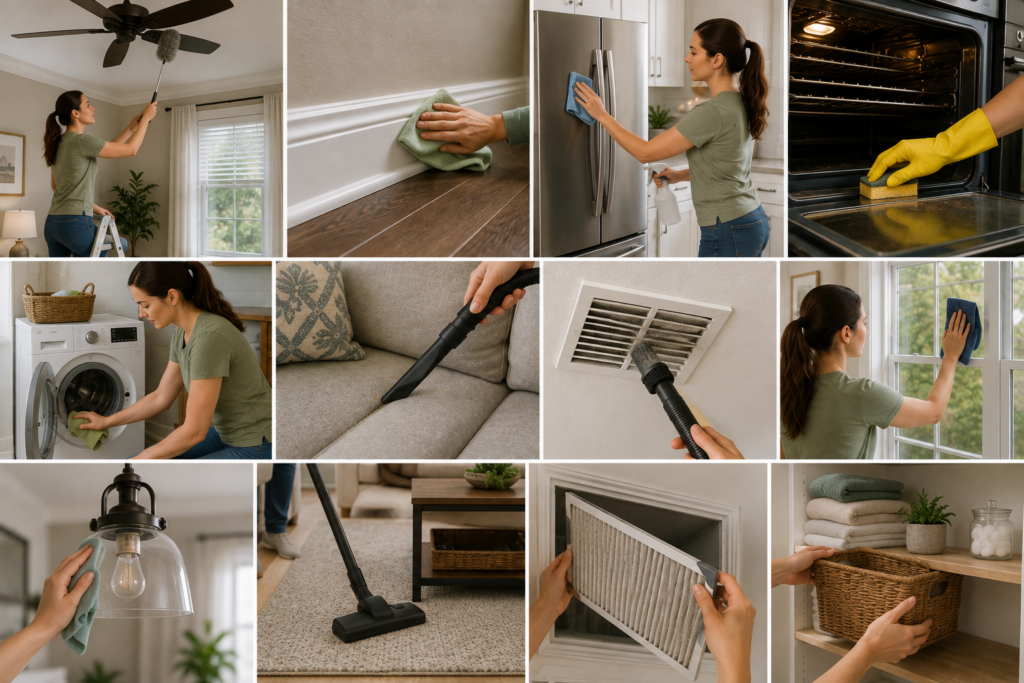
Monthly tasks address areas that don’t get dirty as quickly but still need attention before they become a genuine chore. These are the tasks that are easy to forget precisely because they’re not part of your daily line of sight.
Kitchen
- Clean inside the refrigerator, wiping shelves and drawers, and discard expired items
- Wipe down the inside of the microwave thoroughly
- Clean the garbage disposal to prevent odor and bacteria buildup
- Wipe down small appliances (toaster, coffee maker) inside and out
Bathrooms
- Scrub grout lines in the shower or tub
- Clean the exhaust fan cover
- Descale the showerhead if you’re in a hard-water area
- Wash the bath mat and shower curtain (or liner)
Living Areas and Bedrooms
- Dust baseboards, window sills, and blinds
- Wipe down light fixtures and ceiling fans
- Vacuum under furniture and in corners that weekly vacuuming often misses
- Wash or dust curtains and drapes
Whole-House Monthly Tasks
- Vacuum upholstered furniture, including cushions and crevices
- Clean interior door handles, light switch plates, and other frequently touched surfaces more thoroughly
- Wipe down walls near light switches and doorframes where fingerprints accumulate
- Check and replace air filters if your household’s schedule calls for it that month
Cleaning Schedule at a Glance
| Frequency | Time Commitment | Focus |
| Daily | 10–15 minutes | Preventing buildup — dishes, counters, beds, clutter |
| Weekly | 30–90 minutes total (often spread across days) | Genuine cleaning — floors, bathrooms, kitchen surfaces |
| Monthly | 1–3 hours (often spread across a weekend) | Overlooked areas — appliances, baseboards, fixtures |
How to Build a Schedule That Actually Fits Your Household
A generic checklist only works if it matches how your household actually lives. Consider these factors when adjusting the schedule above to fit your situation.
If You Live Alone or With a Partner
Daily and weekly tasks are usually enough to keep a smaller household running smoothly, since there’s less overall mess-generating activity. Monthly tasks can often be handled in a single afternoon.
If You Have Kids
Daily tasks may need slightly more attention in shared spaces (floors, bathrooms, common areas), since kids tend to generate mess faster than adults alone. Weekly floor cleaning may benefit from happening more than once a week in high-traffic zones.
If You Have Pets
Vacuuming and floor care often need to happen more frequently than the standard weekly schedule, particularly in homes with pets that shed. Using a vacuum with a HEPA filter can help more effectively capture pet dander and allergens.
If You Work Long Hours or Travel Often
Focus daily habits on the bare essentials — dishes, counters, a quick clutter sweep — and consider consolidating weekly tasks into fewer, longer sessions (like a Saturday morning block) rather than spreading them across weekdays you may not consistently be home for.
Practical Tips to Make the Schedule Stick
- Assign specific days to specific tasks, rather than a vague “sometime this week” approach. A fixed day removes the decision fatigue of figuring out what to clean next.
- Keep cleaning supplies accessible in each area. Storing sanitizing wipes under the bathroom vanity or supplies in the kitchen makes small daily tasks far more likely to actually happen.
- Use a checklist, physical or digital, to track completed tasks — checking something off is a small but real motivator to keep the habit going.
- Involve the whole household. Splitting daily and weekly tasks among family members makes the schedule far more sustainable than one person handling everything alone.
- Adjust the schedule seasonally. Some monthly tasks, like window cleaning or deep appliance cleaning, may naturally shift depending on the season or how your home is being used.
- Don’t aim for perfection every week. If a weekly task gets missed, simply pick it back up the following week rather than trying to catch up on everything at once.
Small, Consistent Habits Beat Occasional Deep Cleans
A clean home doesn’t require constant effort it requires a rhythm. Daily tasks stop mess from building up, weekly tasks keep the essentials genuinely clean, and monthly tasks catch the details that easily slip through the cracks. Once this schedule becomes a habit rather than a chore list you dread, cleaning stops feeling like an overwhelming weekend project and starts feeling like a normal, manageable part of your week.
Start small if the full schedule feels like a lot at once even adding just the daily habits first will noticeably reduce how often your home feels like it’s spiraling. Build from there, adjust it to fit your household’s actual pace of life, and let the schedule do the work of keeping your home consistently comfortable and clean.
FAQ
1- How long should a daily cleaning routine actually take?
A realistic daily routine takes about 10 to 15 minutes total, focused on preventing buildup wiping counters, handling dishes, making the bed, and doing a quick clutter sweep before the day ends.
2- Is it better to clean the whole house in one day, or spread tasks throughout the week?
Spreading weekly tasks across several days for example, dusting one day and vacuuming another tends to be more sustainable than one long cleaning session, since each task stays short and manageable rather than becoming a multi-hour weekend project.
3- What tasks are most commonly forgotten in a cleaning routine?
Baseboards, light fixtures, ceiling fans, and the areas behind or under furniture are among the most commonly overlooked spots, since they’re not part of the everyday line of sight the way counters and floors are.
4- How often should I vacuum if I have pets?
Households with pets, especially those that shed, generally benefit from vacuuming more frequently than the standard once-a-week schedule, and using a vacuum with a HEPA filter can help better capture pet dander and allergens.
5- Do I need to do all the monthly tasks in a single day?
Not necessarily. Many households find it easier to spread monthly tasks across a weekend or even across the month, tackling one or two items at a time rather than treating it as a single large cleaning event.
6- What’s the easiest way to stay consistent with a cleaning schedule?
Assigning specific tasks to specific days, keeping supplies easily accessible in each room, and using a simple checklist to track progress are among the most effective ways to keep a cleaning schedule sustainable long-term.