
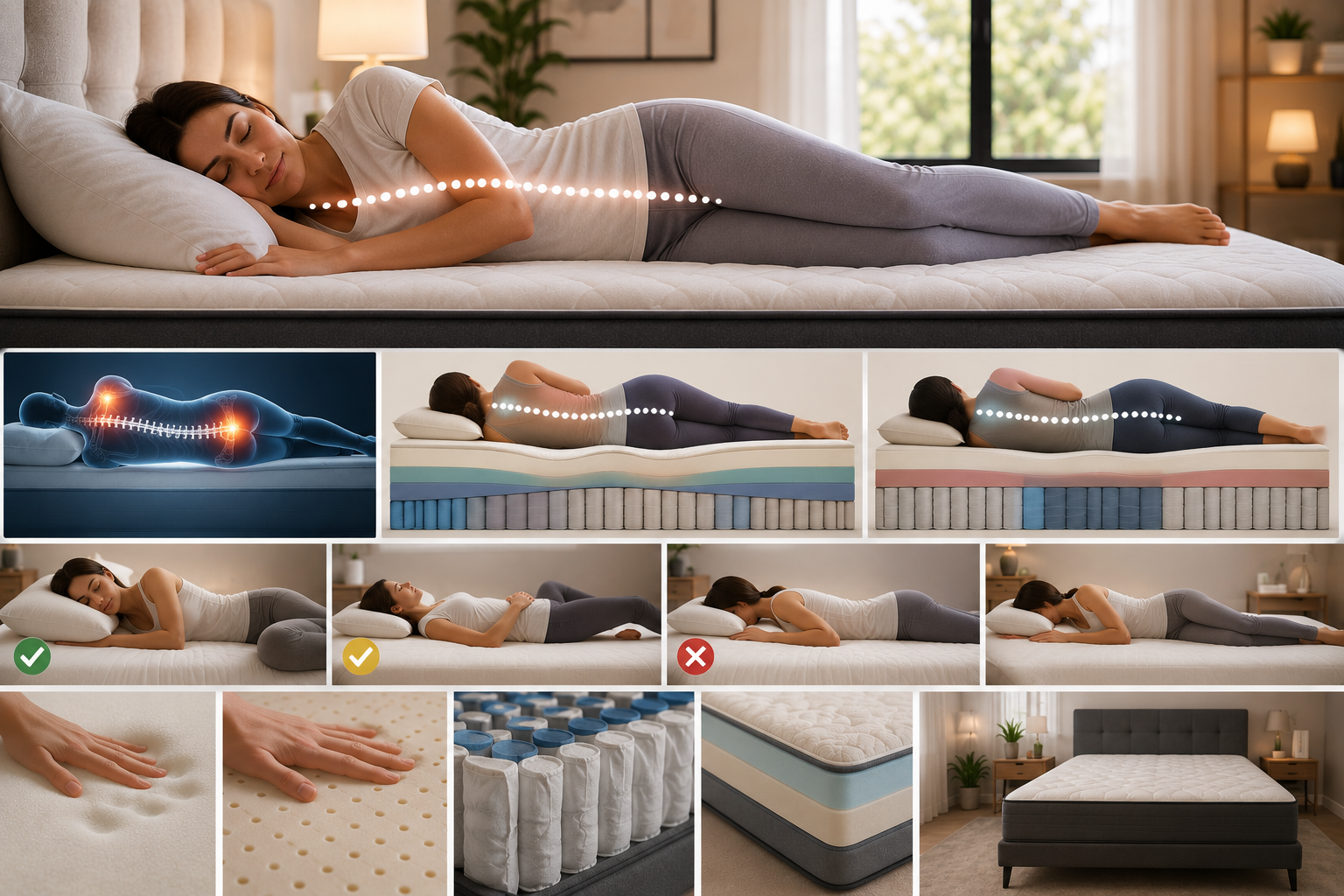
If you sleep on your side, and roughly most people do, you already know the specific ache that comes from the wrong mattress: a numb shoulder, a sore hip, or a nagging lower back stiffness that seems to show up no matter how you shift positions. Finding the best mattress for side sleepers isn’t about grabbing “the softest one on the shelf,” it’s about understanding exactly how side sleeping loads your body and choosing a mattress engineered specifically for that pressure pattern.
This guide breaks down the real science behind side-sleeper comfort, the ideal firmness range, which materials actually deliver on pressure relief, and how to shop smart based on your specific pain points and body weight.
What Side Sleepers Actually Need
Side sleepers generally need a medium-firm mattress, roughly a 5 to 6 on a 10-point firmness scale, that offers enough give to cushion the shoulder and hip without letting either sink so far that your spine falls out of alignment. Memory foam, latex, and hybrid constructions all perform well here, since each conforms to your body’s curves rather than pushing back flat the way a firmer innerspring does. If you’re dealing with hip or shoulder pain specifically, look for mattresses with zoned support, firmer coils or foam under the hips and lower back, softer material under the shoulders, since this targeted design does more for spinal alignment than overall softness alone.
Why Side Sleeping Is So Hard on Your Body
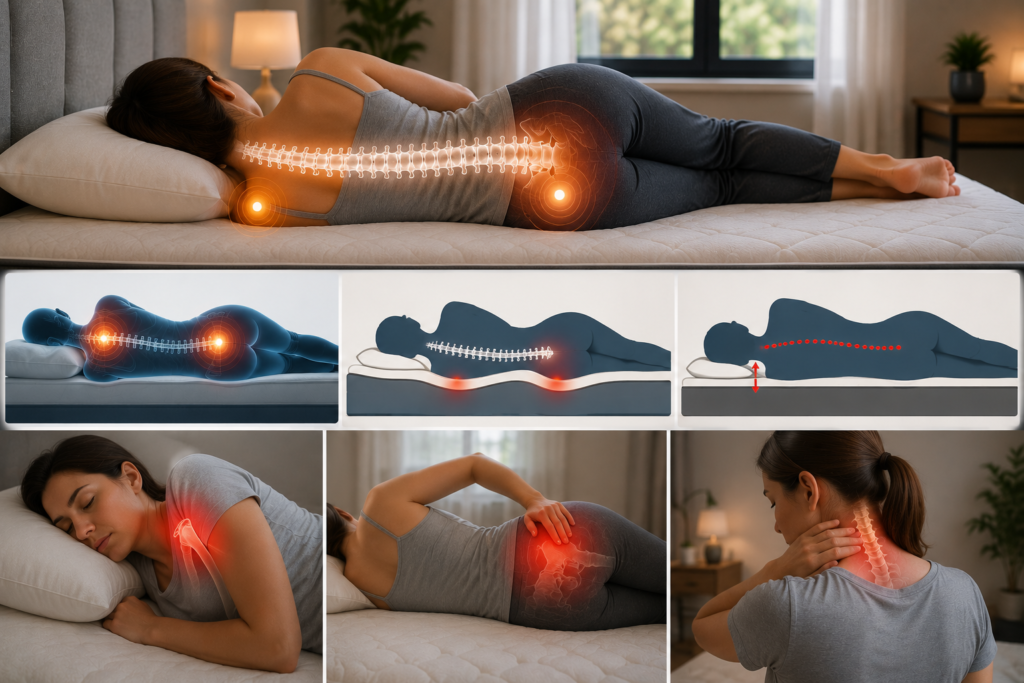
Two Pressure Points Carry Almost All Your Weight
Side sleeping concentrates your body’s weight onto two relatively small, bony areas, your shoulder and your hip, rather than distributing it evenly the way back sleeping does. When a mattress doesn’t accommodate these two contact points properly, you get pressure buildup, restricted blood flow, and the kind of numbness or soreness that wakes you up or lingers into the morning.
This isn’t just intuitive pressure-mapping research confirms it. Studies show hip pressure in side sleeping runs roughly twice as high as it does when lying on the back, which is exactly why side sleepers need more targeted cushioning than other sleep positions require
Why “Just Buy Something Soft” Is the Wrong Advice
It’s tempting to assume the fix is simply a softer mattress, and softness genuinely does help relieve pressure at the shoulder and hip. But too much sink creates a different problem entirely: your hips drop lower than your spine can comfortably tolerate, pulling your lower back out of alignment and creating a “hammock” effect through your midsection. The actual goal is a mattress that lets the shoulder and hip settle in just enough to keep your spine level from neck to tailbone, not maximum softness for its own sake.
The Gap Problem at Your Neck and Shoulder
A mattress that’s too firm creates the opposite issue, your shoulder can’t sink in at all, which pushes your head and neck out of natural alignment and creates a visible gap between your ear and the mattress surface. This is one of the most common causes of chronic neck pain and morning headaches for side sleepers using an overly firm bed.
The Ideal Firmness Range for Side Sleepers
Why Medium Firmness Hits the Sweet Spot
A medium-firm mattress, generally landing around 5 to 6 on the standard 10-point firmness scale, gives side sleepers the balance they need: soft enough to cradle the hips and shoulders, firm enough to keep the rest of the spine properly supported rather than sagging into a curve.
Adjusting Firmness for Your Body Weight
| Body Weight | Recommended Firmness | Why |
| Under 130 lbs | Soft to medium (4–5) | Lighter body weight doesn’t compress firmer material enough for real pressure relief |
| 130–230 lbs | Medium to medium-firm (5–6) | Standard zone where most side sleepers find balanced support |
| Over 230 lbs | Medium-firm to firm (6–7) | Heavier body weight needs more resistance to avoid excessive sinkage and maintain alignment |
Why Lighter Sleepers Often Need Softer Beds Than They Expect
Lighter individuals don’t apply enough body weight to compress a firmer mattress the way heavier sleepers do, which means a “medium” mattress can actually feel considerably firmer to a 120-pound sleeper than it does to someone weighing 200 pounds. If you’re on the lighter end and still waking up sore on a supposedly medium-firm bed, a softer option may genuinely be the fix rather than a sign something else is wrong.
Which Mattress Materials Actually Work Best?
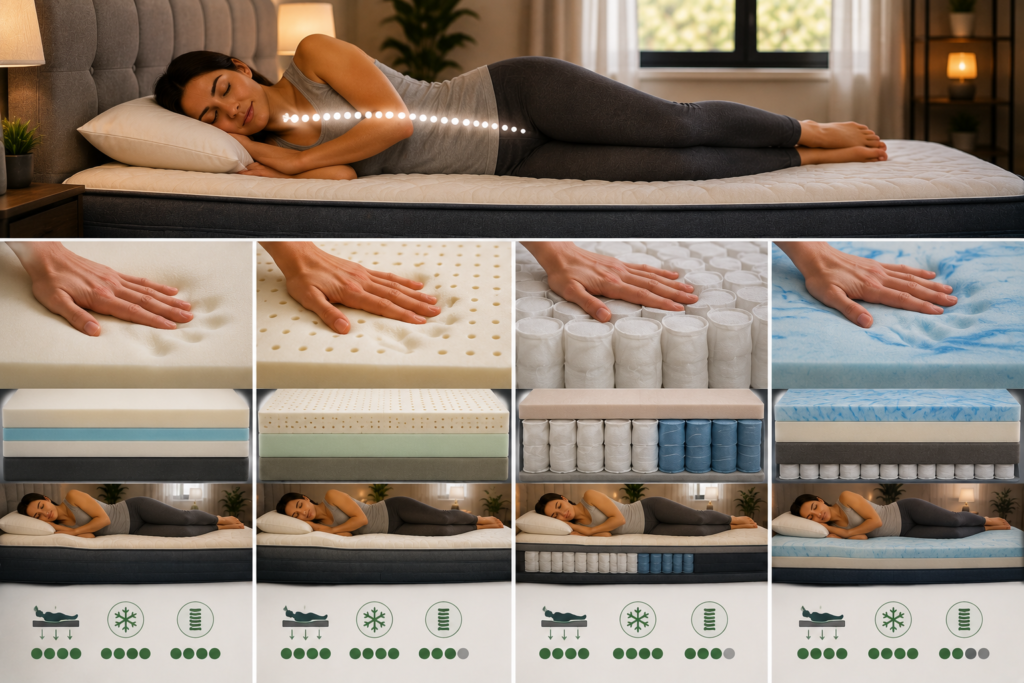
- Memory Foam: The Classic Contouring Choice
Memory foam remains one of the most reliable options for side sleepers, since it hugs the body’s curves and evenly distributes weight across the surface rather than concentrating it at the shoulder and hip. This close, slow-responding contour delivers genuinely strong pressure relief, though it’s worth pairing with a cooling gel infusion if you tend to sleep warm.
- Latex: A Buoyant, Naturally Cooler Alternative
For side sleepers who want foam’s contouring without the heat retention some memory foam carries, latex-over-coil construction offers a more buoyant, responsive pressure relief with notably better breathability, a strong option for anyone who runs warm at night but still wants that cushioned, cradled feel.
- Hybrid: The Zoned-Support Powerhouse
Hybrid mattresses have become a particularly strong match for side sleepers specifically because of zoned coil systems, firmer coils positioned under the hips and lower back to prevent excessive sinkage, paired with softer coils and foam under the shoulders for cushioning. This targeted approach does more precise work for spinal alignment than a uniform-firmness mattress ever could, while the coil base also adds better airflow and cooling than all-foam construction.
Why Pure Innerspring Generally Falls Short
Traditional innerspring mattresses, without a substantial foam or latex comfort layer, typically don’t offer enough contouring for side sleepers, leaving the shoulder and hip without adequate cushioning and increasing the likelihood of pressure buildup and morning soreness.
Understanding Zoned Support (And Why It Matters More Than Marketing Buzzwords Suggest)
What “Zoned” Actually Means
A zoned-support mattress varies its firmness across different sections rather than using uniform material throughout. In a well-designed zoned system, the section under your hips and lower back is firmer, preventing your midsection from sinking too deeply, while the section under your shoulders is softer, allowing that pressure point to sink in comfortably.
Why This Beats “Just Pick Medium Firmness”
Two mattresses can both be labeled “medium firm” and perform completely differently for a side sleeper, one might apply that medium firmness uniformly across the entire surface, while a zoned model targets the specific pressure points that actually need different treatment. If you’ve tried a “correctly firm” mattress and still wake up sore, zoned support is often the missing piece.
Mattress Options by Specific Pain Point
Best Approach for Hip Pain
Look specifically for medium firmness (around 5–6) with zoned support that reinforces the torso and hip area, since hip pain in side sleepers most often stems from either too much sinkage (misalignment) or too little cushioning (pressure buildup) at that single, heavily loaded contact point.
Best Approach for Shoulder Pain
Side sleepers with shoulder pain generally do best with a soft to medium-firm mattress that provides ample cushioning specifically at the shoulder without sacrificing overall support, and lighter sleepers under roughly 150 pounds often find more genuine relief on the softer end of that range.
Best Approach for Lower Back Pain
Lower back discomfort in side sleepers is frequently a spinal alignment issue rather than a pure pressure problem, meaning a mattress with reinforced midsection support (zoned coils or a firmer core layer) tends to help more than simply choosing a softer bed.
The Pillow and Positioning Details Most Guides Skip
Choosing the Right Pillow Height
Side sleepers need a firmer, taller pillow than back or stomach sleepers, specifically one that fills the gap between your ear and shoulder completely, keeping your neck level with the rest of your spine rather than tilted up or down.
Adding a Knee Pillow for Back Pain
If you deal with lower back discomfort, sleeping with a small pillow between your knees helps keep your hips stacked and your spine in a more neutral alignment throughout the night, a simple, low-cost addition that pairs well with any of the mattress types above.
Quick Comparison: Mattress Type by Side-Sleeper Need
| Priority | Best Mattress Type |
| Maximum pressure relief | Memory foam |
| Cooling + contouring balance | Latex or gel-infused hybrid |
| Targeted hip/shoulder support | Zoned hybrid |
| Couples sharing a bed | Memory foam or hybrid (strong motion isolation) |
| Budget-conscious shoppers | Hybrid with foam comfort layer over basic firm innerspring |
| Hot sleepers | Latex-over-coil or cooling gel hybrid |
Common Mistakes Side Sleepers Make When Mattress Shopping
- Assuming softer is always better, when excessive sinkage actually pulls the spine out of alignment rather than fixing pressure problems
- Ignoring body weight when judging firmness, since a “medium” mattress feels dramatically different depending on how much weight is compressing it
- Skipping zoned support options, missing the targeted hip-and-shoulder design that solves problems uniform firmness can’t
- Pairing a good mattress with the wrong pillow height, undermining spinal alignment even on an otherwise well-chosen bed
- Not accounting for temperature preferences, ending up with a warm memory foam bed despite already running hot at night
Conclusion
Finding the best mattress for side sleepers comes down to understanding exactly how this position loads your body, concentrated pressure at the shoulder and hip, and choosing a mattress built to address both cushioning and spinal alignment together, not just one or the other. Medium firmness, zoned support, and a material suited to your temperature preferences (memory foam, latex, or hybrid) will do far more for your mornings than chasing the softest or firmest bed on the showroom floor. Pair the right mattress with a properly sized pillow, and those recurring shoulder and hip aches have a genuinely good shot at becoming a thing of the past.
Frequently Asked Questions
1- What firmness is best for side sleepers?
Medium firmness, generally around 5 to 6 on a 10-point scale, is the widely recommended range, offering enough give to cushion the shoulder and hip while still supporting proper spinal alignment.
2- Is memory foam or hybrid better for side sleepers?
Both work well. Memory foam offers the deepest, most consistent pressure relief and motion isolation, while hybrid mattresses, especially those with zoned coils, offer more targeted support along with better cooling and responsiveness.
3- What mattress is best for side sleepers with hip pain?
A medium to medium-firm mattress with zoned support, firmer under the hips and lower back, softer under the shoulders, tends to work best, since it addresses both pressure relief and spinal alignment at the specific point where hip pain develops.
4- Should lighter people choose a softer mattress?
Often, yes. Lighter body weight doesn’t compress firmer material enough to achieve real pressure relief, meaning a mattress labeled “medium” can feel considerably firmer to a lighter sleeper than to someone heavier.
5- What pillow should side sleepers use?
A firm, taller pillow that fully fills the gap between your ear and shoulder helps keep your neck aligned with the rest of your spine, and a small pillow between the knees can further help with lower back alignment.
6- Do side sleepers need a cooling mattress?
Not necessarily, but if you run warm, choosing latex or a gel-infused hybrid over standard memory foam will meaningfully improve temperature regulation without sacrificing the contouring pressure relief side sleeping requires.
7- What is zoned support, and why does it matter for side sleepers?
Zoned support means a mattress varies its firmness across different sections, typically firmer under the hips and softer under the shoulders, targeting the two specific pressure points side sleeping concentrates weight on, rather than applying uniform firmness across the whole surface.