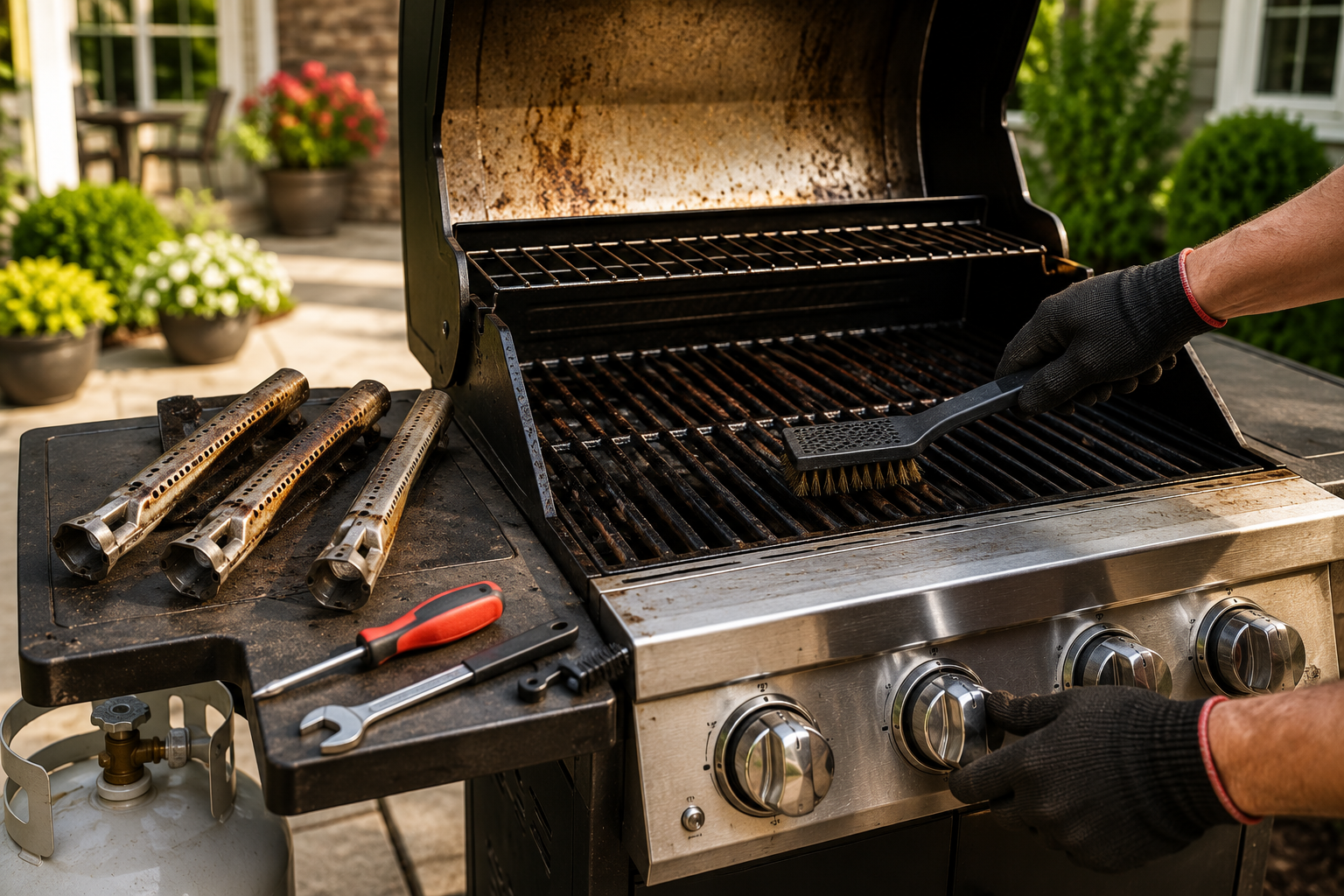
A BBQ grill is one of the most enjoyable outdoor cooking appliances, but like any piece of equipment, it can occasionally develop problems. Whether your grill won’t ignite, cooks food unevenly, produces too much smoke, or suffers from rust, knowing how to identify and solve common issues can save time, reduce frustration, and help extend the life of your grill.
Many grill problems have simple causes that homeowners can fix without replacing the entire unit. Regular maintenance, proper cleaning, and routine inspections often prevent minor issues from becoming expensive repairs. Understanding how your grill works also makes troubleshooting much easier.
This guide explains the most common BBQ grill problems, why they happen, and practical solutions you can try before considering replacement parts or professional service.
Why BBQ Grill Problems Occur
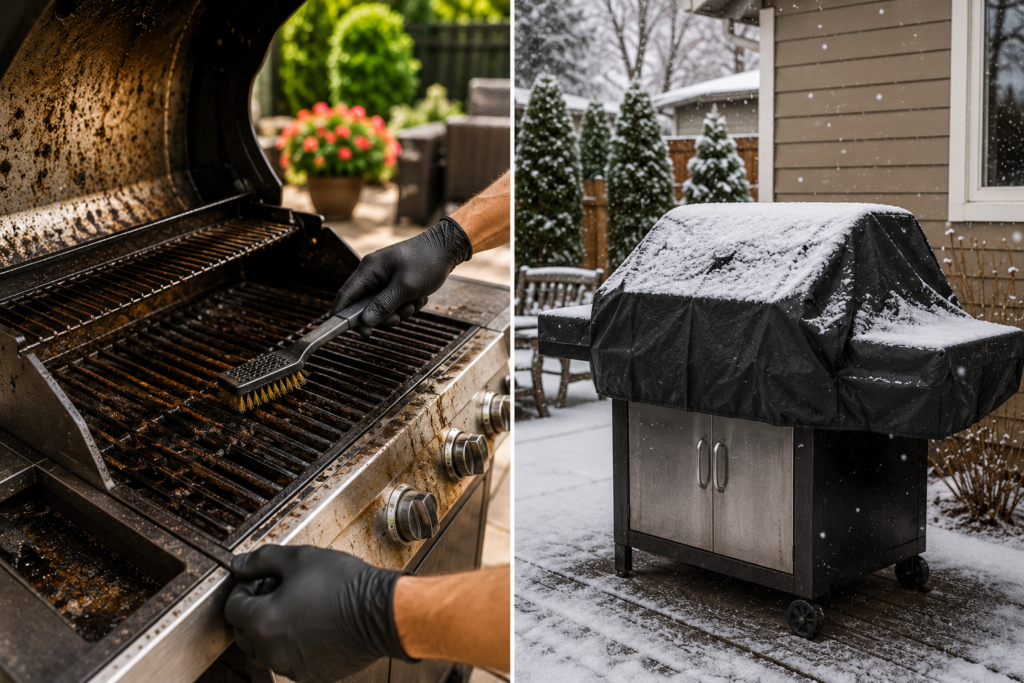
Even high-quality grills experience wear over time.
Common causes include:
- Lack of routine maintenance
- Grease buildup
- Weather exposure
- Normal wear and tear
- Improper storage
- Dirty burners or vents
- Aging components
Most issues can be prevented through regular cleaning and seasonal inspections.
Quick Troubleshooting Guide
| Problem | Possible Cause | Common Solution |
| Grill won’t ignite | Ignition issue or fuel problem | Check fuel supply and ignition system |
| Uneven heating | Dirty burners or blocked airflow | Clean burners and cooking chamber |
| Excessive flare-ups | Grease buildup | Clean grease tray and grates |
| Weak flames | Low fuel or blocked burners | Inspect fuel supply and burner ports |
| Too much smoke | Grease accumulation | Deep clean interior |
| Rust | Moisture exposure | Clean, protect, and replace damaged parts if necessary |
| Food sticking | Dirty or dry cooking grates | Clean and lightly oil grates |
This table provides a quick overview before exploring each issue in detail.
Problem 1: Grill Won’t Ignite
One of the most common complaints among gas grill owners is an ignition system that doesn’t work.
Possible Causes
Several factors may prevent ignition:
- Empty propane tank
- Closed gas valve
- Dirty ignition electrode
- Worn igniter battery
- Moisture
- Loose connections
How to Fix It
Start with the simplest checks.
- Verify the propane tank contains fuel.
- Ensure the gas valve is fully open.
- Inspect the ignition button.
- Replace the igniter battery if applicable.
- Clean visible dirt around the ignition electrode.
If the grill still doesn’t ignite, consult the manufacturer’s instructions before attempting further repairs.
Problem 2: Uneven Heat Distribution
If one side of the grill cooks much faster than the other, uneven heat is usually the cause.
Why It Happens
Uneven heating often results from:
- Dirty burners
- Blocked burner ports
- Grease buildup
- Improper preheating
- Wind exposure
Solutions
To improve heat distribution:
- Clean burner ports according to the manufacturer’s recommendations.
- Remove grease buildup.
- Allow sufficient preheating time.
- Position the grill away from strong wind.
Consistent maintenance helps maintain even temperatures across the cooking surface.
Problem 3: Excessive Flare-Ups
Small flare-ups are normal when fat drips onto hot surfaces.
Large, uncontrolled flames are not.
Common Causes
Excessive flare-ups usually occur because of:
- Grease accumulation
- Dirty flavorizer bars
- Excess oil in marinades
- Overflowing grease trays
Solutions
Reduce flare-ups by:
- Cleaning grease trays regularly.
- Trimming excess fat from meat.
- Avoiding excessive oil.
- Keeping cooking surfaces clean.
Never spray water directly onto grease fires inside the grill.
Problem 4: Low Flame or Weak Heat
If your grill struggles to reach cooking temperature, several factors could be responsible.
Possible Reasons
Common causes include:
- Nearly empty propane tank
- Dirty burners
- Regulator issues
- Blocked burner ports
- Cold weather
What You Can Do
Check fuel levels first.
Then:
- Clean burner openings.
- Inspect visible gas connections.
- Allow extra preheating during colder weather.
If performance doesn’t improve, manufacturer-approved replacement parts may be required.
Problem 5: Food Keeps Sticking
Food sticking to the cooking grate is frustrating and often ruins presentation.
Causes
Food commonly sticks because:
- Cooking grates are dirty.
- Grill wasn’t preheated.
- Food was flipped too early.
- Grates weren’t lightly oiled.
Solutions
For better cooking results:
- Clean grates after every use.
- Preheat the grill fully.
- Lightly oil clean grates if appropriate.
- Allow proteins to naturally release before turning.
Proper preheating is one of the simplest ways to reduce sticking.
Problem 6: Too Much Smoke
While grilling naturally produces some smoke, excessive smoke usually indicates a maintenance issue.
Common Causes
Heavy smoke often comes from:
- Grease buildup
- Burnt food residue
- Dirty drip trays
- Excessive oil
Solution
Perform a thorough cleaning that includes:
- Cooking grates
- Grease tray
- Heat shields
- Interior cooking chamber
Regular cleaning improves airflow while reducing unwanted smoke.
Problem 7: Rust on the Grill
Outdoor exposure makes rust one of the most common long-term issues.
Causes
Rust develops when moisture remains on metal surfaces for extended periods.
Contributing factors include:
- Rain
- Snow
- Humidity
- Poor storage
- Damaged protective coatings
Solutions
Light surface rust may be removed using manufacturer-approved cleaning methods.
To reduce future rust:
- Keep the grill dry.
- Use a quality grill cover.
- Clean regularly.
- Store accessories indoors.
Severely damaged cooking grates or structural components should be replaced.
Problem 8: Grill Doesn’t Get Hot Enough
Sometimes the grill lights successfully but never reaches proper cooking temperatures.
Possible causes include:
- Dirty burners
- Low fuel pressure
- Wind
- Cold weather
- Grease buildup
Start by cleaning the grill thoroughly and verifying the fuel supply.
Allow at least 10–15 minutes of preheating before cooking.
Problem 9: Temperature Fluctuates Constantly
Consistent temperatures are important for predictable cooking results.
Large temperature swings may result from:
- Frequent lid opening
- Wind
- Dirty burners
- Fuel supply issues
Keep the lid closed whenever possible to maintain steady cooking temperatures.
Problem 10: Bad Odors During Cooking
Unpleasant smells usually indicate old grease or food residue burning inside the grill.
A deep cleaning often solves this issue.
Clean:
- Cooking grates
- Grease tray
- Burner covers
- Interior surfaces
Fresh, clean grills generally produce cleaner cooking aromas.
Problem 11: Burner Flames Are Yellow Instead of Blue
For most gas grills, healthy burner flames are primarily blue with small yellow tips. If the flames are mostly yellow or orange, the burner may not be receiving the correct air-to-fuel mixture.
Possible Causes
- Dirty burner ports
- Grease blocking airflow
- Insects or debris inside burner tubes
- Incorrect air shutter adjustment
- Moisture inside the burner
How to Fix It
Start by cleaning the burners according to your grill manufacturer’s instructions.
Inspect for:
- Dirt
- Grease
- Spider webs
- Dust
- Rust
Never force sharp objects into burner ports, as this can damage them. If cleaning doesn’t restore normal flame color, consult the owner’s manual before adjusting any burner settings.
Problem 12: The Lid Thermometer Doesn’t Match Cooking Results
Built-in lid thermometers provide a general estimate of cooking temperature, but they don’t always reflect the temperature at the cooking grate.
Why This Happens
The thermometer is usually mounted several inches above the food.
Temperature differences can occur because of:
- Heat rising
- Wind
- Lid design
- Grill size
Solution
Use the built-in thermometer as a reference rather than an exact measurement.
For greater accuracy, many grill owners use a digital meat thermometer or a grate-level temperature probe to monitor cooking temperatures.
Problem 13: Pellet Grill Produces Too Much Ash
Pellet grills naturally create ash during cooking, but excessive buildup can affect performance.
Possible Causes
- Infrequent cleaning
- Low-quality pellets
- Damp pellets
- Long cooking sessions
Solution
After the grill has cooled:
- Vacuum ash from the fire pot.
- Empty the ash collection area if applicable.
- Store pellets in airtight containers to keep them dry.
Following the manufacturer’s cleaning schedule helps maintain consistent performance.
Problem 14: Charcoal Won’t Stay Lit
Charcoal grills rely on proper airflow to maintain combustion.
Common Causes
- Damp charcoal
- Blocked air vents
- Too little charcoal
- Poor lighting technique
Solution
Use dry charcoal stored in a moisture-free location.
Before cooking:
- Clean the ash catcher.
- Open the air vents.
- Remove old ash.
- Use a chimney starter for more even ignition.
Good airflow is essential for maintaining cooking temperatures.
Problem 15: Wheels or Shelves Feel Loose
Outdoor grills are frequently moved around patios and decks, which can loosen hardware over time.
Solution
Inspect the grill periodically.
Check:
- Wheels
- Side shelves
- Handles
- Hinges
- Control knobs
Tighten loose hardware using the appropriate tools while following the manufacturer’s recommendations.
Preventive Maintenance Tips
Most grill problems can be avoided with consistent maintenance.
Build these habits into your grilling routine:
- Brush cooking grates after every cook.
- Empty grease trays regularly.
- Remove charcoal ash after each use.
- Deep clean the interior every few months.
- Inspect burners seasonally.
- Keep the grill covered when not in use.
- Store fuel properly.
- Replace worn accessories promptly.
Small maintenance tasks require only a few minutes but can significantly extend your grill’s lifespan.
Troubleshooting Before Calling for Repairs
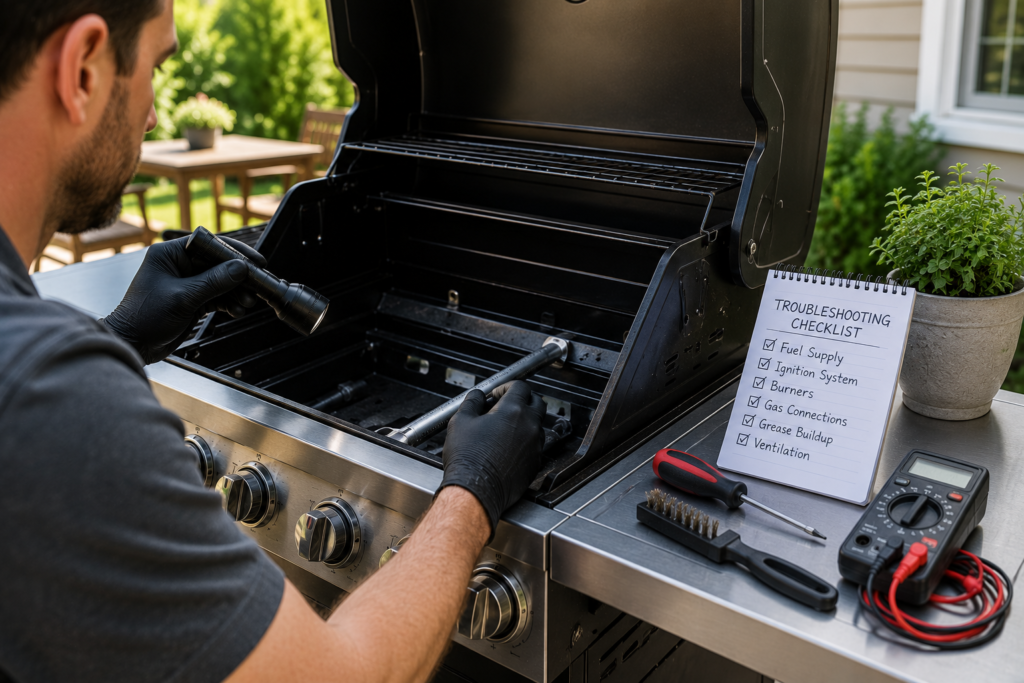
When your grill isn’t working properly, start with the basics before assuming a major repair is needed.
Ask yourself:
- Is there enough fuel?
- Is the grill clean?
- Has it been preheated long enough?
- Are the burners or vents blocked?
- Is grease buildup affecting performance?
- Is the weather unusually cold or windy?
- Have I followed the manufacturer’s operating instructions?
Many common issues can be resolved by checking these simple items first.
When Should You Replace Parts?
Some grill components naturally wear out over time.
Consider replacing parts if you notice:
Cooking Grates
Replace if they are:
- Severely rusted
- Warped
- Broken
- Peeling (porcelain-coated)
Burners
Burners may require replacement if:
- Flames remain uneven after cleaning
- Corrosion is extensive
- Burner holes are damaged
Ignition Components
If replacing the battery and cleaning the ignition system doesn’t solve ignition problems, replacement parts may be necessary.
Always choose components compatible with your grill model.
Safety Tips While Troubleshooting
Safety should always come first when inspecting or maintaining a grill.
Remember to:
- Turn off the fuel supply before cleaning.
- Allow the grill to cool completely.
- Wear heat-resistant gloves when appropriate.
- Work in a well-ventilated outdoor area.
- Follow the manufacturer’s maintenance instructions.
- Replace damaged components rather than attempting unsafe repairs.
If you ever suspect a gas leak, turn off the tank immediately fire safety officials recommend a simple soap-and-water test on hose connections to check for leaking bubbles before relighting.
BBQ Grill Troubleshooting Checklist
Before every grilling season, take a few minutes to inspect your grill.
- ✓ Cooking grates are clean.
- ✓ Burners are free from visible debris.
- ✓ Grease tray has been emptied.
- ✓ Ash has been removed (charcoal grills).
- ✓ Fire pot is clean (pellet grills).
- ✓ Ignition system operates correctly.
- ✓ Fuel supply is adequate.
- ✓ Wheels and shelves are secure.
- ✓ Grill cover is in good condition.
- ✓ No visible rust or damaged components require replacement.
Following this checklist helps prevent many common problems before they interrupt your next backyard cookout.
Conclusion
Most BBQ grill problems have straightforward solutions when identified early. Issues such as uneven heating, ignition failures, flare-ups, weak flames, excessive smoke, and food sticking are often linked to routine maintenance rather than major equipment failure. Cleaning your grill regularly, inspecting components seasonally, and storing it properly can prevent many of these problems while improving cooking performance and extending the life of your investment.
Whether you own a gas, charcoal, or pellet grill, understanding how your equipment works makes troubleshooting much easier. Start with the simplest checks, follow the manufacturer’s recommendations, and replace worn parts when necessary. With consistent care and a proactive maintenance routine, your grill will continue delivering reliable performance for countless family meals and backyard gatherings.
Frequently Asked Questions
1- Why does my grill keep flaring up?
Large flare-ups are usually caused by grease or excess fat dripping onto hot surfaces. Regularly cleaning the cooking chamber and grease tray helps reduce flare-ups.
2- Why won’t my gas grill get hot enough?
Low fuel levels, dirty burners, blocked burner ports, cold weather, or insufficient preheating can all reduce cooking temperatures.
3- How can I stop food from sticking?
Preheat the grill, clean the cooking grates after every use, and lightly oil the grates if recommended for your grill type. Avoid flipping food too early.
4- Is rust on a grill dangerous?
Light surface rust can often be managed with proper cleaning and maintenance. However, severely rusted cooking grates or structural parts should be replaced to maintain safe cooking conditions.
5- How often should I inspect my grill?
A quick visual inspection before each cookout and a more detailed inspection at least once each season helps identify wear before it affects performance.