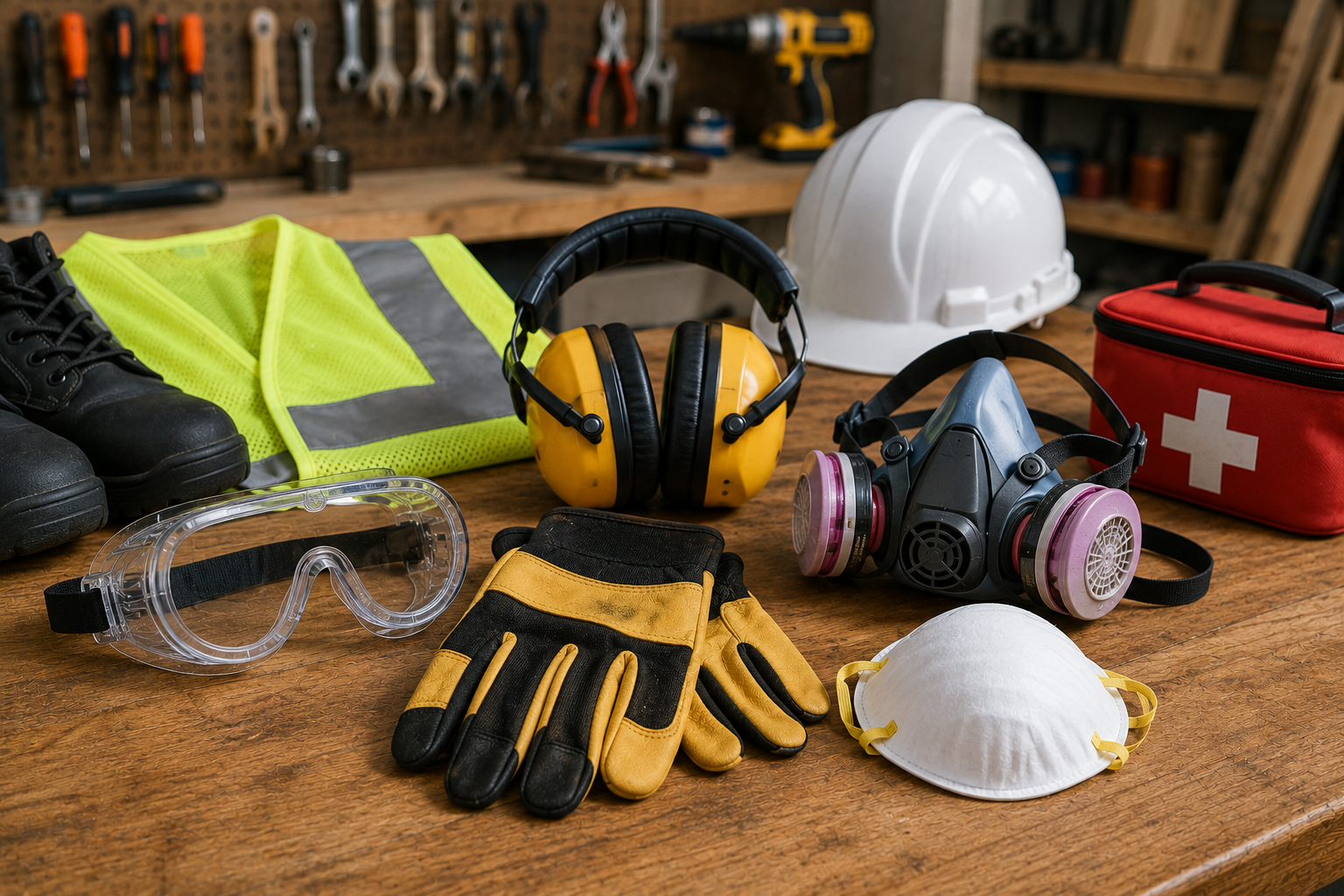
It’s easy to focus entirely on which tools a project requires and overlook the safety equipment that should go alongside them. Cuts, eye injuries, hearing damage, and respiratory irritation are among the most common DIY injuries, and nearly all of them are genuinely preventable with the right DIY safety equipment on hand before you start.
This guide covers the essential safety gear every homeowner should own, when each piece actually matters most, and practical advice for building a safety kit that matches the specific projects you tackle around the house.
What Every Homeowner Needs
At minimum, every homeowner doing DIY projects should own safety glasses, work gloves, and a dust mask, covering the most common risks across cutting, drilling, sanding, and general handling tasks. Add hearing protection for any extended use of louder power tools, and a proper respirator (rather than a basic dust mask) for tasks involving fine dust, chemical fumes, or specific hazardous materials. Beyond personal protective equipment, a properly stocked first aid kit and a clear understanding of your specific project’s hazards round out a genuinely solid DIY safety foundation. Our guide on deciding when to DIY and when to hire a professional can help you make that decision.
Eye Protection
Why It’s Non-Negotiable
Flying debris from cutting, drilling, sanding, or hammering poses a genuine and common risk of eye injury, and this risk exists even for tasks that might seem minor or brief.
Safety Glasses vs Goggles
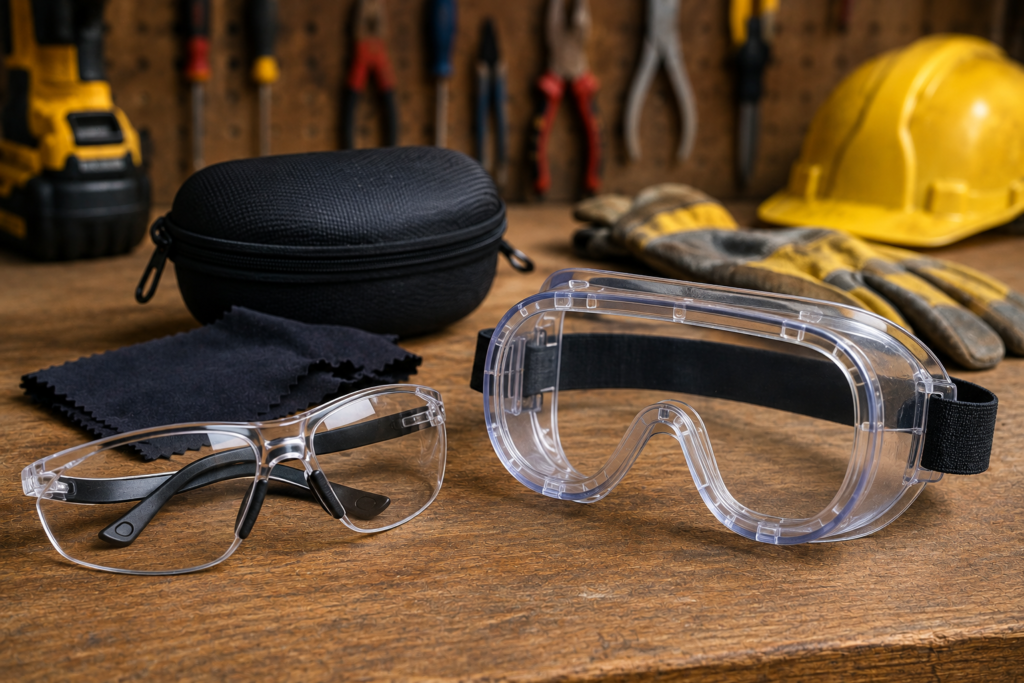
Safety glasses offer basic protection against flying debris and are suitable for most general DIY tasks, cutting, drilling, and light sanding. Safety goggles provide a more complete seal around the eyes, offering better protection against fine dust, chemical splashes, or tasks generating significant airborne particles, worth prioritizing for more intensive sanding or when working with liquid chemicals.
What to Look For
Look for glasses or goggles specifically rated for impact resistance (typically marked with an ANSI Z87.1 rating in the US), rather than assuming any pair of glasses offers adequate protection. If you wear prescription glasses, over-the-glasses safety goggles or prescription safety glasses are worth considering, since standard safety glasses may not fit comfortably or securely over existing eyewear.
Hand Protection
General-Purpose Work Gloves
Sturdy work gloves protect hands during general repair work, moving materials, or handling rough surfaces, reducing the risk of scrapes, splinters, and minor cuts during typical household projects.
Cut-Resistant Gloves
For tasks involving sharp materials, handling glass, metal, or box cutters, cut-resistant gloves (often rated by cut-resistance level) offer considerably more protection than standard work gloves.
Chemical-Resistant Gloves
When working with paint strippers, certain cleaning chemicals, or other hazardous liquids, chemical-resistant gloves (typically nitrile or rubber) prevent skin contact and absorption that standard fabric or leather gloves wouldn’t adequately block.
When to Avoid Gloves
For certain power tool operations, particularly those involving spinning blades or drill bits, gloves can actually increase risk by getting caught in moving parts. Always check the specific tool manufacturer’s safety guidance regarding glove use for that particular tool.
Hearing Protection
Why Power Tools Warrant This
Many power tools, particularly circular saws, shop vacuums, and other high-RPM equipment, generate noise levels that can contribute to hearing damage with repeated or extended exposure over time. Because power tools generally operate at higher speeds and produce more noise than hand tools, understanding the differences between power tools and hand tools is important before choosing the right safety equipment.
Earplugs vs Earmuffs
Foam or silicone earplugs offer effective, low-cost, and highly portable hearing protection, suitable for most general DIY noise exposure. Earmuffs (over-the-ear protection) offer a consistent, easy-to-use option that doesn’t require proper insertion technique the way earplugs do, and some models include additional features like built-in communication or noise-canceling technology.
When Hearing Protection Matters Most
Extended sessions with louder tools, prolonged circular saw cutting, extensive shop vacuum use, or any tool generating consistent high noise levels over more than a few minutes, are the situations where hearing protection genuinely matters most.
Respiratory Protection
Basic Dust Masks
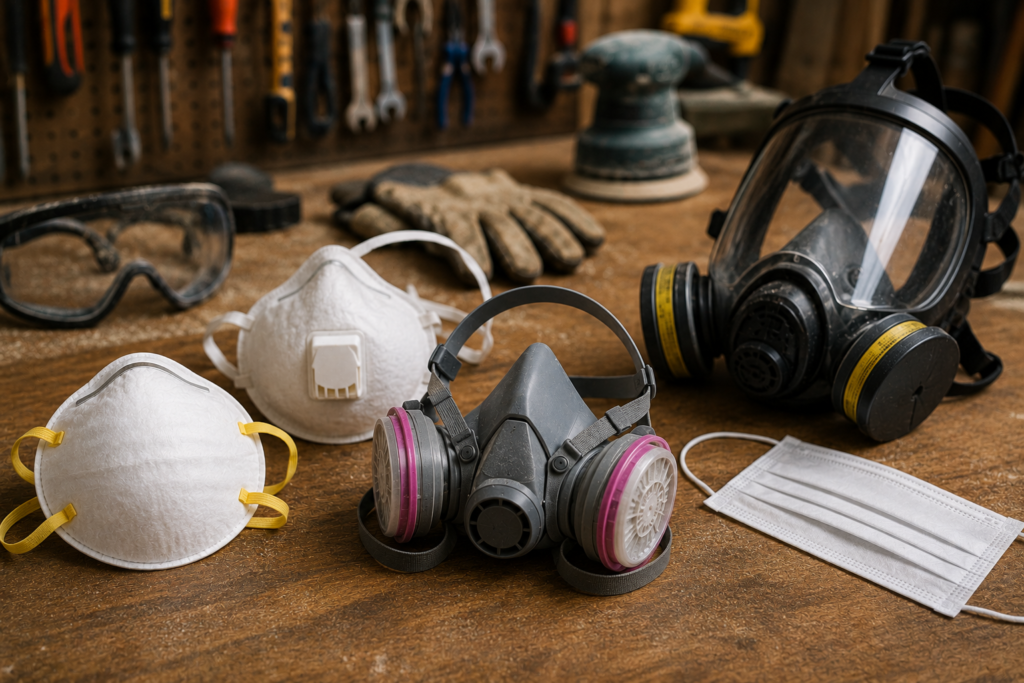
Simple disposable dust masks offer basic protection against larger dust particles generated during light sanding or cutting of wood and similar materials, suitable for brief, low-intensity tasks.
N95 or Higher-Rated Respirators
For tasks generating finer dust particles, extensive sanding, cutting certain composite materials, or drywall work, an N95 or higher-rated respirator offers meaningfully better filtration than a basic dust mask.
Chemical Cartridge Respirators
When working with paint fumes, solvents, or other chemical vapors, a respirator with the appropriate chemical cartridge filters out fumes that a standard dust mask or N95 respirator isn’t designed to handle, since these products are engineered for particulates rather than gaseous chemicals.
Choosing the Right Respiratory Protection
| Task Type | Recommended Protection |
| Light wood sanding/cutting | Basic dust mask |
| Extensive sanding, drywall work | N95 or higher-rated respirator |
| Paint, solvents, chemical fumes | Chemical cartridge respirator |
| Working around mold or asbestos-suspected materials | Consult a professional; specialized protection required |
Head and Fall Protection
Hard Hats
While less commonly needed for typical indoor home projects, a hard hat becomes relevant for tasks involving overhead work where falling debris is a genuine risk, larger renovation projects, working under scaffolding, or similar situations.
Fall Protection for Ladder Work
For work at height, cleaning gutters, changing exterior light fixtures, or roof-adjacent tasks, proper ladder safety matters more than any specific piece of equipment: ensuring a stable, level base, maintaining three points of contact while climbing, and never overreaching beyond the ladder’s stable range.
Skin and Body Protection
Long Sleeves and Durable Clothing
For tasks involving significant debris, chemicals, or extended sun exposure during outdoor projects, durable, appropriately covering clothing reduces the risk of scrapes, chemical exposure, or sunburn during longer work sessions.
Knee Pads
For flooring installation, extended kneeling tasks, or garden work, knee pads reduce strain and discomfort during projects requiring prolonged kneeling, a genuinely practical comfort and joint-protection item often overlooked in typical safety equipment discussions.
Building a Basic DIY Safety Kit
Core Items Every Homeowner Should Have
- Safety glasses (ANSI Z87.1 rated)
- General-purpose work gloves
- A basic dust mask, plus a small supply of N95 respirators
- Foam or silicone earplugs
- A basic first aid kit
Additional Items for More Frequent DIY Work
- Safety goggles for more intensive sanding or chemical work
- Cut-resistant gloves for handling sharp materials
- Earmuffs for extended power tool sessions
- A chemical cartridge respirator if regularly working with solvents or paint fumes
- Knee pads for flooring or extended kneeling tasks
First Aid Considerations for DIY Projects
A Properly Stocked First Aid Kit
Beyond general safety equipment, having a first aid kit specifically accessible during DIY projects, not just tucked away in a bathroom cabinet, ensures quick response to minor cuts, splinters, or other common injuries that occur during typical home projects.
What a DIY-Specific First Aid Kit Should Include
- Adhesive bandages in various sizes
- Sterile gauze and medical tape
- Antiseptic wipes or solution
- Tweezers, for splinter removal
- Disposable gloves
- A basic understanding of when an injury requires professional medical attention rather than home treatment
Matching Safety Equipment to Specific Common Tasks
Cutting Wood or Materials
Safety glasses, hearing protection (for power saws), and a dust mask are the core essentials, with a respirator upgrade for extensive cutting sessions generating significant dust.
Sanding
Safety glasses or goggles, a dust mask or N95 respirator (depending on sanding intensity), and hearing protection if using a power sander for extended periods.
Painting or Using Chemical Products
Chemical-resistant gloves, a chemical cartridge respirator if working with strong solvents or in poorly ventilated spaces, and safety goggles if there’s meaningful splash risk.
Drilling or Fastening
Safety glasses are the primary essential here, with work gloves useful for general handling, though removed during actual drill operation if the specific tool’s guidance recommends it.
Working at Height
Focus on proper ladder technique and stability over specific equipment, though a hard hat is worth considering for larger projects with overhead falling debris risk.
Common Mistakes to Avoid
- Skipping eye protection for “quick” tasks, when injury risk exists even during brief cutting or drilling work
- Using a basic dust mask for fine particulate or chemical exposure, when an N95 or chemical cartridge respirator is actually needed
- Wearing gloves during power tool operations where they’re specifically not recommended, increasing entanglement risk
- Neglecting hearing protection during extended power tool use, underestimating cumulative noise exposure over repeated projects
- Not having a first aid kit readily accessible during projects, delaying treatment for minor but immediate injuries
Conclusion
Building a genuine safety habit around DIY projects comes down to matching the right DIY safety equipment to the specific task at hand, rather than treating protective gear as optional or an afterthought. Safety glasses, gloves, a dust mask, and hearing protection cover the majority of common household project risks, with more specialized equipment, respirators, chemical-resistant gloves, or fall protection, added as specific projects genuinely call for them. Taking a few extra minutes to gear up properly before starting any project is a small, consistent habit that meaningfully reduces the risk of the cuts, injuries, and long-term damage that make DIY projects far less enjoyable than they should be.
Frequently Asked Questions
1- What safety equipment do I need for basic DIY projects?
Safety glasses, work gloves, and a basic dust mask cover the most common risks across typical cutting, drilling, and sanding tasks, with hearing protection recommended for extended power tool use.
2- Is a basic dust mask enough protection for sanding?
For light, brief sanding, a basic dust mask may be sufficient, but extensive sanding or work with fine dust particles warrants an N95 or higher-rated respirator for meaningfully better filtration.
3- When do I need a respirator instead of a dust mask?
A respirator becomes necessary for tasks generating fine particulates (extensive sanding, drywall work) or chemical fumes (paint, solvents), situations a basic dust mask isn’t designed to adequately filter.
4- Are safety glasses the same as regular glasses?
No, safety glasses are specifically rated for impact resistance (typically marked with an ANSI Z87.1 rating), offering genuine protection against flying debris that standard eyewear doesn’t provide.
5- Do I need hearing protection for all power tools?
Not necessarily for brief use of quieter tools, but extended sessions with louder equipment like circular saws or shop vacuums genuinely warrant hearing protection to prevent cumulative noise-related damage.
6- What should be in a DIY-specific first aid kit?
Adhesive bandages, sterile gauze, antiseptic wipes, tweezers for splinter removal, and disposable gloves cover most common DIY injuries, kept accessible during projects rather than stored away in a separate location.
7- Can I skip gloves when using power tools?
For certain tools, particularly those with spinning blades or bits, gloves can actually increase entanglement risk. Always check the specific tool manufacturer’s safety guidance regarding glove use for that particular equipment.