
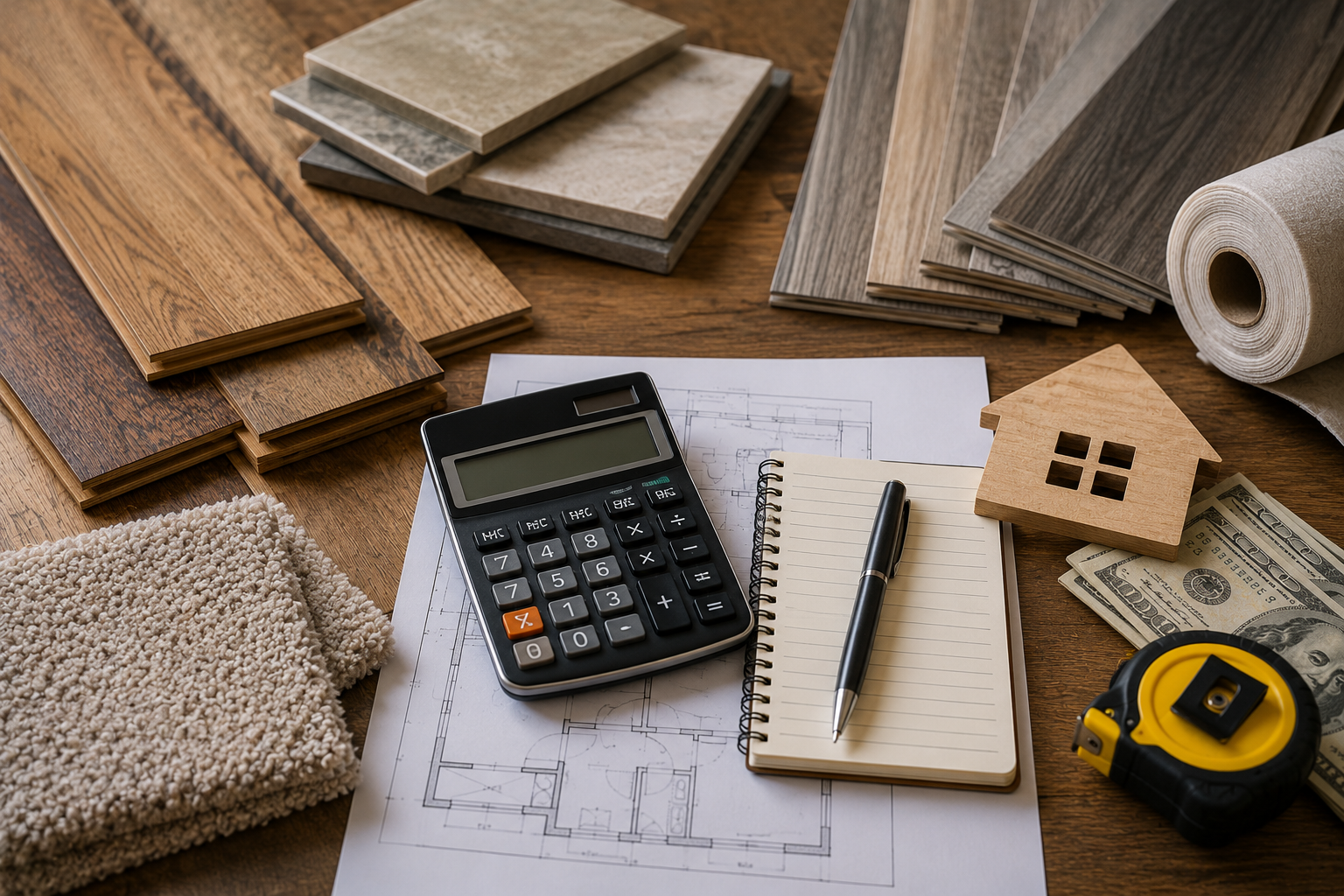
New flooring is one of the more significant home improvement investments you’ll make, and costs vary widely depending on material, labor, and your home’s specific conditions. Understanding realistic price ranges upfront helps you budget accurately and avoid surprises partway through a project.
This guide breaks down flooring costs by material, covers hidden expenses many homeowners overlook, and offers practical budgeting advice. We’ll also cover flooring installation cost, material pricing, and labor considerations for American homeowners planning a flooring project.
By the end, you’ll have a clear, realistic picture of what different flooring options actually cost, helping you plan your project with confidence.
What Does New Flooring Cost?
Flooring costs vary significantly by material, generally ranging from a few dollars to well over twenty dollars per square foot installed, depending on the material chosen and labor complexity. Laminate is typically the most budget-friendly option, followed by vinyl or luxury vinyl plank, while hardwood and tile generally cost more due to higher material prices and more labor-intensive installation.
Beyond material costs, labor, subfloor preparation, and old flooring removal all add to your total project cost, sometimes significantly, which is why getting a detailed estimate matters more than relying on material price alone.
Flooring Costs by Material
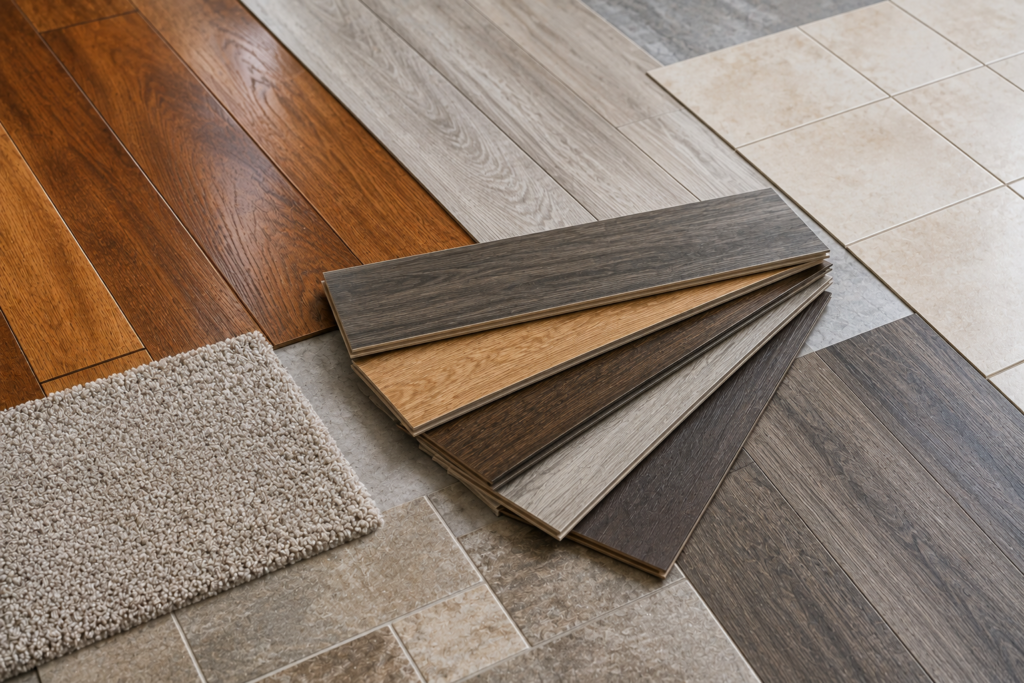
Understanding typical price ranges for each flooring type helps you compare options realistically before committing to a project.
1- Hardwood Flooring Costs
Hardwood flooring typically runs $6 to $18 per square foot installed, making it one of the pricier flooring options available. This higher cost reflects both material expense and the more labor-intensive installation process compared with click-lock alternatives.
If your existing hardwood is in reasonably good condition, refinishing costs $2 to $8 per square foot, which is often considerably cheaper than full replacement while still refreshing the floor’s appearance.
2- Laminate Flooring Costs
Laminate is generally the cheapest flooring option to install, typically running $3 to $8 per square foot total, including both materials and labor. Costs can vary depending on the specific style, thickness, and finish you choose, with basic laminate sitting at the lower end of that range and premium textured or wide-plank styles costing more.
3- Tile Flooring Costs
Tile installation typically costs $5 to $20 per square foot, reflecting both the wide range of tile materials available and the more labor-intensive installation process, particularly for custom layouts or natural stone. Custom tile installations can run notably higher, sometimes up to $15 per square foot in labor alone, depending on pattern complexity.
4- Vinyl and Luxury Vinyl Plank Costs
Vinyl and luxury vinyl plank flooring generally costs $4 to $10 per square foot installed, making it a popular mid-range option that balances affordability with durability and water resistance.
5- Carpet Costs
Carpet installation typically costs $3 to $9 per square foot, making it comparable to laminate and vinyl in overall affordability, though exact pricing varies significantly based on carpet quality, padding, and fiber type.
Comparing Flooring Costs at a Glance
| Flooring Type | Approx. Installed Cost per Sq Ft | Typical Lifespan |
| Laminate | $3–$8 | 15–25 years |
| Vinyl/LVP | $4–$10 | 10–20 years |
| Carpet | $3–$9 | 5–15 years |
| Hardwood | $6–$18 | 25–100+ years with refinishing |
| Tile | $5–$20 | 20–50+ years |
Understanding Labor Costs
Labor makes up a significant portion of total flooring costs and varies considerably based on material and installation complexity.
Labor typically accounts for 20 to 50 percent of total flooring project costs, depending on the installer’s expertise and how complex the job is. Overall labor costs for flooring installation generally run $0.60 to $4 per square foot, though this can climb higher for more labor-intensive materials like tile or hardwood.
Factors that affect labor cost:
- Type of flooring being installed, since materials like tile and hardwood require more skilled labor than click-lock laminate or vinyl
- Room size and layout complexity, including cuts around corners, doorways, and fixtures
- Your local labor market rates, which vary considerably by region
- Existing floor condition, since a level, prepared subfloor reduces prep time and cost
Hidden Costs to Budget For
Beyond material and basic labor, several additional costs commonly catch homeowners off guard during flooring projects.
- Old Flooring Removal
Removing old flooring adds to overall project cost, with rates varying based on the type of material being removed. Carpet removal is typically the least expensive to remove, while tile and hardwood removal generally cost more due to the labor involved in careful demolition.
- Subfloor Repair or Replacement
Subfloor replacement typically costs $3 to $10 per square foot, and this becomes necessary when water damage, rot, or structural issues affect the surface beneath your existing flooring. Skipping needed subfloor repair can compromise your new flooring’s performance and lifespan.
- Underlayment
Underlayment installation costs approximately $0.50 to $5.40 per square foot, and is typically required for vinyl, laminate, and carpet installations, though not always necessary for tile or hardwood.
Many flooring installers charge extra for moving furniture out of the work area if this isn’t already included in your quote, so it’s worth confirming this detail upfront to avoid surprise fees.
- Mold Remediation
If mold is discovered during a flooring project, remediation typically costs $9 to $23 per square foot of affected area, which can significantly increase project costs if moisture damage has gone unaddressed for some time.
DIY vs Professional Installation Costs
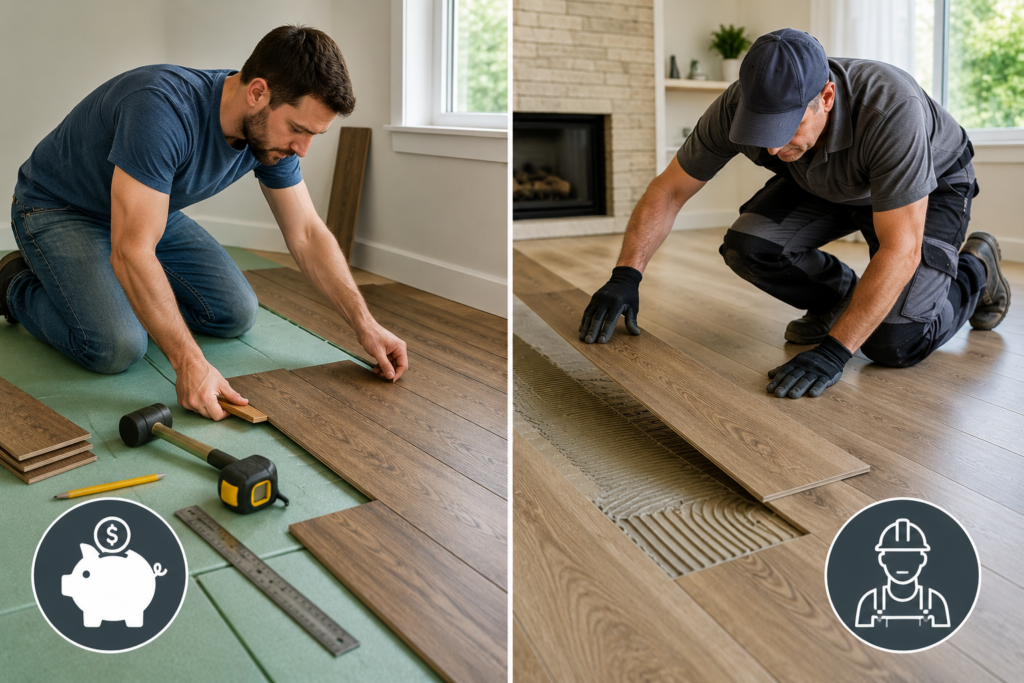
Deciding whether to install flooring yourself or hire a professional significantly affects your total project cost, though the right choice depends on more than price alone.
- DIY installation can save considerably on labor costs, particularly for click-lock laminate or vinyl plank flooring designed for straightforward installation. However, DIY installation requires proper tools, time, and a genuine understanding of the process to avoid costly mistakes.
- Professional installation costs more upfront but typically ensures proper technique, particularly important for materials like tile and hardwood where installation quality significantly affects long-term performance and appearance.
Materials generally more DIY-friendly:
- Laminate with click-lock installation
- Luxury vinyl plank with click-lock systems
- Some carpet tile products designed for simpler installation
Materials generally better left to professionals:
- Hardwood, particularly nail-down or glue-down installation
- Tile, especially custom layouts or natural stone
- Traditional broadloom carpet requiring stretching and seaming
Factors That Affect Your Total Flooring Cost
Several project-specific factors influence your total cost beyond the base material and labor pricing.
- Room Size and Layout
Larger rooms generally cost more in total, though the cost per square foot may decrease slightly with larger orders due to material purchasing efficiencies. Complex layouts with many corners, closets, or transitions typically increase labor time and cost.
- Material Quality Tier
Within each flooring category, quality tiers significantly affect pricing. Basic laminate costs considerably less than premium, textured, wide-plank laminate designed to closely mimic real hardwood.
- Geographic Location
Labor rates vary meaningfully by region, with some metro areas commanding notably higher rates than others, which affects your total installation cost regardless of which flooring material you choose.
- Existing Floor Condition
A level, well-prepared subfloor keeps installation straightforward and affordable, while damaged, uneven, or contaminated subfloors add both time and cost to the overall project.
Budgeting Tips for a Flooring Project
A few practical strategies can help you manage costs effectively without compromising on quality where it matters most.
- Get multiple quotes: Comparing several contractor estimates helps you understand fair pricing for your specific project and area
- Consider a mixed approach: Using premium flooring in high-visibility areas and more budget-friendly options elsewhere can balance cost and appearance
- Ask about included services: Confirm whether furniture moving, old flooring removal, and disposal are included in quotes to avoid surprise add-on fees
- Consider refinishing over replacement: If your existing hardwood is in reasonably good condition, refinishing is often significantly cheaper than full replacement
- Plan for subfloor issues in older homes: Budgeting extra contingency for potential subfloor repair helps avoid mid-project cost surprises
- Time your project for contractor availability: Some contractors offer better pricing during slower seasons for flooring work
Conclusion
Flooring costs vary considerably by material, with laminate and vinyl generally offering the most budget-friendly options, while hardwood and tile command higher prices due to material and labor demands. Beyond the base material cost, budgeting for labor, old flooring removal, subfloor repair, and underlayment helps you avoid mid-project surprises. Getting multiple detailed quotes and understanding exactly what’s included in each estimate remains the most reliable way to plan a flooring project that fits your budget while delivering the quality and durability you’re looking for.
Frequently Asked Questions
1- What is the cheapest flooring option to install?
Laminate flooring is generally the most budget-friendly option, followed closely by vinyl and luxury vinyl plank, both of which use straightforward click-lock installation systems.
2- Why does hardwood flooring cost so much more than laminate?
Hardwood costs more due to higher material expense and a more labor-intensive installation process, though it also typically lasts significantly longer and can be refinished multiple times.
3- Does removing old flooring cost extra?
Yes, old flooring removal is typically a separate cost from new flooring installation, with pricing varying based on the type of material being removed.
4- Is DIY flooring installation actually cheaper?
DIY installation can save significantly on labor costs, particularly for click-lock laminate or vinyl, though it requires proper tools and technique to avoid costly mistakes that could offset the savings.
5- What hidden costs should I budget for in a flooring project?
Subfloor repair, underlayment, old flooring removal, and furniture moving are among the most commonly overlooked costs in flooring project budgets.
6- Is it cheaper to refinish hardwood than replace it?
Yes, refinishing existing hardwood in reasonably good condition is typically considerably cheaper than full replacement while still meaningfully improving the floor’s appearance.