
Shopping for a sofa often means running into a wall of numbers: width, depth, seat depth, back height, arm-to-arm length, without a clear sense of what actually matters for your room. It’s easy to end up either overwhelmed or guessing.
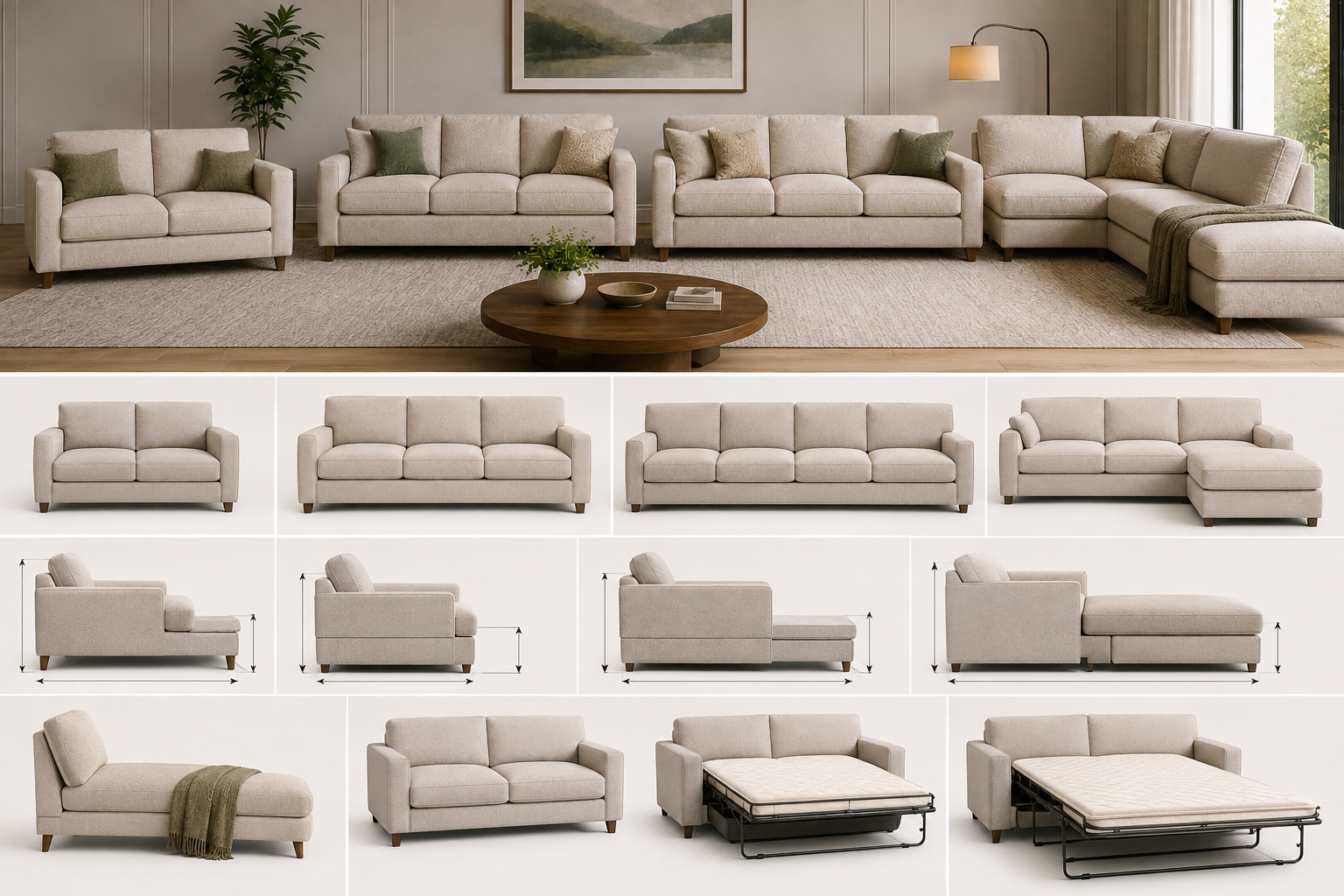
Sofa sizes vary by type, but here’s the general range: loveseats run about 55 to 75 inches wide; standard three-seat sofas run 72 to 90 inches wide; sectionals range from 90 inches up to 150+ inches, depending on shape; and sleeper sofas typically measure 70 to 90 inches wide when closed. Beyond overall width, depth (35 to 40 inches for most sofas), seat depth (19 to 24 inches), and back height (30 to 36 inches) all affect comfort and how the sofa fits your space.
This guide breaks down every standard sofa size and dimension in plain language, so you can confidently compare options and choose the right fit for your room no guesswork required.
Why Sofa Sizing Confuses So Many Buyers
Part of the confusion comes from the fact that there’s no single universal “standard” sofa size; sizes vary by seat count, sofa style, and even by brand. On top of that, terms like “width” and “length” are often used interchangeably, and dimensions can be listed differently depending on whether they include arms, cushions, or legs.
The good news: while exact numbers vary, most sofas fall within predictable ranges by type. Understanding those ranges makes comparison shopping far easier.
The Core Sofa Measurements You’ll See
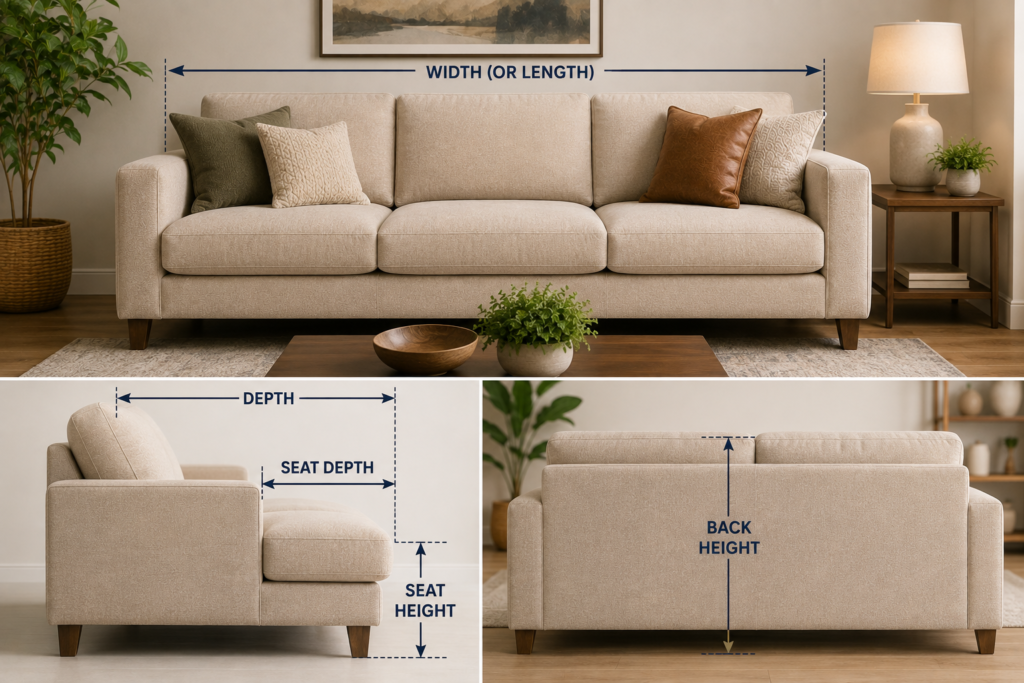
Before diving into sizes by type, it helps to know what each measurement actually refers to.
| Measurement | What It Means |
| Width (or length) | The full arm-to-arm measurement of the sofa |
| Depth | The distance from the front of the seat to the back of the sofa |
| Seat depth | The usable seating space, from the front edge to the backrest |
| Seat height | The height of the seat cushion off the floor |
| Back height | The overall height of the sofa, from floor to the top of the backrest |
Depth and width are the two numbers that matter most for room fit, while seat depth and seat height affect comfort more directly.
Sofa Sizes by Type: The Complete Breakdown
Loveseats (Two-Seaters)
A loveseat is the smallest standard seating option, designed to comfortably fit two people.
- Width: 55 to 75 inches
- Depth: 35 to 38 inches
- Best for: Small living rooms, studio apartments, secondary seating, or bedrooms and home offices
Standard Sofas (Three-Seaters)
The three-seat sofa is generally treated as the “standard” reference size in most sizing guides, since it’s the most common configuration in American living rooms.
- Width: 72 to 90 inches (with 78 to 84 inches being the most common range)
- Depth: 35 to 40 inches
- Best for: Most standard living rooms, family rooms, and primary seating needs
Large Sofas (Four-Seaters)
Less common than three-seaters, four-seat sofas offer extra length for households that regularly need more seating without switching to a sectional.
- Width: 90 to 118 inches
- Depth: 35 to 40 inches
- Best for: Larger living rooms, households that frequently host
Sectionals
Sectionals vary the most in size since they’re modular and shaped to fit a room’s layout.
| Sectional Type | Long Side | Short Side/Return | Depth |
| L-Shaped | 90–130+ inches | 60–95 inches | 36–40 inches |
| U-Shaped | 150+ inches total | Varies | 36–40 inches |
Best for: Larger or open-concept rooms, households needing seating for four or more people regularly.
Chaise Sofas (Standalone)
A chaise is a single elongated seating piece, either used on its own or as part of a sectional.
- Length: 60 to 80 inches
- Width: 30 to 40 inches
- Best for: Reading nooks, bedrooms, small studios, or as an add-on to a sectional configuration
Sleeper Sofas (Sofa Beds)
Sleeper sofas need to be measured both closed and open, since the pull-out bed significantly changes the footprint.
Closed dimensions:
- Width: 70 to 90 inches
- Depth: 35 to 40 inches
Open dimensions:
- Depth (extended): 85 to 96 inches
Mattress sizes within sleeper sofas generally follow familiar bed-size naming, though the actual sofa-bed mattress dimensions run smaller than standalone mattresses of the same name:
- Twin sleeper mattress: roughly 35 x 72 inches
- Full sleeper mattress: roughly 52–55 x 72 inches
- Queen sleeper mattress: roughly 60 x 72 inches
Best for: Studio apartments, guest rooms, or any multi-purpose living space.
Height and Depth: The Numbers That Affect Comfort Most
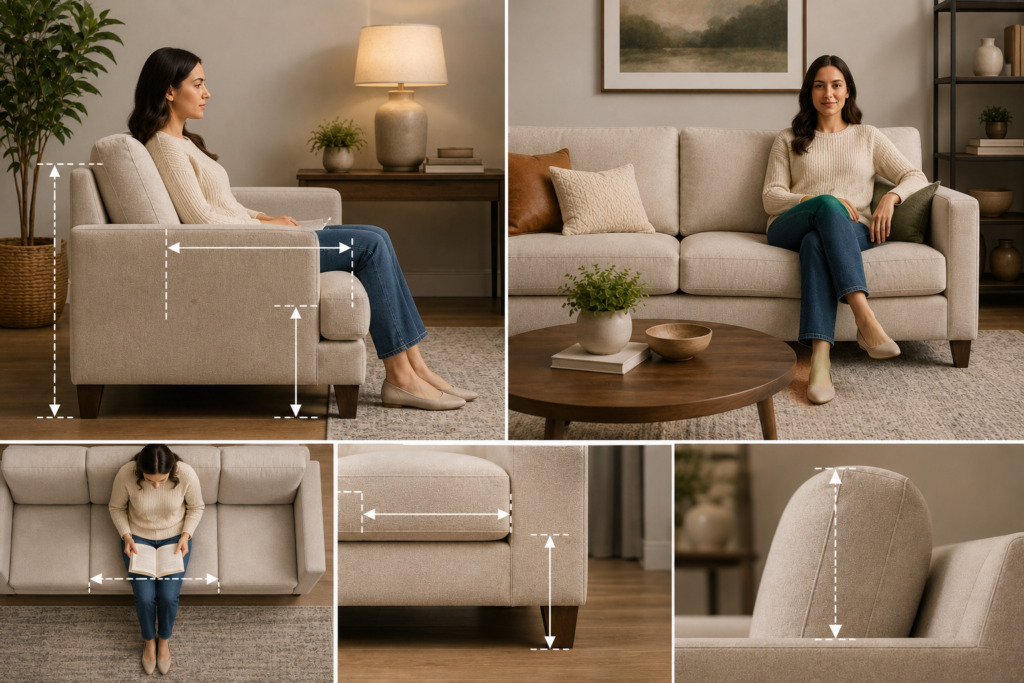
While width gets the most attention, these measurements have a bigger day-to-day impact on how the sofa actually feels to sit on.
Seat Height
- Standard range: 17 to 22 inches off the floor
- A lower seat height feels more relaxed and lounge-oriented.
- A higher seat height feels more formal and is generally easier to stand up from.
Seat Depth
- Standard range: 19 to 24 inches
- Shorter individuals often prefer a shallower seat depth (around 19–21 inches) so their feet rest flat on the floor.
- Taller individuals or those who like to curl up often prefer a deeper seat (22–24 inches or more).
Back Height
- Standard range: 30 to 36 inches
- A lower back (closer to 30 inches) keeps sightlines open and suits modern, minimalist rooms.
- A taller back (closer to 36 inches) offers more head and shoulder support and tends to feel cozier or more traditional.
Overall Sofa Depth
- Standard range: 35 to 40 inches
- Shallower depth (31–34 inches) works better for small rooms and more upright sitting.
- Deeper sofas (over 40 inches) are better suited for lounging, taller individuals, or reclining sofa styles.
Practical tip: If your living room feels tight even with a correctly sized sofa width, reducing the depth by just a few inches can noticeably improve walking space and overall flow.
How Sofa Size Should Match Your Room
Sofa sizing isn’t just about the piece itself — it’s about how it relates to your actual room dimensions.
| Room Size | Recommended Sofa Type |
| Small room (under ~130 sq ft) | Loveseat or apartment-size 3-seater (60–75″) |
| Medium room (~12′ x 18′) | Standard 3-seater (78–90″) |
| Large or open-concept room (300+ sq ft) | Sectional, chaise sofa, or paired 3-seaters |
A Simple Two-Step Sizing Process
- Measure your room’s length and width.
- Subtract clearance space: deduct roughly 36 to 48 inches for main walkways, and at least 24 inches for minor passage areas.
Whatever space remains gives you a realistic sense of how large a sofa your room can comfortably accommodate.
Walkway and Clearance Guidelines
Beyond the sofa’s own footprint, you need enough space around it for the room to function well.
- General walkway clearance: at least 30 inches around the sofa
- TV viewing distance: roughly 8 to 12 feet from the sofa for comfortable viewing
- Coffee table clearance: about 14 to 18 inches between the sofa and coffee table
- Sectional chaise clearance: allow roughly 42 to 48 inches of clear space beside the chaise portion, since it projects further into the room
Special Sizing Considerations for Sectionals and Sleepers
Sectionals
Because the chaise portion projects forward, sectionals generally feel most comfortable in rooms around 13 x 16 feet or larger. Always measure both the long side and the short “return” side separately, since sectionals aren’t symmetrical the way standard sofas are.
Sleeper Sofas
Always measure the fully extended size, not just the closed footprint this is one of the most common sleeper sofa sizing mistakes. A sleeper sofa that fits perfectly against a wall when closed can block a door, walkway, or window once opened for use. Check which direction the mattress pulls out before buying to avoid clearance surprises.
Common Sofa Sizing Mistakes to Avoid
- Measuring only the wall space, not the full room. You also need to account for walkways and other furniture.
- Forgetting to measure doorways and hallways the sofa needs to pass through to reach the room.
- Ignoring depth in favor of width. A sofa within the “right” width range can still feel oversized if the depth is excessive for the room.
- Not checking the sleeper sofa’s open dimensions. The closed size alone doesn’t tell you whether the sofa will function properly once extended.
- Assuming all “3-seater” sofas are the same size. Width for three-seaters can range from 72 to 90 inches always check the specific dimensions rather than assuming based on seat count alone.
Practical Buying Advice
- Always check the specific dimensions, not just the seat-count label. A “3-seater” can vary by nearly 20 inches depending on the brand and design.
- Measure your full room, subtract walkway clearance, and shop within that remaining range.
- For sectionals, measure both the long side and the return separately, and confirm the chaise direction matches your room’s layout.
- For sleeper sofas, always get the fully extended depth, not just the closed dimensions.
- Prioritize seat depth and height based on your own body, not just general averages; comfort varies more by individual height than most buyers expect.
- Use painter’s tape to map the sofa’s footprint on your actual floor before ordering, especially for larger pieces the same trick works well for sizing a rug to your furniture layout too.
Conclusion
Sofa sizing doesn’t have to be confusing once you understand what each measurement actually tells you. Width and depth determine how the sofa fits your room, while seat height, seat depth, and back height determine how it actually feels to use day to day.
Before you shop, measure your room, account for walkway clearance, and know which type of sofa loveseat, standard, sectional, chaise, or sleeper best matches your space and needs. With the right numbers in hand, you can compare sofas confidently and choose one that fits both your room and your daily life, not just the listing photo.
FAQ
1- What is considered a “standard” sofa size?
There’s no single universal standard, but a three-seat sofa in the 78 to 84-inch width range is generally treated as the reference point most sizing guides use, since it’s the most common configuration.
2- How much bigger is a sofa than a loveseat?
Loveseats typically run 55 to 75 inches wide, while standard three-seat sofas run 72 to 90 inches, meaning a sofa can be anywhere from roughly 10 to 30 inches wider than a loveseat, depending on the specific models compared.
3- Do sectional sizes vary a lot between brands?
Yes, significantly. L-shaped sectionals can range from around 90 inches to over 130 inches on the long side alone, so it’s important to check exact dimensions rather than assuming based on the general “sectional” category.
4- How do I know if a sleeper sofa will fit when it’s open?
Check the manufacturer’s fully extended depth measurement, not just the closed dimensions, and confirm which direction the mattress pulls out so you can plan for that clearance in your room.
5- What sofa depth is best for lounging versus upright sitting?
Deeper sofas (over 40 inches) generally work better for lounging and stretching out, while shallower depths (31–34 inches) suit more upright sitting and tend to fit better in smaller rooms.
6- Is seat height or seat depth more important for comfort?
Both matter, but they affect different things: seat height influences how easy it is to sit down and stand up, while seat depth affects whether your feet rest flat on the floor and how supported your legs feel while seated.