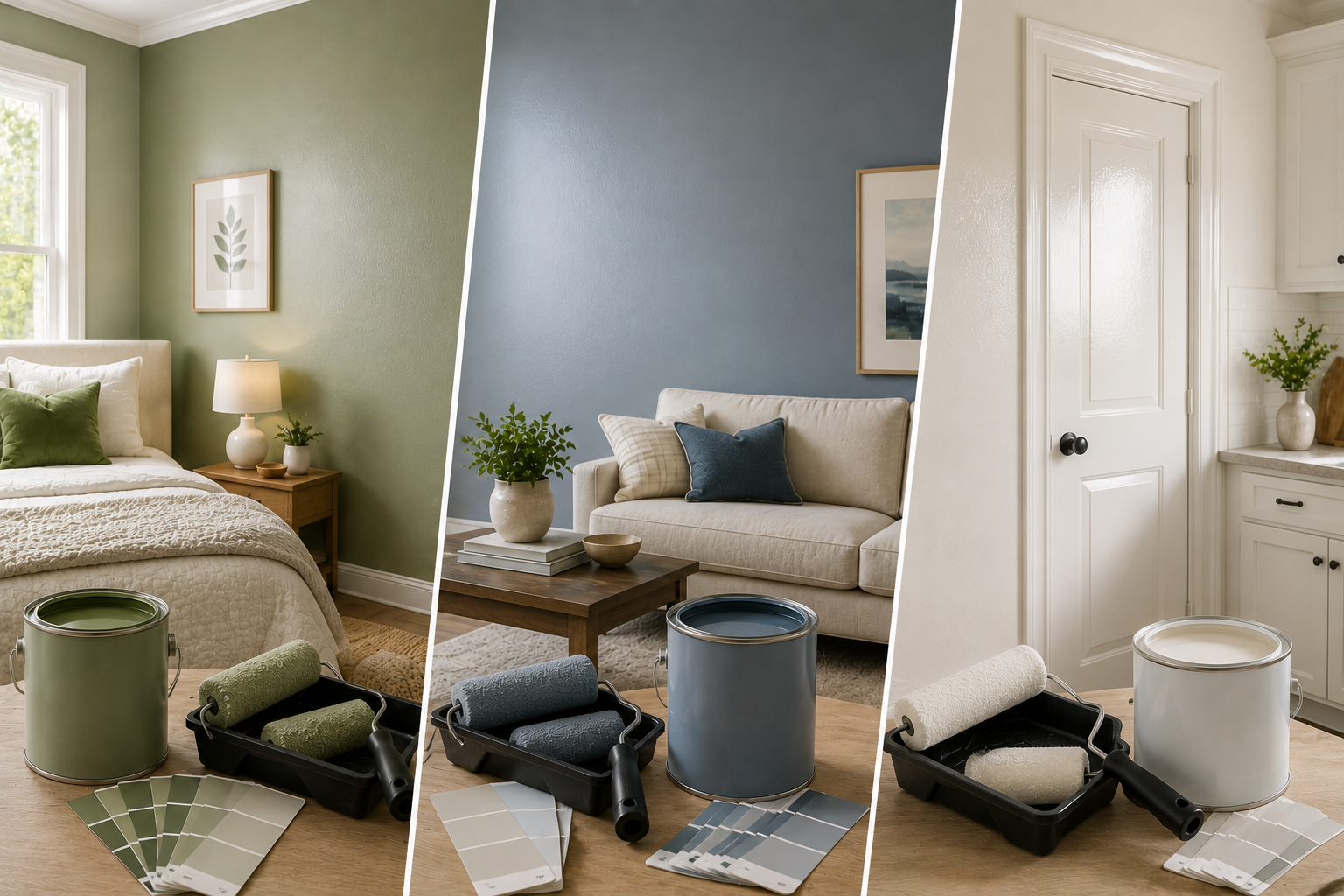
Once you’ve picked a color, the next decision, and one that genuinely affects how your paint job looks and performs, is sheen. Matte vs satin vs semi-gloss represents three distinctly different points on the reflectiveness spectrum, and each one comes with real trade-offs in durability, washability, and how forgiving it is of wall imperfections.
This guide compares these three specific finishes in depth, covering light reflectance, cleanability, and which rooms and applications genuinely suit each one, so you can move past color selection and choose a finish that will actually hold up the way you expect.
Matte vs Satin vs Semi-Gloss Paint
Matte offers the least shine and the best ability to hide minor wall imperfections, making it well suited to low-traffic bedrooms, formal living rooms, and ceilings, though it’s the least washable and durable of the three. Satin offers a soft, low-luster sheen with meaningfully better washability than matte, making it a strong all-around choice for hallways, family rooms, kids’ rooms, and other moderate-traffic living spaces. Semi-gloss delivers the most shine and durability of the three, standing up well to moisture and frequent cleaning, making it the traditional go-to for kitchens, bathrooms, trim, and doors.
Understanding Light Reflectance and What It Means Practically
How Sheen Is Measured
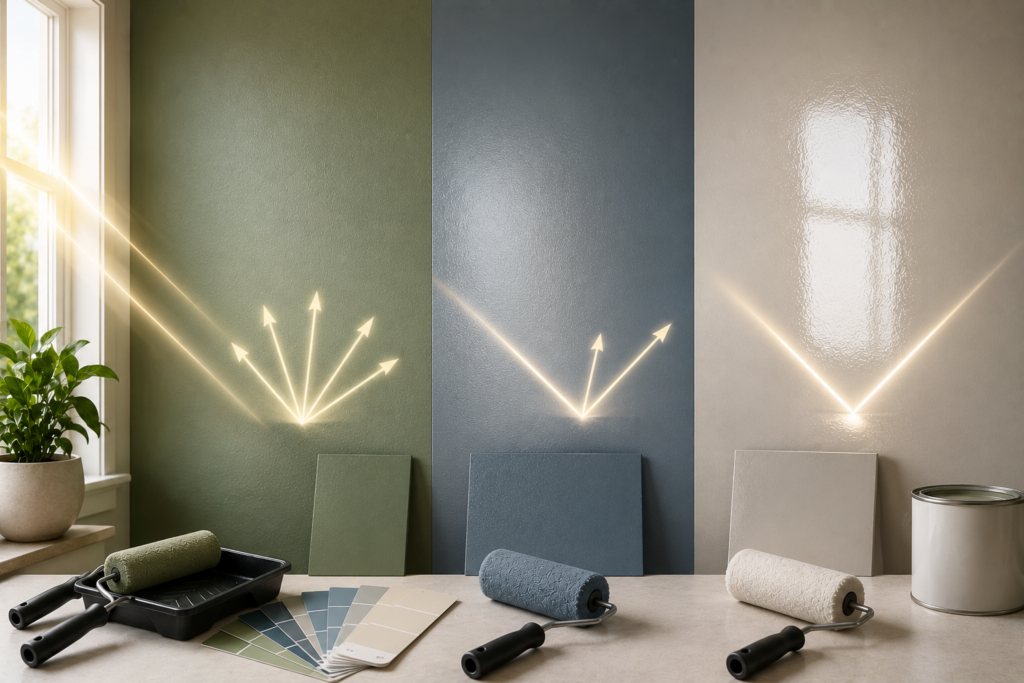
Paint sheen refers to how much light a dried paint film reflects versus absorbs, generally measured on a gloss scale from 0 (completely flat) upward. Matte, satin, and semi-gloss occupy increasingly higher points on this scale, in that order.
Why Reflectance Affects Appearance
Higher-sheen paints reflect more light, which makes colors appear slightly different (often a touch more vibrant or saturated) compared to the same color in a lower-sheen finish, and it also means higher-sheen paint more prominently reveals any surface imperfections, bumps, uneven texture, or patch marks, that a lower-sheen finish would help conceal. Sheen doesn’t just affect appearance and durability day-to-day it also plays a role in how long a paint job lasts overall. See our guide on how long interior paint lasts by room and finish for expected lifespans across all three sheens.
Why This Matters for Your Project
Understanding this relationship helps explain why sheen selection isn’t purely aesthetic, it directly affects both how forgiving your walls’ surface condition needs to be and how durable the finished result will actually be against everyday wear.
Matte Paint Explained
What Matte Offers
Matte paint has little to no shine, absorbing light rather than reflecting it, which creates a soft, non-reflective, and often described as more “sophisticated” or “elegant” wall appearance, particularly popular for accent walls and formal spaces.
Matte Paint Pros and Cons
Pros:
- Excellent at hiding minor wall imperfections, bumps, texture, and touch-up marks
- Soft, non-reflective appearance many homeowners find visually appealing
- Often the most budget-friendly finish option
Cons:
- Least washable and durable of common finishes, marks and scuffs are harder to clean without affecting the finish
- More prone to burnishing (a shiny spot appearing where it’s been scrubbed or rubbed repeatedly)
- Generally not recommended for high-moisture or high-traffic areas
Where Matte Works Best
Formal living rooms, dining rooms rarely used for casual daily activity, adult bedrooms, and ceilings are all strong candidates for matte finish, given their generally lower traffic and contact levels.
Satin Paint Explained
What Satin Offers
Satin sits between matte and semi-gloss on the sheen spectrum, offering a soft, low-luster shine, sometimes described as having a pearl-like quality, that provides noticeably better washability than matte without the more pronounced shine of semi-gloss.
Satin Paint Pros and Cons
Pros:
- Meaningfully more washable and durable than matte, standing up well to regular cleaning
- Softer, more subtle sheen than semi-gloss, still reasonably forgiving of minor wall imperfections
- Versatile enough to work well across a wide range of rooms and traffic levels
Cons:
- Shows more of the wall’s surface imperfections than matte, though less than semi-gloss
- Not as maximally moisture-resistant as semi-gloss for genuinely wet areas
Where Satin Works Best
Hallways, family rooms, kids’ bedrooms, home offices, and other moderate-traffic living spaces benefit from satin’s balance of washability and a still relatively soft, understated appearance.
Semi-Gloss Paint Explained
What Semi-Gloss Offers
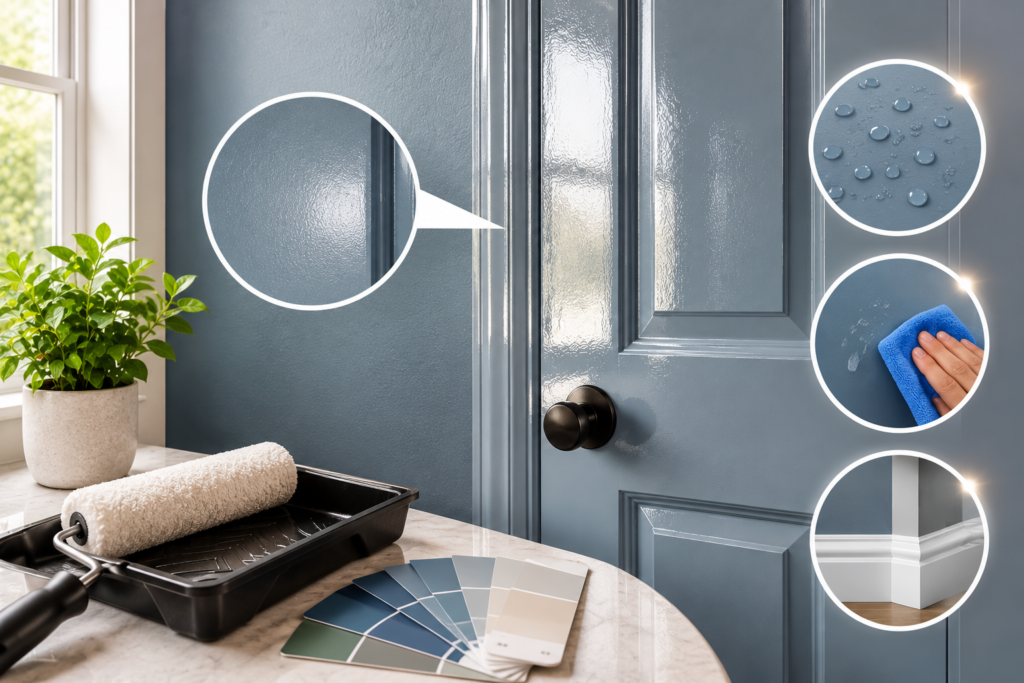
Semi-gloss delivers a noticeably shinier, more reflective finish, offering the strongest durability and moisture resistance among these three options, along with the easiest overall cleaning.
Semi-Gloss Paint Pros and Cons
Pros:
- Excellent durability against scuffs, moisture, and frequent cleaning
- Strong moisture resistance, well suited to humid or wet environments
- Creates crisp, defined contrast when used on trim against flatter wall finishes
Cons:
- Most prominently highlights surface imperfections of the three finishes, requiring careful surface prep
- Can feel overly shiny or “busy” if used across large wall surfaces rather than reserved for trim or specific rooms
- Generally not the first choice for large-scale application in low-traffic, formal living spaces
Where Semi-Gloss Works Best
Kitchens, bathrooms, trim, doors, cabinetry, and other high-moisture or high-touch surfaces are where semi-gloss’s durability and cleanability genuinely earn their place.
Side-by-Side Comparison
| Factor | Matte | Satin | Semi-Gloss |
| Shine level | Lowest | Moderate | High |
| Washability | Lowest | Good | Excellent |
| Moisture resistance | Poor | Moderate | Excellent |
| Imperfection hiding | Excellent | Good | Poor |
| Durability | Lower | Moderate to good | High |
| Best rooms | Formal living rooms, adult bedrooms, ceilings | Hallways, family rooms, kids’ rooms | Kitchens, bathrooms, trim, doors |
| Surface prep sensitivity | Low (forgiving) | Moderate | High (unforgiving) |
Satin vs Semi-Gloss for Trim: A Closer Look
The Case for Semi-Gloss on Trim
Semi-gloss remains the traditional, most common choice for trim, doors, and window casings, offering strong durability against the frequent contact and occasional bumps trim experiences, along with a crisp, defined visual contrast against flatter wall finishes.
The Case for Satin on Trim
Some homeowners increasingly choose satin for trim specifically to achieve a softer, more understated look, particularly in more contemporary or minimalist design styles where semi-gloss’s higher shine can feel too pronounced or dated against the overall aesthetic.
Making the Choice
This genuinely comes down to personal style preference more than a strict performance requirement, since satin still offers reasonable durability for trim use, just somewhat less than semi-gloss. If your trim sees particularly heavy contact (entryway doors, mudroom trim), semi-gloss’s superior durability may be worth prioritizing over the softer satin aesthetic.
Best Paint Sheen for Bedrooms
Bedrooms generally see lower traffic and contact than shared living spaces, making both matte and satin reasonable choices depending on preference. Matte suits bedrooms prioritizing a soft, sophisticated look with minimal cleaning needs, while satin suits bedrooms wanting a bit more washability, useful for kids’ bedrooms specifically, where walls tend to see more marks and fingerprints than adult bedrooms typically experience.
Choosing by Room: A Practical Reference
| Room | Recommended Sheen | Why |
| Formal living room | Matte | Low traffic, prioritizes soft appearance |
| Family room | Satin | Moderate traffic, needs washability |
| Adult bedroom | Matte or satin | Low traffic, comes down to preference |
| Kids’ bedroom | Satin | More marks and contact than adult rooms |
| Kitchen (walls) | Satin | Balance of washability without excess shine |
| Kitchen/bathroom (trim, cabinets) | Semi-gloss | Maximum moisture resistance and durability |
| Bathroom (walls) | Semi-gloss | Consistent humidity requires strong moisture resistance |
| Hallway | Satin or semi-gloss | Higher traffic, benefits from durability |
| Home office | Satin | Moderate traffic, reasonably forgiving |
| Ceiling | Matte (flat) | Minimizes visibility of overhead imperfections |
Surface Preparation Considerations by Sheen
Preparing Walls for Matte Paint
Matte is the most forgiving finish regarding minor surface imperfections, meaning walls with small dents, uneven texture, or old touch-up marks won’t be as visually obvious once painted, requiring somewhat less intensive surface prep than higher-sheen alternatives.
Preparing Walls for Satin Paint
Satin requires a moderate level of surface preparation, since its sheen level will reveal more imperfections than matte but considerably fewer than semi-gloss, generally warranting standard patching and sanding before application.
Preparing Walls for Semi-Gloss Paint
Given how prominently semi-gloss highlights every bump, patch, and texture inconsistency, surfaces intended for semi-gloss benefit from the most thorough preparation, careful sanding, patching, and priming, to avoid an uneven, distracting final appearance once the reflective finish is applied.
How Sheen Affects Paint Application
Matte’s Application Forgiveness
Matte paint’s lack of sheen also tends to make minor application inconsistencies, slightly uneven roller strokes, minor lap marks, less visually noticeable in the finished result compared to higher-sheen alternatives.
Semi-Gloss’s Application Precision Requirements
Semi-gloss demands more careful, consistent application technique, since its reflective surface will visibly show roller marks, brush strokes, or uneven coverage far more readily than matte or even satin would.
Common Sheen Combinations Homeowners Use
The Classic Combination
Flat or matte on walls, semi-gloss on trim and doors, remains one of the most common and reliable combinations, offering a soft wall backdrop with crisp, durable trim definition throughout most of a home.
The Modern, Softer Combination
Satin on walls throughout, paired with satin (rather than semi-gloss) on trim, creates a more uniform, softer overall sheen level throughout a space, increasingly popular in contemporary design approaches favoring a less pronounced shine contrast.
The High-Durability Combination
Satin or semi-gloss throughout kitchens and bathrooms specifically, with matte or satin reserved for adjoining lower-moisture living spaces, prioritizes practical durability specifically where moisture and heavy use genuinely warrant it.
Practical Buying Tips
- Match sheen to each room’s actual traffic and moisture level, rather than choosing one finish for your entire home based on a single preference
- If your walls have noticeable imperfections, lean toward matte or satin rather than semi-gloss, which will highlight those flaws
- For trim specifically, weigh semi-gloss’s superior durability against satin’s softer, increasingly popular aesthetic based on your specific style preference
- Budget extra time for surface preparation if choosing satin or semi-gloss, given how much more visible imperfections become at higher sheen levels
- Test a small sample of your chosen sheen and color combination on the actual wall before committing to the full project, since sheen can affect how a color reads in your specific room’s lighting
Common Mistakes to Avoid
- Using matte paint in a bathroom or kitchen, where its poor moisture resistance and washability genuinely don’t suit the room’s conditions
- Choosing semi-gloss for walls with significant imperfections, without budgeting for the more thorough surface prep this finish requires
- Assuming satin and semi-gloss are interchangeable for trim, when they offer genuinely different durability levels and visual impact
- Skipping a sample test, discovering only after full application that a chosen sheen reads differently than expected in your room’s specific lighting
- Using the same sheen throughout the entire home regardless of room function, missing the practical benefits of matching finish to each space’s actual needs
Conclusion
The matte vs satin vs semi-gloss decision comes down to weighing each room’s actual traffic, moisture exposure, and wall condition against your aesthetic preferences, rather than defaulting to a single sheen throughout your entire home. Matte rewards low-traffic, formal spaces with a soft, sophisticated look, satin offers a genuinely versatile middle ground for most everyday living spaces, and semi-gloss delivers the durability and moisture resistance that kitchens, bathrooms, and trim genuinely need. Matching sheen to each room’s specific demands, rather than color alone, is what separates a paint job that looks good on day one from one that continues to look and perform well for years to come.
Frequently Asked Questions
1- What is the difference between matte and satin paint?
Matte offers little to no shine and the best imperfection-hiding capability, while satin offers a soft, low-luster sheen with meaningfully better washability and durability than matte.
2- Should I use satin or semi-gloss for trim?
Semi-gloss offers superior durability and moisture resistance, making it the traditional choice for high-contact trim, while satin offers a softer, increasingly popular aesthetic with somewhat less durability, a choice that often comes down to style preference.
3- What paint sheen is best for a bathroom?
Semi-gloss is generally recommended for bathrooms, given its strong moisture resistance and easy cleanability in a consistently humid environment.
4- Does paint sheen affect how a color looks?
Yes, higher-sheen finishes reflect more light, which can make colors appear slightly more vibrant or saturated compared to the same color in a lower-sheen finish.
5- Is matte paint hard to clean?
Yes, relatively speaking, matte is the least washable of common finishes, and scrubbing marks can sometimes create a shinier spot (burnishing) where it’s been cleaned repeatedly.
6- What sheen should I use for a kids’ bedroom?
Satin is generally a strong choice, offering noticeably better washability than matte for walls that tend to see more marks and fingerprints than adult bedrooms typically experience.
7- Why does semi-gloss show wall imperfections more than matte?
Semi-gloss reflects considerably more light than matte, and that reflectiveness makes bumps, texture inconsistencies, and patch marks far more visually noticeable than they would be under a flatter, light-absorbing finish.