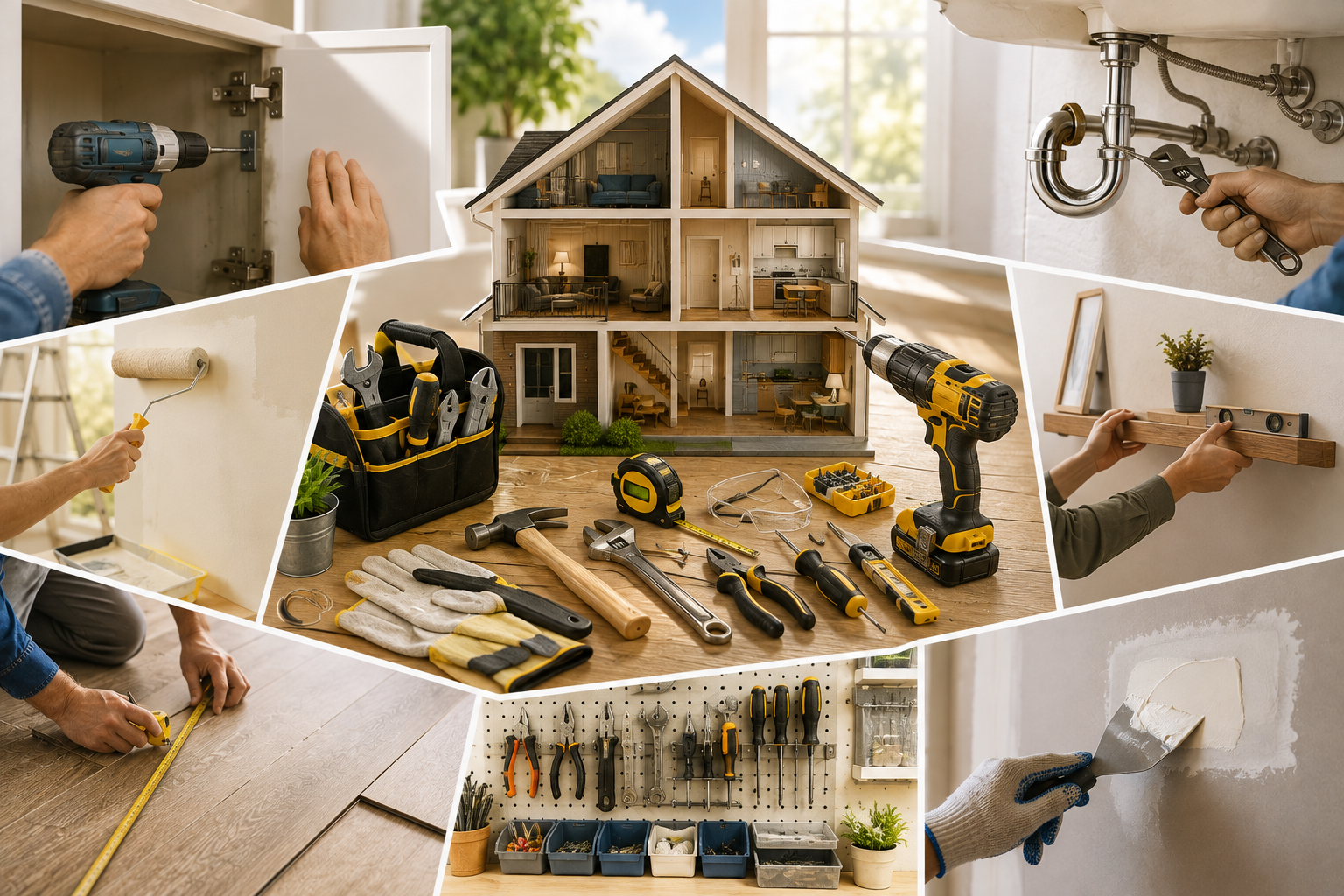
Owning a home means you’ll eventually face a loose cabinet hinge, a leaky faucet, or a wall that needs a fresh coat of paint. You don’t need to be a professional contractor to handle these tasks. With the right home DIY tools, some patience, and a bit of guidance, most homeowners can confidently manage everyday repairs and small upgrades themselves.
This guide walks you through everything you need to start your DIY journey the right way from building your first toolkit to understanding which projects are safe to tackle and which ones need a licensed professional.
Why Every Homeowner Should Learn Basic DIY Skills
Learning basic DIY skills isn’t just about saving money, though that’s a real benefit. It’s about understanding your home better.
When you know how your plumbing, electrical, and structural systems work — even at a basic level — you can:
- Spot small problems before they become expensive repairs
- Communicate more clearly with contractors and get fair quotes
- Handle emergencies (like shutting off water to a leaking pipe) calmly
- Feel more confident and in control of your living space
Beginner DIY projects are also a great way to personalize your home without committing to a full renovation budget.
Getting Started: Mindset Before Tools

Before buying a single tool, set realistic expectations. DIY success comes from patience and preparation, not rushing.
Keep these principles in mind:
- Start small. Your first project shouldn’t be replacing a water heater — start with something like hanging shelves or patching drywall.
- Read before you act. Manufacturer instructions and reputable how-to resources exist for a reason.
- Know your limits. Some jobs, especially electrical and gas-related work, require licensed professionals for safety and legal reasons.
- Budget for mistakes. Buy a little extra material (paint, screws, tile) in case something goes wrong the first time.
Building Your First DIY Toolkit
A well-stocked DIY toolkit is the foundation of nearly every home project. You don’t need to buy everything at once — build it gradually as your projects demand.
Essential Hand Tools
| Tool | Common Use |
| Claw hammer | Driving and removing nails |
| Screwdriver set (flathead & Phillips) | Furniture assembly, fixture repairs |
| Adjustable wrench | Plumbing connections, bolts |
| Tape measure (25 ft) | Measuring rooms, furniture, materials |
| Utility knife | Cutting drywall, packaging, flooring |
| Level | Ensuring shelves and frames are straight |
| Pliers (needle-nose & slip-joint) | Gripping, bending, and cutting wire |
| Stud finder | Locating wall studs before mounting items |
Power Tools Worth Investing In
Once you’re comfortable with hand tools, a few power tools will expand what you can safely accomplish:
- Cordless drill/driver – the single most useful power tool for beginners
- Orbital sander – smooths wood surfaces for painting or staining
- Circular saw – for cutting lumber and larger materials
- Jigsaw – useful for curved or detailed cuts
Safety Equipment
Never overlook safety gear. At minimum, keep these on hand:
- Safety glasses
- Work gloves
- Dust mask or respirator
- Ear protection (for power tool use)
Essential Home Repair Basics Every Homeowner Should Know
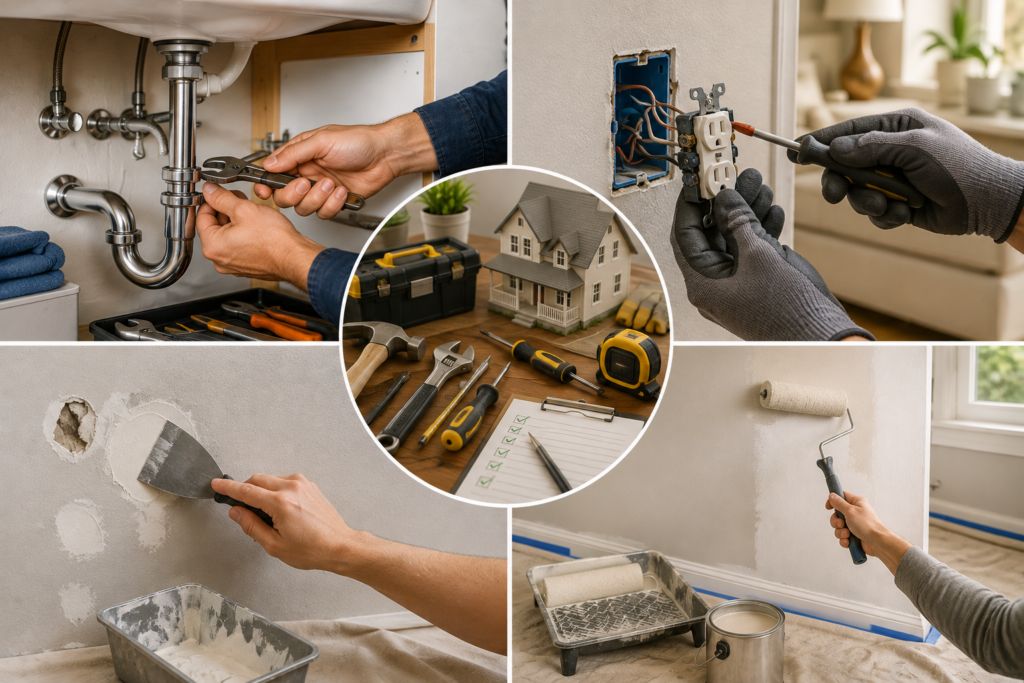
Understanding home repair basics helps you respond quickly to common household issues instead of panicking or calling a professional for something simple.
Plumbing Basics
Most minor plumbing issues are manageable for beginners:
- Fixing a running toilet (often just a worn flapper valve)
- Unclogging a slow drain using a plunger or drain snake
- Replacing a leaky faucet washer or cartridge
- Tightening loose supply line connections
When to call a plumber: sewer line issues, major leaks behind walls, water heater installation, or any job requiring permits. For routine upkeep, follow our plumbing maintenance checklist.
Electrical Basics
Electrical work carries real risk, so caution matters here more than in most categories.
Safe beginner tasks include:
- Replacing a light switch or outlet cover
- Swapping a light fixture (after turning off power at the breaker)
- Installing a smart thermostat or doorbell (following manufacturer instructions)
When to call an electrician: panel work, rewiring, adding new circuits, or anything involving your main electrical panel. Miswired electrical work is a leading cause of house fires, so this is not an area to guess in.
Drywall and Wall Repairs
Small holes, dents, and cracks are among the easiest home repairs to learn:
- Clean the damaged area of loose debris.
- Apply spackle or joint compound with a putty knife.
- Let it dry fully, then sand smooth.
- Prime and paint to match the wall.
For larger holes, a self-adhesive drywall patch simplifies the process significantly.
Painting Basics
Painting is one of the most rewarding beginner DIY projects because the visual impact is immediate.
Tips for a professional-looking finish:
- Clean and patch walls before painting
- Use painter’s tape along trim and ceilings
- Apply primer on new drywall or dramatic color changes
- Use two thin coats rather than one thick coat
- Avoiding these basics is exactly what leads to most common painting mistakes beginners make.
DIY vs. Hiring a Professional: How to Decide
Not every project belongs on your DIY list. Here’s a general comparison to help you decide.
| Factor | DIY-Friendly | Hire a Professional |
| Involves gas lines | No | Yes |
| Requires a permit | Rarely | Often |
| Structural changes (load-bearing walls) | No | Yes |
| Cosmetic updates (paint, shelving, caulking) | Yes | Optional |
| Major electrical panel work | No | Yes |
| Minor plumbing fixes | Yes | Optional |
| Roof repair | Rarely | Yes |
| Furniture assembly | Yes | No |
As a general rule: if a mistake could affect your home’s safety, structure, or resale value, it’s worth consulting a licensed professional even just for a second opinion. For a deeper breakdown of this decision, see our full guide on DIY vs. hiring a professional.
Beginner-Friendly DIY Projects to Build Confidence
If you’re new to home improvement, start with these approachable projects before moving to bigger jobs.
Around the House
- Installing floating shelves
- Caulking around tubs, sinks, and windows
- Replacing cabinet hardware
- Weatherstripping doors and windows
- Assembling flat-pack furniture
Outdoor Projects
- Power washing siding or driveways
- Mulching flower beds
- Building a small raised garden bed
- Repainting a fence or mailbox
These projects teach transferable skills — measuring, leveling, cutting, and using basic power tools — that prepare you for more advanced work later.
Creating a Home Maintenance Checklist
A big part of DIY success is prevention. Regular maintenance reduces the number of repairs you’ll ever need to make.
Monthly Tasks
- Test smoke and carbon monoxide detectors
- Check HVAC filters and replace if dirty
- Inspect under sinks for leaks
Seasonal Tasks
- Clean gutters (spring and fall)
- Inspect roof and siding for damage
- Service HVAC system before summer and winter
- Check weatherstripping and caulking around windows/doors
Annual Tasks
- Flush the water heater
- Inspect the foundation for cracks
- Test the sump pump (if applicable)
- Review fire extinguisher expiration dates
Keeping a simple maintenance calendar — digital or on paper — helps you stay ahead of costly repairs.
How to Shop Smart for DIY Supplies
Buying the right materials matters as much as having the right tools. A few practical buying tips:
- Buy tools based on frequency of use. Rent expensive equipment (like tile saws or pressure washers) for one-time jobs instead of purchasing.
- Choose mid-range quality for frequently used tools. Extremely cheap tools often wear out quickly, while premium professional-grade tools may be unnecessary for occasional use.
- Check return policies before buying specialty materials in bulk.
- Measure twice before purchasing lumber, tile, or flooring to avoid costly waste.
- Compare hardware store vs. online prices, but factor in your ability to return items easily if something doesn’t fit.
Common DIY Mistakes Beginners Should Avoid
Learning from common pitfalls can save time, money, and frustration:
- Skipping the “why.” Understanding why a step matters (like priming before painting) helps you adapt when situations differ from instructions.
- Ignoring manufacturer instructions. Especially important for electrical fixtures, appliances, and warranty-covered items.
- Not turning off water or power sources. Always confirm the correct shutoff before starting plumbing or electrical work.
- Rushing measurements. Inaccurate measurements are one of the most common causes of wasted materials.
- Underestimating drying/curing times. Paint, adhesives, and caulk often need longer than expected to fully cure.
Conclusion
Becoming comfortable with home DIY doesn’t happen overnight — it happens one small project at a time. Start with manageable tasks, build a reliable toolkit, and always prioritize safety over speed.
As your skills grow, you’ll naturally take on bigger projects with more confidence. And for anything involving major electrical, structural, or plumbing work, remember that hiring a licensed professional isn’t a failure — it’s simply smart homeownership.
With the right foundation, a bit of patience, and consistent practice, you’ll be well-equipped to keep your home comfortable, safe, and truly feeling like yours.
Frequently Asked Questions
1- What tools should every homeowner own, even non-DIYers?
At minimum, a hammer, screwdriver set, adjustable wrench, tape measure, and flashlight cover most emergency situations, even if you don’t plan on doing regular DIY work.
2- Is it cheaper to DIY or hire a professional?
For small, low-risk projects like painting or shelving, DIY is typically more affordable. For technical work like electrical, plumbing behind walls, or structural changes, professional labor often prevents costly mistakes and is usually required by code.
3- How do I know if a wall is load-bearing?
You generally cannot determine this with certainty just by looking. A structural engineer or contractor should confirm this before any wall removal, since altering a load-bearing wall without proper support can compromise your home’s structure.
4- What’s the best way to learn DIY skills as a complete beginner?
Start with low-risk, reversible projects, follow trusted instructional resources, and don’t hesitate to pause and research before continuing if something feels unfamiliar.
5- Do I need a permit for home DIY projects?
It depends on your local building codes and the scope of the project. Structural changes, electrical panel work, and plumbing rerouting often require permits, while cosmetic updates typically do not. Always check with your local building department before starting significant work.